How to test your subfloor for moisture before installing carpet
The invisible flood beneath your padding
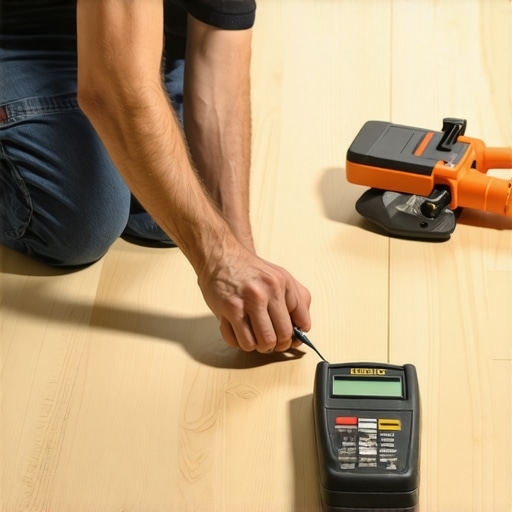
Carpet installation requires a subfloor moisture test using a calcium chloride kit or a pinless moisture meter to ensure the concrete slab or plywood is dry. Excessive vapor emission will destroy carpet adhesives and trigger mold growth within the padding and fibers. I spent three days grinding concrete on a job last month just so the floor wouldn’t click like a castanet. Most guys skip the leveling compound. They think the underlayment will hide the dip. It won’t. I smell like WD-40 and oak dust most days, and I have seen what happens when you ignore the science. You see a dry gray slab. I see a pressurized reservoir of water molecules trying to escape through your new frieze. Carpet is breathable, sure, but the pad acts like a lid on a boiling pot. If that moisture cannot get out, it turns the floor into a laboratory for fungi.
The 72 hour calcium chloride protocol
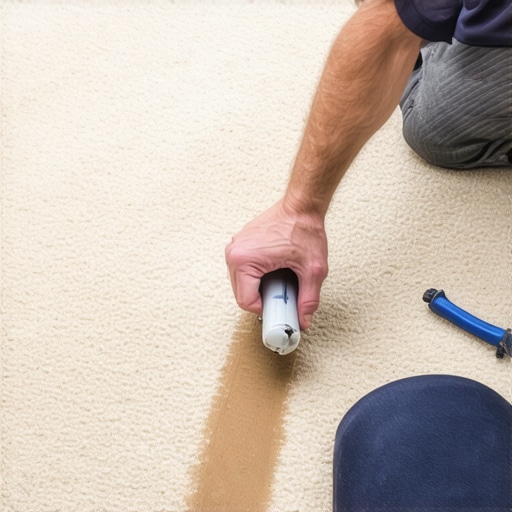
The calcium chloride test, or ASTM F1869, measures the moisture vapor emission rate by weighing a small dish of salt before and after it sits under a sealed plastic dome. This test is the gold standard for carpet install professionals because it quantifies the weight of water escaping from 1,000 square feet of concrete over 24 hours. You need to prep the area. Scraping off old paint and drywall mud is not optional. The concrete must be clean. If you place the kit over a patch of sealer, you are lying to yourself. The salt inside the jar absorbs the moisture. You weigh it on a gram scale. The difference tells you if your floor is a desert or a swamp. If the result is over five pounds, you have a problem that no amount of fancy padding will fix.
“A floor is only as good as the subfloor beneath it; deflection is the enemy of every joint.” – Master Flooring Axiom
Why your subfloor is lying to you
Subfloor moisture often hides deep within the concrete pores or the wood cellular structure while the surface feels bone dry to the touch. This is called a moisture gradient, where the top quarter inch of the slab has equilibrated with the air but the bottom three inches remain saturated. You walk on it and it feels solid. You put a moisture meter on the surface and it reads low. Then you lay down a non-breathable barrier or a thick carpet pad. Suddenly, the moisture moves up. It is a capillary action driven by physics. The water wants to reach equilibrium. When it hits your flooring, it stops. It pools. It rots the tack strips. It causes the laminate in the next room to swell. I once saw a carpet install where the tack strips were so rotted they turned into black mush because the installer didn’t check the vapor drive coming off a crawlspace.
Molecular zooming into the concrete slab
Concrete is not a solid rock. It is a complex network of calcium silicate hydrate capillaries. These microscopic straws pull water from the earth through a process called osmotic pressure. Even if you have a vapor barrier under the slab, those barriers degrade. They get punctured during the pour. Once a carpet install begins, the temperature of the room changes. This shifts the dew point. If the slab is colder than the air, moisture condenses. This is why floor leveling is more than just making things flat. It is about creating a stable substrate. Many floor leveling compounds are sensitive to alkalinity. High moisture brings alkaline salts to the surface. This spike in pH levels eats the glue. It turns the adhesive into a soapy liquid. Your carpet will start to ripple. It looks like waves on the ocean. That is not a manufacturing defect. That is a physics failure.
The 1/8 inch that ruins everything
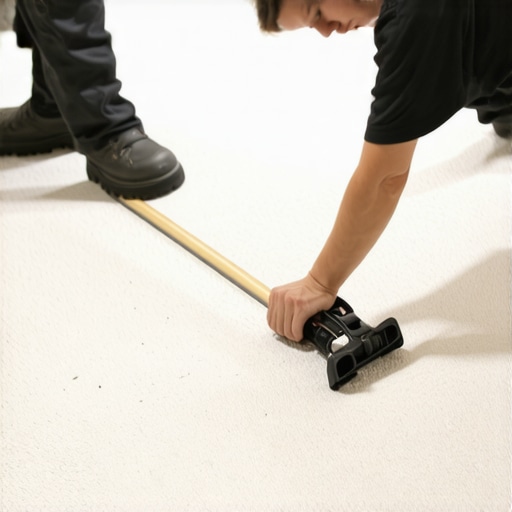
Floor leveling is the most ignored phase of a carpet install because people think carpet is soft enough to hide subfloor flaws. This is a lie. A dip of 1/8 inch over a ten-foot span will cause the carpet to stretch unevenly. Over time, the backing of the carpet will break down as it flexes into that void. If you are also installing laminate or tile in adjacent showers, that levelness is even more critical. You cannot bridge a gap with thin-set and hope for the best. Showers are high-moisture zones. If the subfloor outside the shower is damp, it will wick that water right under your carpet. I use a ten-foot straightedge. If I see light under that bar, the leveling bag comes out. I don’t care if it takes another day. I don’t want a callback.
| Subfloor Type | Moisture Limit (MC%) | Test Method | Risk Factor |
|---|---|---|---|
| Concrete Slab | < 3.0 lbs / 1000sqft | Calcium Chloride | Adhesive Failure |
| Plywood | < 12% MC | Pin Meter | Dry Rot |
| OSB | < 10% MC | Pinless Meter | Edge Swelling |
| Leveling Compound | Per Manufacturer | Relative Humidity | Delamination |
The myth of the waterproof pad
While most people want the thickest underlayment, too much cushion actually causes the locking mechanisms on LVP to snap under pressure. For carpet, a waterproof pad is a double-edged sword. It keeps spills from soaking in, but it also keeps subfloor moisture from soaking out. If your subfloor is damp, a waterproof pad traps that water against the wood or concrete. This creates a microclimate for mold. You want the moisture to move, or you want the subfloor to be dry before you seal it. Do not use a