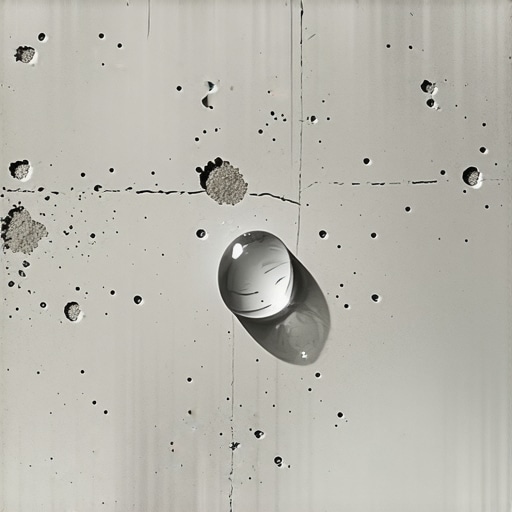
The ‘Water Drop’ Test for Checking Your Concrete Porosity
Most guys skip the leveling compound. They think the underlayment will hide the dip. It won’t. I spent three days grinding concrete on a job last month just so the floor wouldn’t click like a castanet. That job was a nightmare because the previous installer ignored the basic physics of the slab. I have spent twenty-five years on my knees with a moisture meter and a straight edge. I have seen fifteen-thousand dollar walnut floors turn into potato chips because of crawlspace humidity. A floor is not a decoration. It is a structural performance surface. If you treat it like a rug, it will fail. Most homeowners think waterproof LVP means they can flood their kitchen. It does not. If the concrete underneath is not right, nothing on top will matter.
Concrete is a living, breathing sponge that interacts with every layer of your flooring system. When we talk about concrete porosity, we are discussing the capillary network within the cementitious matrix. This determines how well adhesives, primers, and floor leveling compounds will mechanically bond to the substrate. If your slab is too dense, the bond fails. If it is too porous, it sucks the moisture out of your materials too fast.
The hidden science of your concrete slab
Concrete porosity refers to the volume of void spaces within the material, which dictates the permeability and moisture vapor transmission rates. These microscopic capillaries are formed during the hydration process as excess water evaporates from the calcium silicate hydrate gel. Understanding this pore structure is vital for carpet install success and laminate longevity.
When you look at a slab, it looks solid. It is not. It is a highway of tiny tunnels. These tunnels carry moisture from the earth up to your flooring. If you seal those tunnels too tightly without checking the moisture content, you trap water. That water turns into hydrostatic pressure. That pressure is what blows your tiles off the floor or makes your laminate joints swell. I have seen it happen in a week. You need to know if your concrete is open or closed before you even think about opening a box of planks.
“A floor is only as good as the subfloor beneath it; deflection is the enemy of every joint.” – Master Flooring Axiom
The simple water drop test for porosity
The water drop test is a field diagnostic used to evaluate the surface absorption and surface tension of a concrete substrate. By placing distilled water droplets on the surface profile, installers can determine the absorptive capacity and identify bond breakers like curing compounds or sealers.
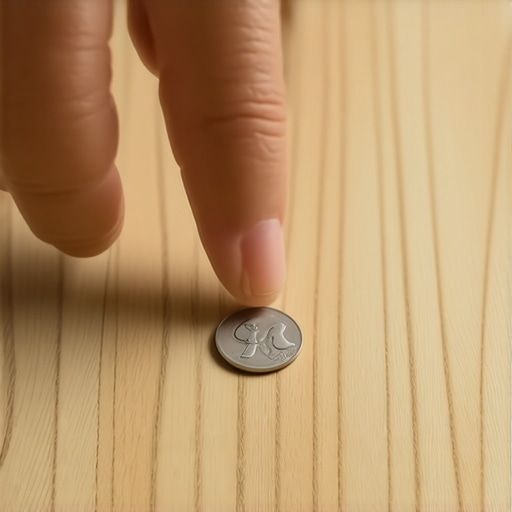
You do not need a laboratory for this. You need a bottle of water and a stopwatch. Find a few spots on your floor. Go to the corners, the middle, and near the doors. Scrape away any old paint or drywall mud. You need to see the actual concrete. Drop a few beads of water. They should be about the size of a dime. Now you watch. Do not walk away. If that water disappears in less than thirty seconds, you have a thirsty floor. It is very porous. If it sits there like a bead on a freshly waxed car for five minutes, you have a problem. Your floor is sealed shut. Nothing will stick to it. Not your glue, not your leveler.
Why your subfloor is lying to you
A subfloor may appear dry and stable, but latent moisture and alkalinity can compromise adhesive integrity over time. Floor leveling compounds require a specific porosity range to achieve mechanical anchorage into the concrete pores. Without this interlocking bond, the underlayment will delaminate and cause hollow spots.
I remember a job in a basement where the slab looked perfect. It was smooth as glass. The homeowner wanted a high-end laminate. We did the water drop test and the water just sat there. It never moved. It turns out the original builder used a heavy-duty curing compound to keep the concrete from drying too fast. That compound was a invisible wall. If we had poured leveler over that, it would have peeled up like an orange skin. We had to bring in a diamond grinder to open those pores. It was messy, it was loud, but it was the only way to do it right.
| Absorption Time | Porosity Level | Required Action |
|---|---|---|
| 0-30 Seconds | Highly Porous | Heavy Priming Required |
| 30-90 Seconds | Ideal | Standard Primer |
| 90 Seconds – 5 Minutes | Low Porosity | Mechanical Abrasion |
| 5+ Minutes | Non-Porous | Diamond Grinding |
The impact on showers and wet areas
In showers and wet environments, the porosity of the mortar bed or concrete slab is critical for waterproofing membrane adhesion. TCNA guidelines specify that thin-set mortar must achieve full coverage and a chemical bond to prevent water migration behind the tile assembly.
If you are building a walk-in shower on a concrete slab, porosity is your best friend and your worst enemy. If the slab is too porous, it will suck the water out of your thin-set before the cement has a chance to hydrate. You end up with a powdery, weak bond. If it is not porous enough, the thin-set just slides around. I always dampen the slab slightly before applying mortar. This is called SSD or Saturated Surface Dry. It stops the concrete from stealing the water from your mix. It is a small trick, but it saves the job.
Checklist for a perfect porosity prep
- Clear the area of all dust and debris with a HEPA vacuum.
- Scrape off any drywall mud, paint, or grease.
- Perform the water drop test in at least five locations per 1000 square feet.
- Time the absorption with a digital stopwatch.
- Record the results to choose the correct primer.
- Check for curing compounds by seeing if the water beads indefinitely.
- Ensure the room temperature is between 65 and 85 degrees.
The chemistry of floor leveling and primers
Self-leveling underlayment relies on polymer-modified primers to bridge the gap between the porous concrete and the leveling material. These primers penetrate the capillaries and provide a tacky surface for the leveler to chemically weld to the substrate.
Do not buy the cheap primer. Do not skip the primer. If your concrete is very porous, the primer will sink in and disappear. You might need two coats. The first one seals the pores, the second one gives you the grip. If you pour leveler on a thirsty slab without a primer, the air inside the concrete will try to escape as the water goes in. This causes pinholes. Thousands of tiny little bubbles. Those bubbles make the floor weak. It will crumble under the weight of your furniture. I have seen laminate floors fail because the leveler underneath turned to dust. All because someone wanted to save twenty bucks on a jug of primer.
“Adhesion is a function of surface energy and mechanical interlocking; a closed slab is a failed slab.” – Structural Flooring Standards
The 1/8 inch that ruins everything
The industry standard for floor flatness is usually 1/8 inch over 10 feet for most large-format tiles and hardwood installations. Achieving this tolerance requires a perfectly prepped slab where the floor leveling compound can flow and feather properly.
If you have a hump in your floor, you cannot just sand it down with a hand sander. Concrete is tough. You need the right tools. But if you have a dip, you need to know if that dip will hold a patch. The water drop test tells you if the patch will stay. I have gone into houses where the carpet was pulled up and the old patch was just rattling around in the dips. It never bonded because the guy before me didn’t check the porosity. He just dumped the mud and ran. Now the homeowner is paying me twice as much to fix it.
Final thoughts on concrete preparation
Most people want to get to the pretty part of the job. They want to see the wood or the tile. They want the finish. But the finish is only five percent of the work. The other ninety-five percent is the stuff you will never see. It is the grinding, the priming, and the testing. If you take the time to do the water drop test, you are ahead of ninety percent of the DIY crowd and half the professionals. It is the difference between a floor that lasts thirty years and one that lasts three. Concrete is not just a grey rock. It is a complex chemical structure. Respect it, or it will break your heart and your bank account. Use the data. Trust the stopwatch. Get on your knees and check the pores. It is the only way to be sure.