How to Stop Your Cat from Tearing Up the Carpet at the Bedroom Door
The feline obsession with door thresholds
Cats shred carpet at bedroom doors due to territorial anxiety and the desire to access closed spaces. This behavior is often triggered by the olfactory signals left at thresholds and the physical resistance of the carpet pile which provides satisfying feedback for their claws. When a cat hooks its claws into the primary backing, it creates a mechanical leverage point that can destabilize the entire carpet install. Most guys skip the leveling compound. They think the underlayment will hide the dip. It won’t. I spent three days grinding concrete on a job last month just so the floor wouldn’t click like a castanet. When it comes to carpet at a bedroom door, that dip is exactly where a cat gets its claws under the edge. Once they get a grip on the primary backing, the whole installation starts to unspool like a cheap sweater. This is not just a pet problem, it is a structural failure of the transition zone. The carpet at the door is under constant tension from the power stretcher, and once a single tuft is pulled, the integral lattice of the weave begins to fail. I have seen fifteen thousand dollar installations ruined in a weekend because the installer did not use a Z-bar or a proper transition strip to lock those fibers down. You have to understand that a cat is not just scratching, it is performing a tensile strength test on your flooring. If the styrene-butadiene rubber (SBR) latex used in the backing is low quality, the cat will win every time.
The structural failure of the bedroom threshold
The carpet threshold is the weakest point of a carpet installation because the tension of the stretch ends there. If the tack strip is not placed within a half inch of the transition or if the subfloor is uneven, the carpet becomes loose and easy for a cat to hook. The floor leveling process is vital here. If there is even a 1/8 inch deviation in the subfloor height between the bedroom and the hallway, the carpet will bridge that gap rather than sitting flush. This creates a hollow pocket. A cat can feel that void. They use their paws to find the give in the material, and then they begin the mechanical extraction of the fibers. You need to ensure that the subfloor is dead level. I use a straight edge and Portland cement-based leveler to fill any birdbaths at the door before the pad even touches the ground. If you are transitioning to showers or tiled bathrooms, the height difference is even more dangerous. A Schluter strip or a heavy duty marble threshold is the only way to protect the edge from a determined feline.
“A floor is only as good as the subfloor beneath it; deflection is the enemy of every joint.” – Master Flooring Axiom
Why your subfloor is lying to you
Subfloor imperfections are magnified at door openings where foot traffic and air pressure changes are most frequent. A subfloor that looks flat to the naked eye often has micro-slopes that prevent the carpet from seating correctly against the tackless strip. When the carpet is not seated, the tensioning pins cannot bite into the secondary backing. This leaves the edge floppy. A cat will take advantage of this floppiness to get its paw underneath. The chemistry of the adhesive also matters. Over time, the alkalinity of a concrete slab can break down the adhesives in the carpet backing if a proper moisture barrier was not used. This process, known as saponification, turns the glue into a soapy film. Once the glue fails, the cat can pull the individual tufts out with almost no resistance. This is why I always check the calcium chloride levels in the slab before I even bring the roll in from the truck. If the moisture is too high, your carpet is already failing before the cat even touches it. The mil thickness of the moisture barrier is your first line of defense against both the earth and the cat.
The 1/8 inch that ruins everything
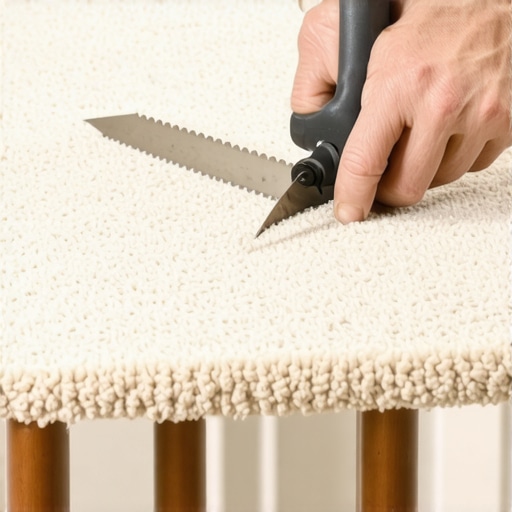
Precision at the door casing is the difference between a permanent floor and a shredded mess. Most installers are lazy and do not undercut the door jambs properly. If the carpet is just tucked against the wood, there is a visible gap. That gap is an invitation. I use a Crain power undersaw to get a clean 1/16 inch clearance above the new floor height. This allows the carpet to be tucked deep under the wood, hiding the edge from the cat’s claws. If the cat cannot find the edge, it cannot start the tear. This applies to laminate as well. If you are swapping out carpet for laminate to stop the cat, you still have to worry about the expansion gap. If that gap is too wide and the T-molding is flimsy, a cat can actually pop the molding off or chew the edge of the boards. You need a solid aluminum core transition that is screwed into the subfloor, not just snapped into a plastic track.
| Material | Janka Hardness / Durability | Cat Claw Resistance | Moisture Sensitivity |
|---|---|---|---|
| Nylon Carpet | High Resilience | Low | Moderate |
| Polyester (PET) | Moderate | Very Low | Low |
| High Pressure Laminate | 1200+ | Extremely High | High (at joints) |
| Solid Oak | 1290 | Moderate | High |
The molecular reality of carpet backing failure
Carpet backing is a composite structure made of woven polypropylene and latex binders that degrade under mechanical stress. When a cat scratches, it is applying shear force to the latex bond. If the carpet is a loop pile like a Berber, the cat can hook a single continuous strand and pull it for yards. This is why I never recommend Berber for cat owners. You want a cut pile with a high twist level. The twist level refers to the number of times the fiber is wound around itself per inch. A higher twist makes the individual tip harder to snag. We also look at the denier, which is the weight of the yarn. A higher denier means a thicker, tougher fiber. But the real secret is the pick rate of the backing. The pick rate is how tightly the backing is woven. A tight pick rate means the cat’s claw cannot penetrate deep enough to get a grip on the structural yarns. If you combine a tight pick rate with a high-solids latex, you have a floor that can withstand a tiger.
“The carpet must be stretched to a minimum of one to one and a half percent in both directions to ensure long term performance and prevent delamination.” – Master Flooring Axiom
Permanent solutions for the bedroom threshold
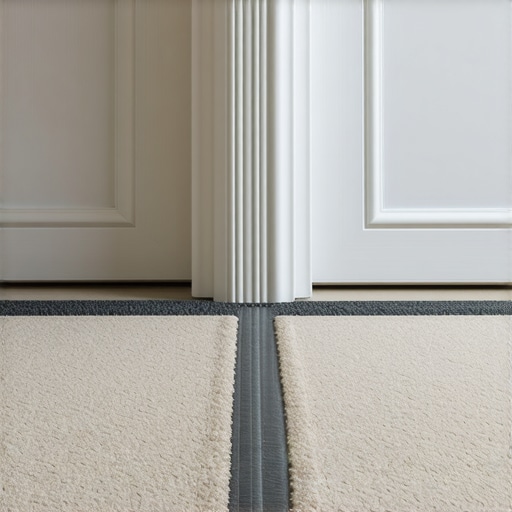
To stop a cat permanently, you must remove the incentive by changing the physical properties of the threshold. If the carpet is already damaged, you do not necessarily need to replace the whole room. You can perform a surgical repair using a donor piece from the back of a closet. But the key is the transition bar. I often install a wide low-profile transition made of anodized aluminum. This covers the first two inches of the carpet where the cat usually digs. It is impossible for a cat to scratch through metal. It also provides a clean break for the eyes. If you are sticking with carpet, use a commercial grade tack strip with J-pins. These pins are longer and angled more aggressively to hold the carpet under extreme stress. Below is a checklist of what you need to fix this right.
- Power stretcher for proper tension
- Heavy duty tack strips with pre-installed nails
- Heat bond tape for seam reinforcement
- Transition metal or Z-bar for secure edges
- Low-VOC carpet adhesive for spot repairs
- Portland cement-based floor leveling compound
The myth of the thick underlayment
While most people want the thickest underlayment, too much cushion actually causes the locking mechanisms on LVP to snap under pressure and makes carpet easier to shred. A thick, soft pad under a carpet allows for too much vertical deflection. When the cat steps on the carpet, the carpet sinks. This creates a lip at the edge of the door where the carpet meets the hard transition. That lip is exactly what the cat is looking for. You want a high-density 8-pound rebond pad or a rubberized underlayment. This provides a firm base that limits the travel of the carpet. The less the carpet moves, the less the cat can interact with it. The same logic applies to laminate. If the underlayment is too squishy, the tongue and groove joints will flex every time you walk on them. Eventually, those joints will fatigue and snap. Then you have a floating floor that is actually bouncing, which creates gaps that a cat can get a claw into. Keep it firm, keep it flat, and keep it fastened. That is the only way to win the war against the cat at the bedroom door. { “@context”: “https://schema.org”, “@type”: “HowTo”, “name”: “How to Stop Your Cat from Tearing Up the Carpet at the Bedroom Door”, “step”: [ { “@type”: “HowToStep”, “text”: “Inspect the subfloor for any dips or birdbaths at the threshold and apply floor leveling compound if necessary.” }, { “@type”: “HowToStep”, “text”: “Undercut the door jambs using a power saw to allow the carpet to be tucked securely beneath the wood.” }, { “@type”: “HowToStep”, “text”: “Install heavy duty tack strips with J-pins within a half inch of the door transition.” }, { “@type”: “HowToStep”, “text”: “Use a power stretcher to achieve a 1.5 percent stretch across the room, locking the carpet onto the pins.” }, { “@type”: “HowToStep”, “text”: “Install an aluminum transition bar or Z-bar to cover the edge and prevent feline access to the backing.” } ] }