Why Your Kitchen Laminate Is Bubbling Near the Dishwasher
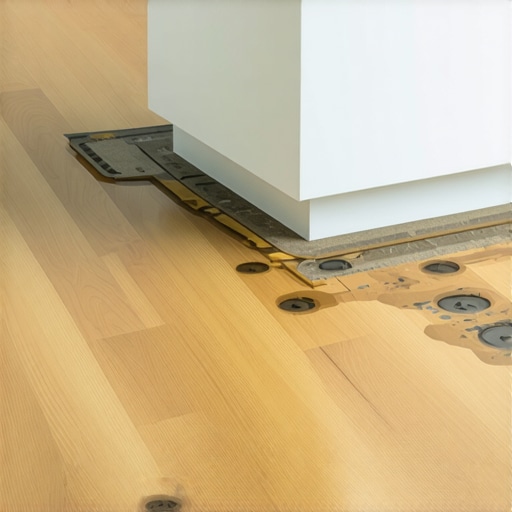
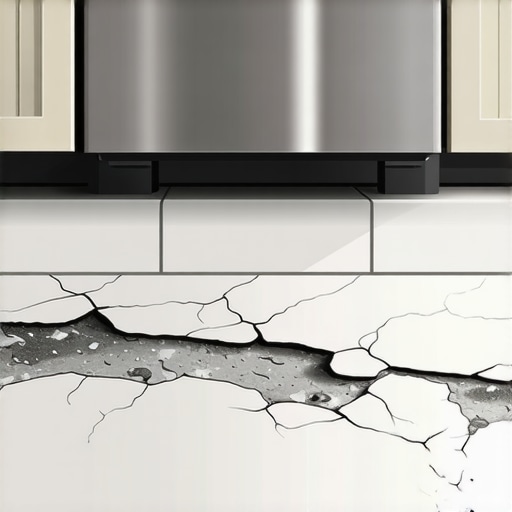
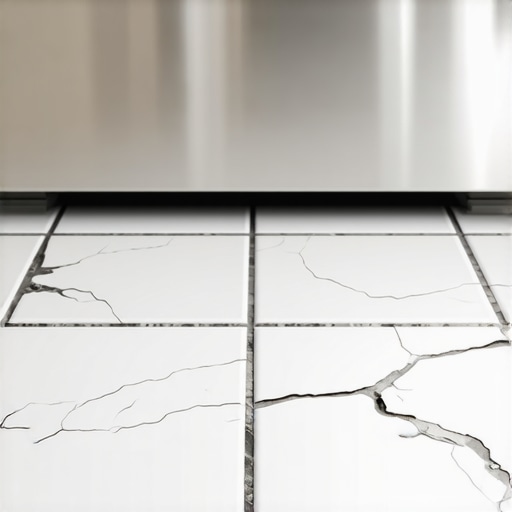
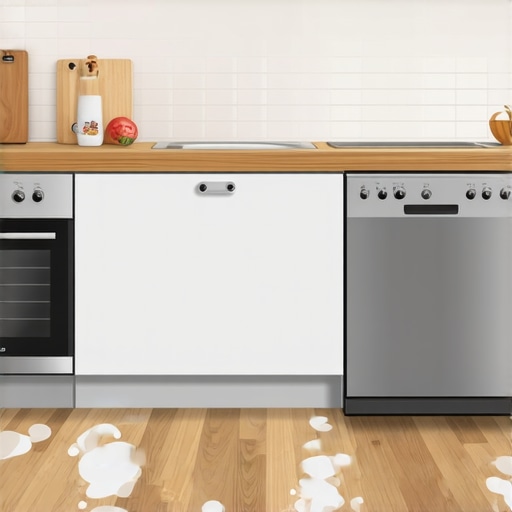
I have spent twenty five years on my knees with a moisture meter and a level. I have seen every way a floor can fail. Usually it starts with a homeowner buying a box of cheap laminate because the packaging had a picture of a duck on it. They think waterproof means indestructible. It does not. Last month I walked into a kitchen where the floor was cupping so badly it looked like a potato chip. The owner was blaming the manufacturer. I looked at his dishwasher. It was an old unit with a failing seal. Every time it ran, it released a cloud of steam. That steam was migrating into the joints of the floor. Because the installer did not leave a proper expansion gap at the perimeter, the floor had nowhere to go but up. It will buckle. It is physics. You cannot argue with the expansion of cellulose fibers when they meet water vapor. I smelled the familiar scent of damp sawdust and floor wax as I started the tear out.
The physics of the dishwasher humidity zone
Laminate flooring failures near dishwashers occur because of concentrated vapor pressure and capillary action within the HDF core. High density fiberboard is a composite material held together by resins. When steam from a dishwasher cycle hits the floor, moisture is pulled into the microscopic gaps between the planks. This is the vapor pressure at work. Once the water enters the core, the cellulose fibers begin to swell, leading to edge peaking or bubbling. This process is often irreversible because the resins have been compromised. The environment under a dishwasher is a micro-climate of high heat and high humidity. Most installers fail to seal the cut edges of the laminate in this specific zone. When you leave an unsealed edge near a heat source that vents steam, you are inviting disaster. The moisture does not just sit on top. It finds its way into the tongue and groove system where it sits and rots the core. It is not a matter of if it will fail, but when.
“A floor is only as good as the subfloor beneath it; deflection is the enemy of every joint.” – Master Flooring Axiom
The chemistry of laminate core expansion
Standard laminate cores consist of wood fibers bonded with urea-formaldehyde or melamine-formaldehyde resins. These resins are water resistant to a point, but they are not water proof. When we talk about HDF density, we are looking at how many pounds per cubic foot the material weighs. A higher density core resists moisture longer because there is less room for water to move. However, even the best 12mm laminate will eventually succumb to hydrostatic pressure if the subfloor is damp. The molecular structure of wood is designed to move water. Even when ground into dust and glued back together, those fibers retain their hygroscopic nature. They want to reach equilibrium with the surrounding air. If your kitchen air is at sixty percent humidity because of the dishwasher, the floor will expand to match it. If the floor is locked under a heavy kitchen island, it cannot expand outward. It must expand upward. This is why floor leveling is so important. A dip in the subfloor creates a pocket where moisture can collect and sit against the bottom of the laminate for days.
| AC Rating | Traffic Level | Typical Use Case |
|---|---|---|
| AC1 | Very Light | Guest bedrooms only |
| AC2 | Moderate | Dining rooms and dens |
| AC3 | General | All residential areas |
| AC4 | Heavy | Kitchens and light commercial |
| AC5 | Extreme | Busy retail stores |
The subfloor secret no one tells you
Subfloor flatness is the single most important factor in preventing joint failure in laminate and LVP products. Most guys skip the leveling compound. They think the underlayment will hide the dip. It won’t. I spent three days grinding concrete on a job last month just so the floor wouldn’t click like a castanet. If the subfloor has a dip greater than one eighth of an inch over ten feet, the locking mechanism of the laminate will be under constant stress. Every time you walk over that spot, the tongue moves inside the groove. This creates friction. Over time, that friction wears down the protective wear layer and the melamine seal. Once that seal is gone, the core is exposed. Now, when the dishwasher vents its steam, the floor is wide open to absorb it. It is like a sponge with a hole in the plastic wrap. You must ensure the moisture barrier is taped correctly at every seam. I use a 6-mil poly film on all concrete slabs. If you skip this, the vapor coming up from the ground is just as dangerous as the steam from the dishwasher. It is a pincer movement against your investment.
The 1/8 inch that ruins everything
Expansion gaps at the perimeter of the room are the lungs of a floating floor system. If you pin the floor against the drywall or under a heavy cabinet, you are killing its ability to breathe. A laminate floor is always moving. It expands in the summer and shrinks in the winter. If there is no gap, the floor hits the wall and starts to tent. I see this often in carpet install transitions where the tack strip is nailed too close to the laminate edge. The floor needs at least a quarter inch of space. I prefer three eighths in larger rooms. Most people hate the look of quarter-round molding, but it exists for a reason. It hides the gap that keeps your floor flat. If you are worried about moisture near showers or dishwashers, you must use a 100 percent silicone sealant in the expansion gap. This prevents liquid water from getting under the floor while still allowing the floor to move. It is a simple step that nine out of ten DIY installers skip. They think the baseboard is enough protection. It is not. The baseboard is just for show. The silicone is the actual engineering solution.
“Every installation must begin with a moisture test of the substrate regardless of the product being installed.” – National Wood Flooring Association Standard
A checklist for a permanent fix
Fixing a bubbling floor requires a systematic approach to moisture management and structural integrity. You cannot just sand down a laminate floor like you can with solid oak. Once it bubbles, the structural integrity of the HDF is gone. You have to replace the affected planks. Before you do that, you must address the source of the moisture. Check the dishwasher door seal. Check the kickplate for signs of water. Ensure your subfloor is flat within the NWFA specifications. If you are starting fresh, follow these steps to ensure the floor lasts twenty years instead of two.
- Verify subfloor flatness is within 1/8 inch over a 10 foot radius
- Apply a 6-mil vapor barrier over all concrete substrates
- Acclimate the laminate in the room for at least 48 hours before opening boxes
- Leave a 3/8 inch expansion gap around all vertical obstructions
- Seal all perimeter gaps in wet areas with 100 percent silicone sealant
- Use a moisture meter to verify the subfloor is below 12 percent MC for wood or 3 lbs for concrete
The hard truth about hardwood versus laminate
Choosing a floor for a kitchen requires an honest assessment of your lifestyle and the local climate. While laminate is durable against scratches, it is vulnerable to moisture at the seams. If you live in a high humidity area like Houston, the air alone can cause cheap laminate to swell. Solid wood is beautiful, but it is a living thing. It reacts to every change in the environment. For kitchens, an engineered core with a waterproof top layer is often the safest bet for most homeowners. It gives the stability of plywood with the look of real wood. Regardless of what you choose, the preparation is the same. You cannot build a house on sand, and you cannot lay a floor on a rolling subfloor. Take the time to grind the high spots. Take the time to fill the low spots. If the floor clicks when you walk on it, the installer failed you. A good floor should be silent, flat, and stable. Anything less is just a temporary covering. Finally, pay attention to the mil-thickness of your wear layer. A 20-mil wear layer on an LVP or a high-quality melamine layer on laminate is the difference between a floor that lasts through three kids and a dog or one that looks like trash in eighteen months. Protect the joints, manage the moisture, and leave the expansion gaps alone. That is how you win the flooring game.”