Why Your Garage Door Installation Will Fail Without a Level Concrete Floor
Why Your Bay Area Garage Doors Installation Will Fail Without a Level Concrete Floor
Meta Description: Expert guide on why level concrete is vital for garage door repair bay area. Avoid mechanical failure, water damage, and pests with Lynn Lenardon’s tips.
You have spent weeks browsing catalogs, comparing R-values, and selecting the perfect carriage-house style or modern glass-panel design for your home. The investment is significant – often several thousand dollars – and you expect the result to be a seamless, quiet, and secure addition to your home. However, as a veteran technician specializing in bay area garage doors, I have seen countless homeowners in San Francisco and Burlingame face a heartbreaking reality: their brand-new door looks broken on day one. The culprit isn’t the door, the tracks, or the installation team. It is the concrete beneath it.
When we talk about garage door repair bay area, we aren’t just talking about fixing a dented panel or a noisy motor. We are talking about the structural harmony between a moving mechanical system and its foundation. A garage door is designed to be a perfectly rectangular “moving wall” that meets a perfectly flat floor. When that floor is uneven, sloped, or pitted, the entire system begins a slow-motion collapse. Whether you are looking to fix garage door issues that have plagued you for years or are planning a fresh installation, you must understand that the floor is the “silent foundation” of your garage’s integrity. Without a level substrate, your door’s lifespan is cut in half, and your repair bills will double.
The Mechanical Domino Effect: Why Leveling Matters
A garage door is a masterpiece of counterbalanced physics. It relies on a delicate equilibrium between the weight of the door and the tension of the springs. When a floor is unlevel – even by as little as half an inch across an eight-foot span – it throws the entire geometry of the system out of alignment. This is where the mechanical domino effect begins, often leading to a cycle of garage door cable replacement and premature wear.
Consider what happens when the door closes on an uneven floor. One side of the door hits the concrete first. The other side, seeking the floor, continues to travel downward. This creates a “racked” door. In this state, the horizontal tracks are no longer parallel, and the vertical tracks are under immense lateral pressure. This misalignment is the primary cause for garage door cable repair. When one side of the door is higher than the other, the cable on the “low” side loses tension. This slack allows the cable to “jump” the drum – a common cause for an emergency garage door repair call. Once a cable is off the drum, the door can become wedged in the tracks, creating a dangerous situation that requires professional intervention.
Furthermore, the tension system suffers immensely. Most residential doors in the San Francisco area utilize torsion springs. These springs are wound to a specific torque to lift the door’s weight evenly. If the door is resting unevenly, the weight distribution on the springs is lopsided. Over time, this leads to the need for garage door spring replacement much sooner than the standard 10,000-cycle rating. If you find yourself needing to fix garage door spring issues every few years, the problem likely isn’t the quality of the steel; it’s the fact that the spring on the “heavy” side is doing 70% of the work. This uneven stress leads to metal fatigue and, eventually, a loud “snap” in the middle of the night.
Opener Strain and Electronic Failure
Modern garage door openers are more intelligent than ever, but that intelligence can be their downfall when faced with an unlevel floor. Most high-end openers used in bay area garage doors feature internal sensors that monitor the “force” required to open and close the door. When the floor is uneven, the opener has to work harder to “crush” the bottom rubber seal to close the gap on the high side of the concrete.
This constant over-exertion leads to a frequent need for garage door opener repair. The plastic gears inside many residential units can strip under the added pressure, and the logic boards may trigger a “rebound” effect, where the door hits the floor and immediately reverses because it thinks it has hit an obstruction. Homeowners often try to fix garage door opener issues by turning up the force settings on the motor. This is a dangerous “band-aid” fix. Increasing the force doesn’t solve the floor issue; it simply forces the motor to strain against the resistance until the motor windings burn out or the rail bows. This often turns a simple maintenance task into an urgent garage door repair scenario where the homeowner is trapped inside or outside their garage.
Even in commercial garage door repair settings, where openers are industrial-grade, an uneven floor can lead to the “limit switches” failing. If the door never reaches its programmed “closed” position because the floor is too high on one side, the motor will continue to push, potentially bending the top section of the door or pulling the opener bracket out of the wall.
Environmental and Structural Consequences
Beyond the mechanical failures, an uneven floor creates an environmental breach in your home. The garage door is the largest opening in your house’s thermal envelope. If there is a gap between the door and the floor, you are essentially leaving a window wide open 24/7. This has several major consequences for Bay Area homeowners:
- Water Ingress: San Francisco is known for its driving rains and fog. If your floor slopes toward the interior or has “dips,” water will pool under the door. This leads to standing water, which can rot the bottom of wooden doors or cause rust on steel doors. More importantly, it creates a breeding ground for mold and mildew.
- Pest Entry: A rodent only needs a gap the size of a quarter (about 1/4 inch) to enter your home. If your floor is uneven, the rubber seal cannot compress enough to block these entry points. Rats and mice see a gap in a garage door as an invitation to your pantry.
- Energy Loss: According to data from Garadry, a well-sealed garage door can significantly improve the energy efficiency of the adjacent rooms. An unlevel floor allows conditioned air to escape and cold drafts to enter, driving up utility bills in Burlingame and San Mateo homes.
- Debris: Blown-in dirt, leaves, and street dust will find their way through the smallest gaps, keeping your garage floor perpetually dirty regardless of how often you sweep.
Diagnostic Tests: Is Your Floor the Problem?
Before you call for garage door repair bay area, you can perform a few simple DIY tests to determine if your concrete is the root of your problems. Many homeowners assume their door is “crooked,” but usually, the door is straight and the world is crooked.
The ‘Flashlight Check’ for High Spots
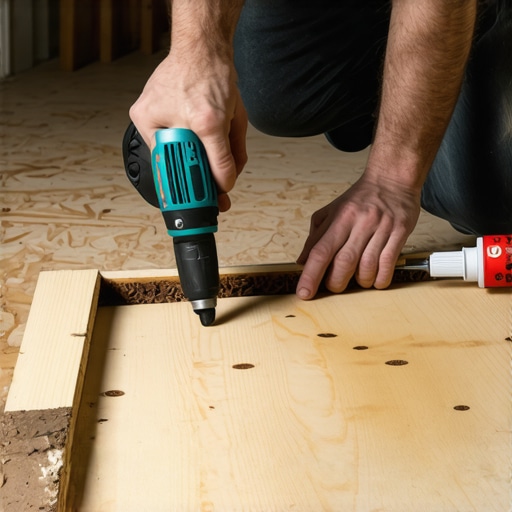
Wait until evening or dim the lights in your garage. Close the garage door completely. Take a high-powered flashlight and lay it on the floor inside the garage, about five feet back from the door. Shine the beam toward the bottom seal. If you see light “bleeding” through to the driveway, you have a dip. To find the specific high spots that are preventing the door from seating, use The ‘Flashlight Check’ for Finding High Spots in New Subfloors. By moving the light along the perimeter, you can map out exactly where the concrete rises and falls.
The ‘Marble Test’ for Hidden Dips
If you suspect your floor isn’t just unlevel but is actually “wavy,” you can adapt a trick from interior flooring experts. While originally intended for kitchens, applying The ‘Marble Test’ for Finding Hidden Dips in Your Kitchen Floor to your garage floor is the fastest way to see where water will pool. Simply place a handful of marbles at various points near the door opening. If they all roll toward the same spot, you have a low point that will collect rain and debris.
Solutions: How to Fix an Uneven Garage Floor
If your diagnostic tests reveal that your floor is the culprit, don’t despair. You don’t necessarily need to rip out the entire driveway. There are several ways to fix garage door gaps by addressing the substrate.
Exterior-Grade Leveling Compounds
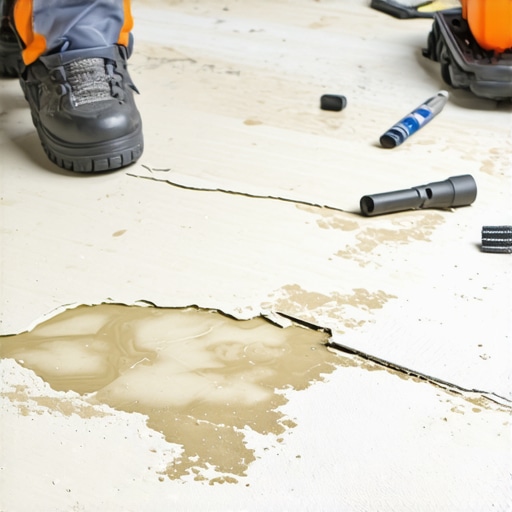
For minor gaps (less than 1 inch), an exterior-grade self-leveling compound like Ardex K 301 is an excellent solution. Unlike interior levelers, these are designed to withstand freeze-thaw cycles and the weight of a vehicle. However, preparation is everything. Understanding The Secret to Making Floor Leveler Stick to Old Concrete Subfloors is vital because garage concrete is often contaminated with oil, grease, and tire residue. If the concrete isn’t etched or primed correctly, the leveler will simply pop off the first time you drive over it.
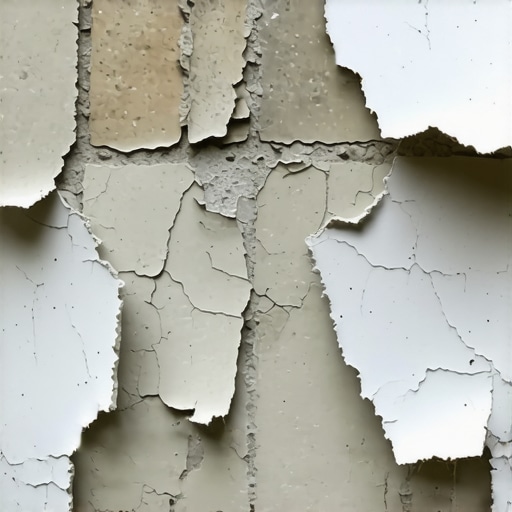
If you skip the primer or use the wrong product, you’ll find out Why Your Floor Leveler Turned Into Peeling Chalk after the first time you drive a heavy SUV over it or experience a heavy Bay Area rainstorm. High-traffic areas require high-strength, polymer-modified cements that bond at a molecular level to the old slab.
The ‘Sanding Hack’ for Precision
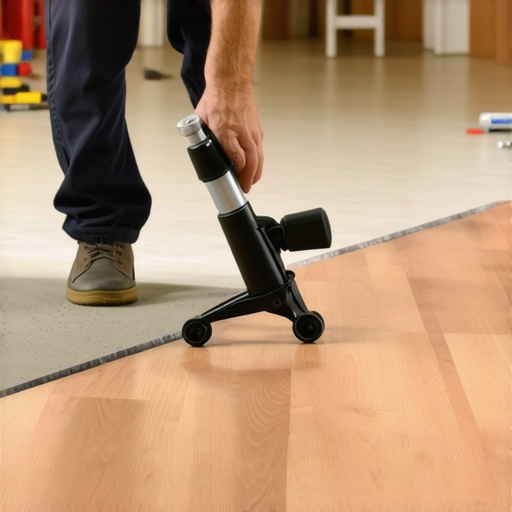
Once you have applied a leveler, you might still have a few “burrs” or slight ridges. If your repair job leaves a small ridge, use The ‘Sanding Hack’ for Fixing High Spots in Concrete Floor Leveler to ensure the rubber gasket makes a 100% airtight seal. A smooth, flat transition is the difference between a door that lasts 20 years and one that needs urgent garage door repair every spring.
Structural Solutions: Slab Jacking
If your floor has dropped significantly on one side (more than 2 inches), it may be a sign of soil settlement – a common issue in the San Francisco Bay Area due to our unique geography. In these cases, “poly-jacking” or slab jacking is required. This involves injecting a high-density polyurethane foam under the slab to lift it back to its original position. This is often more cost-effective than a full concrete replacement and provides a permanent fix for your bay area garage doors.
Conclusion: Invest in the Foundation, Not Just the Door
A garage door is only as good as the floor it rests upon. You can buy the most expensive, high-tech door on the market, but if your concrete is uneven, you are effectively buying a headache. The mechanical strain on the cables, the torsion springs, and the opener motor will eventually lead to a breakdown. Whether it’s a garage door cable replacement in the middle of a workday or a garage door spring replacement that leaves your car trapped on a Monday morning, these “emergencies” are often preventable by addressing the floor first.
At Floorcraft, we believe in doing the job right the first time. Don’t let a bad floor ruin a $3,000 door. If you are noticing gaps, hearing strange noises, or seeing light under your door, it’s time for a professional assessment. For expert garage door repair bay area, contact Lynn Lenardon at Floorcraft. We service Burlingame, San Francisco, and the surrounding regions, ensuring your door – and your floor – are in perfect harmony.
Call us today for a comprehensive inspection before your next installation. Your garage door deserves a level playing field.