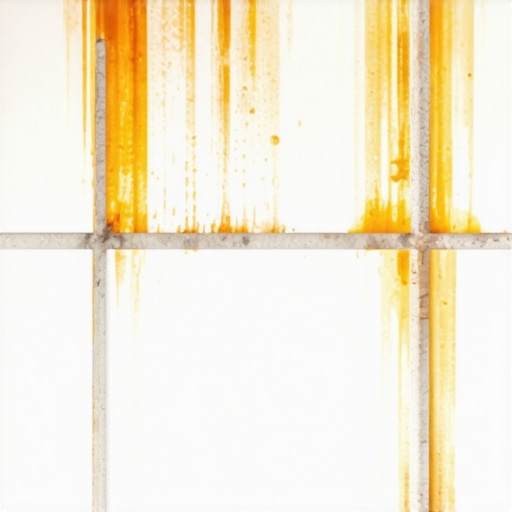
Why Your Bathroom Grout Is Turning Orange Despite Frequent Cleaning
I have spent twenty five years on my knees with a moisture meter and a level. I know the smell of wet concrete better than I know the scent of my own home. My hands are permanently stained with the dust of a thousand oak planks and the grit of modified thin set. When I walk into a bathroom and see orange grout, I do not see a dirty homeowner. I see a chemical failure. Most guys skip the leveling compound. They think the underlayment will hide the dip. It won’t. I spent three days grinding concrete on a job last month just so the floor wouldn’t click like a castanet. That same attention to detail is missing in your shower. You think you are cleaning. You are actually feeding a biological machine. People treat flooring like a cosmetic choice. It is a structural engineering challenge. If you ignore the physics of the subfloor or the chemistry of the water, the surface will fail every single time. That orange tint is a warning sign that your installation is working against you.
The biological reality of Serratia marcescens
Serratia marcescens is the airborne bacteria responsible for the pink and orange film that develops on porous grout lines, shower tiles, and silicone caulk. This organism thrives on fatty acids found in soap scum and shampoo residues, utilizing the moisture-rich environment of tiled showers to colonize quickly. This is not mold. It is a gram-negative proteobacterium. It does not need light to grow. It only needs a damp surface and a food source. Most people scrub the orange away with a brush, but they leave the microscopic roots deep inside the cementitious pores of the grout. Within forty eight hours, the colony has rebuilt itself. It is a cycle of biological persistence that frequent surface cleaning cannot break because the grout itself is acting as a petri dish. If your floor leveling was done poorly and water pools in the corners, you are essentially building a nursery for this bacteria.
Iron deposits and the oxidation trap
Iron bacteria and dissolved minerals such as manganese or ferric oxide in your water supply often cause orange grout discoloration through a process of oxidation. When hard water sits on a porous surface, the oxygen in the air reacts with the minerals, leaving behind a rust-colored stain that binds to the cement binder of the grout. This is common in homes with well water or aging galvanized pipes. You can scrub until your knuckles bleed, but you are trying to fight a chemical bond with mechanical force. The mineral is no longer on the grout. It is part of the grout. This is why a carpet install in a basement with high iron moisture smells like a junkyard. The same physics applies to your bathroom. If you do not address the water chemistry at the source, your grout is doomed to be a filter for every mineral in your plumbing.
“A floor is only as good as the subfloor beneath it; deflection is the enemy of every joint.” – Master Flooring Axiom
The failure of standard grout sealing
Grout sealers are often misapplied or worn away, leaving the cementitious material vulnerable to capillary action that pulls orange pigmented water deep into the substrate. A penetrating sealer must reach a specific saturation point to be effective, yet most DIY applications are far too thin. When the sealer fails, the grout becomes a sponge. I have seen guys use the cheapest sealer at the big box store and wonder why their showers look like a rust bucket six months later. You need a high solids content fluoropolymer sealer. Without it, the water moves through the grout like a highway. If the floor leveling underneath isn’t perfect, the water won’t move toward the drain. It will sit. It will soak. It will stain. The molecular structure of the grout is wide open to every contaminant that hits the floor.
How floor leveling impacts drainage and staining
Subfloor leveling and pre-slope adjustments are critical for shower drainage because low spots allow stagnant water to collect and oxidize grout joints. If the shower pan has a deviation of even 1/8 inch, the surface tension of the water will prevent it from reaching the drain assembly. This standing water is where the orange bacteria and minerals settle. I tell my apprentices that a level is more important than a tile saw. If you don’t get the pitch right, the floor is a failure before the first tile is set. We use self-leveling underlayment for a reason. It creates a flat plane that ensures gravity does its job. When you see orange grout only in certain spots, check the level. You will likely find a birdbath where water is dying to stay.
The comparison of flooring materials and moisture resistance
| Material Type | Porosity Level | Moisture Resistance | Stain Vulnerability |
|---|---|---|---|
| Cement Grout | High | Low | Very High |
| Epoxy Grout | Zero | Extreme | Very Low |
| Laminate Flooring | Moderate | Low | High (Swelling) |
| Solid Oak | High | Very Low | Extreme |
As the table shows, the choice of material dictates the maintenance. While many homeowners love the look of a traditional tiled shower, they do not realize they are buying a high-maintenance engine. Compared to a laminate floor, which would simply disintegrate in a shower environment, tile is durable but chemically active. The grout is the weak link.
The science of grout and why it fails
Cementitious grout is a calcium silicate based material that remains chemically reactive long after the initial cure, making it prone to ion exchange with hard water minerals. This is the molecular zooming that most people miss. The grout is not a solid rock. It is a microscopic forest of crystals with massive amounts of air space in between. When you wash your hair, the fats and proteins fill those gaps. Then the Serratia marcescens arrives to eat. Then the iron in your water oxidizes. It is a perfect storm of failure. This is why I am a stickler for epoxy grout in high moisture areas. Epoxy does not have those pores. It is a plasticized bond that seals the joint completely. It is harder to install, and it costs a lot more, but it stops the orange ghost in its tracks.
“Cementitious grout is a porous structure that acts as a filter for minerals and biological agents.” – TCNA Handbook Insights
The ghost in the expansion gap
Expansion gaps and perimeter joints in a shower enclosure are often filled with caulk that traps moisture behind the tile assembly, leading to wicking and orange bacterial blooms. If the installer did not leave the proper 1/4 inch gap at the transition, the movement of the house will crack the grout. Once it cracks, the water goes behind the tile. Now you have a moisture reservoir that you can never clean. It sits back there and rots. You see orange on the surface, but the real party is happening on the backer board. This is why waterproof membranes are not optional. If you are seeing orange grout, check your corners. If the caulk is peeling, the bacteria has a direct route to the dark, wet space behind your walls.
A checklist for preventing orange grout
- Install a whole house water softener to remove iron and manganese at the entry point.
- Squeegee the shower walls and floor after every single use to remove the food source for bacteria.
- Use a pH neutral cleaner to avoid stripping the protective grout sealer during maintenance.
- Inspect the integrity of the grout joints annually for micro cracks or signs of deflection.
- Switch to a synthetic shower puff instead of a natural loofah which harbors high levels of bacteria.
- Ensure the bathroom fan is rated for the square footage and runs for twenty minutes post shower.
The 1/8 inch that ruins everything
Precision spacing between tiles determines the structural integrity of the grout joint, as narrow joints are harder to pack with grout and more likely to trap orange residues. If the joint is too thin, the grout is just a superficial layer. It will flake out. If the joint is too wide and you didn’t use sanded grout, it will shrink and crack. I have seen beautiful showers ruined because someone wanted 1/16 inch joints but didn’t have the subfloor level enough to support it. Any movement in the house will snap those thin lines. Once they snap, the orange minerals move in. It is a game of millimeters. You cannot cheat the physics of a floor. If you want a floor that stays white, you have to build it to be waterproof from the slab up.
The final word on grout health
The orange stains in your bathroom are a symptom of a deeper issue. It is either your water chemistry, your cleaning habits, or a fundamental flaw in the installation. Most homeowners want a quick fix. They want a magic spray. There is no magic spray for poor engineering. If you have iron in your water, you need a filter. If you have bacteria in your grout, you need a steam cleaner and a better sealer. If your floor is holding water because the installer skipped the leveling compound, you might be looking at a tear out in five years. Do not treat your floor like a rug. Treat it like the foundation of your home. It deserves that level of respect. Stop scrubbing the surface and start looking at the molecular reality of what is happening under your feet.