Why You Should Never Use Bleach on Your Shower Grout
I spent three days grinding concrete on a job last month just so the floor wouldn’t click like a castanet. That is the level of precision required for a professional install. Most guys skip the leveling compound and think the underlayment will hide the dip. It won’t. I carry that same obsession into every corner of the bathroom. When I walk into a house and smell that sharp, stinging scent of chlorine in the shower, I know I am looking at a floor that is dying from the inside out. Homeowners think they are sanitizing. In reality, they are performing a chemical lobotomy on their grout lines. I once saw a twenty thousand dollar marble walk-in shower where the grout had turned to soft mush. The owner had been scrubbing it with straight bleach for three years. The bleach had eaten the binders in the Portland cement so badly that you could scrape the grout out with a fingernail. It is a heartbreak that could have been avoided with a little chemistry and a lot less aggression.
The molecular erosion of Portland cement
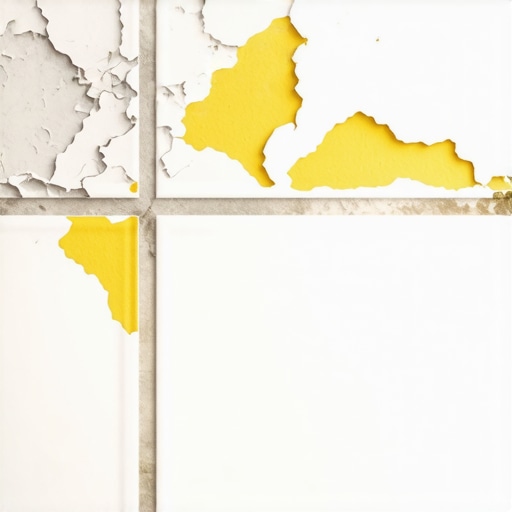
Grout is a porous, cement-based material that relies on a specific chemical bond to maintain its structural integrity and water resistance. When you apply sodium hypochlorite, which is the active ingredient in bleach, you are introducing a high-pH alkaline substance that reacts violently with the mineral salts in the grout. This process causes the calcium carbonate to break down at a microscopic level. It is not just about the color fading. It is about the loss of mass. The bleach penetrates the tiny capillaries of the grout and begins to dissolve the very glue that holds the sand particles together. Over time, this creates a series of micro-voids. These voids are the perfect breeding ground for the very mold you were trying to kill in the first place. You are essentially turning your grout into a sponge that sucks up moisture and holds it against the thin-set and the waterproofing membrane.
The physics of capillary water transport
Water moves through grout via capillary action, and bleach-damaged grout accelerates this process by increasing the size of internal pores. When the grout is healthy and sealed, water beads on the surface or moves slowly through the matrix. Once bleach has etched the surface, the surface area increases ten-fold. This allows water to stay in the joints long after the shower has been turned off. This moisture eventually reaches the substrate. If your installer used a cheap cement board without a proper liquid-applied membrane, that water is going to find your subfloor. I have seen countless cases where a shower leak was blamed on a bad pan, but the real culprit was grout that had been dissolved by cleaning products. This moisture then migrates to the adjacent rooms. I have pulled up soaked carpet and warped laminate in hallways that were five feet away from a shower because the grout failed. The moisture travels through the floor leveling compound like a highway, rotting the house from the ground up.
| Cleaner Type | pH Level | Effect on Grout |
|---|---|---|
| Commercial Bleach | 11 to 13 | Severe mineral erosion and pigment stripping |
| Vinegar Solution | 2 to 3 | Acidic etching of cementitious binders |
| pH-Neutral Cleaner | 7 | Safe for long-term structural integrity |
| Oxygenated Bleach | 10 | Moderate risk if used in high concentrations |
“A floor is only as good as the subfloor beneath it; deflection is the enemy of every joint.” – Master Flooring Axiom
The ghost in the expansion gap
Structural movement in a house is inevitable, and grout must remain dense enough to resist the minor shifts in the framing. When bleach weakens the grout, it loses its compressive strength. This leads to hairline cracks at the change of plane, such as where the wall meets the floor. Many people try to fix this by adding more grout or, worse, more bleach. In a professional shower install, those corners should be 100 percent silicone caulk to allow for movement. But in the field of the floor, the grout is your line of defense. If you weaken that defense, you are inviting water to sit in the thin-set. This can lead to a condition called efflorescence, where white, crusty salts bloom on your tile. This is not just an aesthetic issue. It is a sign that minerals are being leached out of your setting materials. It is the same reason we tell people to never put laminate in a full bathroom. The risk of moisture hitting the HDF core is too high. Your shower grout is the only thing standing between a humid bathroom and a rotted joist.
How to protect your investment for decades
Maintaining a shower requires a gentle approach that preserves the chemical seal and the physical density of the cement. Instead of reaching for the bleach bottle, you should be looking at pH-neutral cleaners or specialized oxygen-based powders that do not have the same corrosive profile. You also need to realize that grout is not a permanent, maintenance-free product. It needs to be sealed every year, especially if it is in a high-use area. A good penetrating sealer fills those microscopic pores so that mold cannot take root. This makes the bleach unnecessary. If you have already used bleach and your grout feels chalky or soft, the damage is likely done. You may need to scrape out the top eighth of an inch and re-grout. It is a tedious job, but it is cheaper than a full mold remediation. Most people think they are being clean, but they are just being destructive.
- Use a soft-bristled brush instead of a wire brush to avoid scratching the tile glaze.
- Rinse all cleaning agents thoroughly with warm water to prevent chemical buildup.
- Squeegee the walls after every shower to reduce the amount of standing water on the grout.
- Verify that your bathroom fan is actually moving air to lower the ambient humidity quickly.
- Check the integrity of the caulking in the corners every six months without fail.
“Proper maintenance is the silent partner of a quality installation.” – TCNA Handbook for Ceramic Tile Installation
The truth about waterproof flooring claims
Many homeowners believe that modern materials are indestructible, but chemistry always wins over marketing. Whether it is a carpet install in a basement or a luxury vinyl plank in a kitchen, every material has a weakness. For shower grout, that weakness is oxidation and acid. Even the most expensive epoxy grouts can be damaged by the wrong chemicals. We see this in the floor leveling industry too. If you use the wrong primer or the wrong cleaning agent on a slab, the bond fails. The same logic applies to your shower. You have to treat the materials with the respect their chemistry demands. If you treat your grout like a sidewalk, it will end up looking like one. Keep the bleach for your whites and keep it far away from your tile if you want your bathroom to last another twenty years. The health of your subfloor depends on the decisions you make with a spray bottle today.