The ‘Spray Bottle’ Hack for Testing Your Shower Grout Sealant
I once walked into a house where a fifteen thousand dollar wide-plank walnut floor was cupping so bad it looked like a potato chip because the installer didn’t check the crawlspace humidity, and it reminds me of why people fail at shower maintenance. They think a shower is a waterproof box. It isn’t. I spent thirty years fixing bathrooms where the homeowners thought their expensive tile was a shield. It is a sieve. Last month, I spent three days grinding concrete on a job just so the floor wouldn’t click like a castanet, and that same level of detail must be applied to your grout joints. If you don’t understand the chemistry of what is happening under your feet, you are just waiting for a structural disaster. My hands smell like WD-40 and oak dust even when I am at the dinner table. That is the price of knowing how things actually work. Most guys skip the leveling compound and most homeowners skip the sealant test. Both are crimes against the trade.
The structural myth of waterproof tile
Tile and grout are not inherently waterproof systems. They serve as a decorative and wear-resistant veneer over a waterproofing membrane. If that membrane is compromised or if the grout is not sealed, water will penetrate the substrate through capillary action, leading to mold, mildew, and subfloor rot over time.
You have to understand the microscopic reality of Portland cement. Grout is a porous material. When you mix that powder with water, it creates a chemical reaction that leaves behind a network of tiny tunnels. These are called capillary voids. Water is a polar molecule. It loves to climb through those voids. If you do not block those paths with a high-quality sealer, you are essentially inviting moisture to sit against your backer board or your mud bed. This is where the physics of the installation takes over. Most people focus on the color of the grout. I focus on the density of the mix. A sloppy, watery grout mix will have more voids than a stiff, properly mixed one. This means your sealant has to work ten times harder to do its job. It will fail. It will rot. Your subfloor does not care about your tile choice. It only cares about the water that reaches it.
“A floor is only as good as the subfloor beneath it; deflection is the enemy of every joint.” – Master Flooring Axiom
Why your grout is essentially a hard sponge
Grout behaves like a hard sponge because of its high porosity. Unless it is a high-performance epoxy grout, it will absorb liquids, oils, and bacteria. Proper sealing creates a hydrophobic surface that forces water to bead rather than soak into the internal structure of the cementitious matrix.
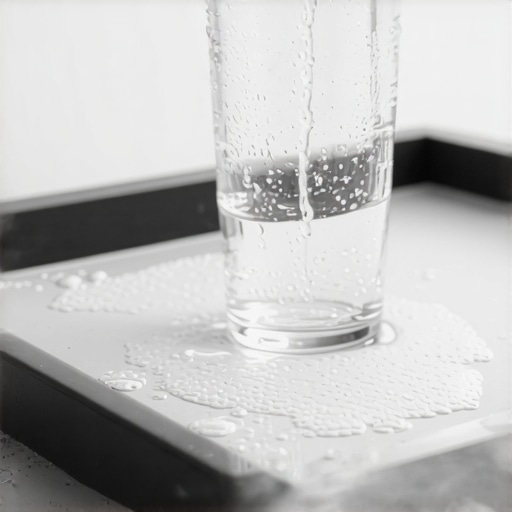
Think about the molecular level. Water has surface tension. When water hits a porous surface like unsealed grout, the surface energy of the grout is higher than the surface tension of the water. The water is pulled in. When you apply a penetrating sealer, you are using silanes or siloxanes to line those capillary tunnels. These chemicals lower the surface energy of the grout. Now, the water molecule sees the grout and wants to stay away from it. It pulls itself into a bead. This is not just about looks. This is about preventing hydrostatic pressure from pushing moisture into the wall cavity. If you have carpet install jobs happening near a bathroom, that moisture can wick right through the subfloor and ruin the tack strips and the pad in the next room over. I have seen laminate floors three rooms away buckle because a shower pan was leaking through the grout joints for six months straight.
The simple physics of the spray bottle test
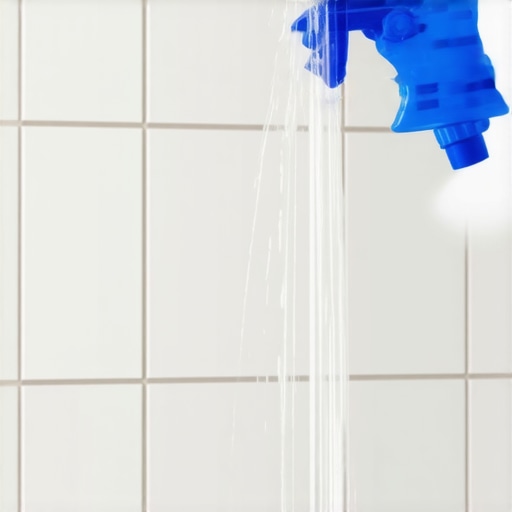
The spray bottle test is a method to verify the integrity of a grout sealant. By misting a small amount of water onto the grout line and observing the reaction, you can determine if the sealant is still active or if the grout has become absorbent again.
It is the simplest tool in my bag. You take a standard spray bottle filled with clean, room-temperature water. You hit the grout lines in the high-traffic areas of the shower. Look at it. Does the water sit on top like a diamond? Or does the grout turn dark immediately? If the grout darkens, the water has entered the pores. That is a failure. You are essentially looking at the difference between a waxed car and an old rusted truck. The physics of the bead tells you everything you need to know about the chemical bond of the sealer. I do this on every floor leveling job where we are transitioning into a wet area. If the bathroom floor is not sealed, my leveling work in the hallway is at risk from the moisture migration. People think I am being paranoid. I call it being professional.
Chemical reality of penetrating sealers
Penetrating sealers are different from topical coatings because they live inside the grout. Topical sealers sit on the surface like a plastic film and can peel or yellow, while penetrating sealers chemically bond to the internal structure of the grout to provide long-lasting protection.
I have a deep distrust of anything that says it is a one-step solution. Real protection comes from chemistry that understands the substrate. A silane-based sealer is small enough to get deep into those pores I talked about. An acrylic topical sealer is just a band-aid. It will wear off under the friction of your feet or the acidity of your shampoo. When you use a penetrating sealer, you are making the grout itself water-resistant from the inside out. You have to wait for the grout to be completely dry before you apply it. If there is moisture in the pores, the sealer cannot get in. It is like trying to put more people on a crowded bus. It won’t work. You need a dry bus. That means no showers for at least twenty-four to forty-eight hours before you even think about sealing.
| Grout Type | Porosity Level | Acclimation Time | Sealant Requirement |
|---|---|---|---|
| Sanded Grout | High | 72 Hours | Required every 6-12 months |
| Unsanded Grout | Medium | 48 Hours | Required every 12 months |
| Epoxy Grout | Near Zero | 24 Hours | Never required |
| High-Performance Cement | Low | 72 Hours | Optional but recommended |
The regional climate impact on shower durability
Regional humidity and temperature fluctuations directly affect how quickly a grout sealant degrades. In high-humidity areas like the Gulf Coast, moisture stays on the grout longer, which can break down the chemical bonds of lower-quality sealants faster than in arid climates.
If you are living in the swampy humidity of Houston, your shower never really dries out. That constant state of dampness is a nightmare for sealants. The chemical bonds are under constant attack from microbial growth and mineral deposits. In a place like Phoenix, the dry heat might help the shower dry out, but it also causes more expansion and contraction in the framing of the house. That movement can create microscopic cracks in your grout. The spray bottle hack is even more vital in these extremes. You need to know if your barrier is still intact. I have seen baseboards shrink in the desert until they show a gap, and that same movement happens in your shower floor. If the grout cracks, the sealer is useless. You have to fix the crack first. Then you seal.
“Cementitious grout is a porous material that requires a liquid-applied sealer to meet the performance standards of a water-resistant assembly.” – TCNA Handbook of Professional Standards
Step-by-step checklist for the spray bottle verification
Testing your grout requires a systematic approach to avoid false positives. Follow these steps to ensure you are getting an accurate reading of your grout’s current protection levels.
- Clean the shower surface thoroughly with a pH-neutral cleaner to remove soap scum.
- Allow the grout to dry for at least twenty-four hours to ensure no residual moisture is in the pores.
- Fill a clean spray bottle with distilled water to avoid mineral interference.
- Spray a fine mist over three or four different areas, focusing on the floor and the bottom two feet of the walls.
- Wait five minutes and observe the color of the grout.
- Wipe away the water; if a dark spot remains, your sealant has failed.
Professional alternatives to DIY hacks
While the spray bottle hack is effective for a quick check, professionals use moisture meters for a definitive analysis. A non-invasive moisture meter can detect water trapped behind the tile that a simple surface test might miss.
Sometimes the spray bottle tells you the surface is fine, but the damage is already done. If water has already bypassed the grout and is sitting in the mud bed, it will stay there for weeks. This is how you get that musty smell that won’t go away. I use an electronic moisture meter that can read through the tile. It tells me the percentage of saturation in the wall. If I see a reading of twenty percent or higher, we have a problem that a bottle of sealer won’t fix. At that point, you are looking at a tear-out. Most homeowners wait until the tile starts falling off the wall. By then, the studs are rotten and the subfloor is soft. That is a five-figure mistake. A five-dollar spray bottle could have prevented it if they had used it once a year.
The 1/8 inch gap that ruins everything
Expansion gaps at the perimeter of a tile floor are mandatory for structural integrity. Without these gaps, the natural expansion of the house will cause the tile to tent or the grout to pulverize, regardless of how well it is sealed.
Everything moves. Your house is a living thing. The wood framing expands and contracts with the seasons. If you butt your tile tight against the wall, it has nowhere to go. It will buckle. I see this all the time in cheap laminate and carpet install jobs where the transitions were mitered too tight. In a shower, the joint where the wall meets the floor should never be grout. It should be a 100 percent silicone caulk. Silicone is flexible. Grout is rigid. If you put grout in that corner, it will crack within six months. Water will then bypass your spray-bottle-tested sealer and go straight into the framing. This is the structural reality that people ignore for the sake of aesthetics. I don’t care about aesthetics if the floor is going to rot in five years. You need to be a stickler for the details. Use the right chemistry, understand the physics of the water, and don’t trust a builder-grade finish. Take care of your grout and it will take care of your subfloor.