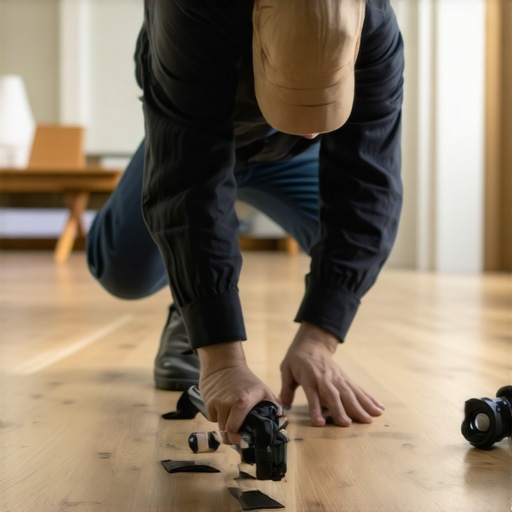
Imagine walking across your living room in the evening, settling into your favorite chair, and suddenly there it is — that unmistakable squeak every time you step. It’s like your floor is protesting your presence, loudly and stubbornly. That’s exactly the moment I realized my laminate flooring’s creak wasn’t just a minor annoyance; it was a sign of underlying issues with my subfloor. The frustration was real, and I knew I had to find a reliable solution fast, especially since I had invested so much in that floor.
Why Does My Laminate Creak? If your laminate flooring starts to squeak, it often means there’s movement between the laminate and the subfloor beneath. Over time, subfloor irregularities, moisture damage, or insufficient leveling can cause these unsettling sounds. At first, I simply ignored it, thinking it was a temporary inconvenience. But the creaks grew louder, and I started to worry about the long-term durability of my entire floor. Fortunately, I discovered that with a few targeted fixes, I could silence those stubborn squeaks and preserve my investment.
What We’ll Tackle Today
In this post, I’ll share four proven strategies that have worked for me and many others to stop laminate creaking. These methods aren’t just quick patches; they address the root causes of the problem, helping ensure your flooring stays smooth and silent for years to come. Whether you’re noticing squeaks from higher traffic areas or throughout your entire space, these fixes can be tailored to your situation. If you’ve faced these symptoms and felt helpless or overwhelmed, stick around — I promise, relief is within reach.
Is Fixing Your Floor Worth the Hassle or Just a Waste?
Early on, I made the costly mistake of believing that a quick, inexpensive fix would do the trick — like just adding some foam pads beneath the laminate. Turned out, that only provided temporary relief. It wasn’t until I learned about proper subfloor assessment and leveling techniques that I finally found a lasting solution. For more info on that, check out [expert advice on floor leveling for laminate flooring](https://floorcraftstore.com/expert-floor-leveling-laminate-flooring-for-lasting-durability).
This experience taught me to be cautious and to get knowledgeable before jumping into superficial solutions. Every home’s flooring needs are unique, and understanding the specific cause of your squeaks can save time and money in the long run.
Now that I’ve shared my story, let’s move on to the practical measures you can implement today to put an end to those pesky creaks once and for all. From assessing your subfloor condition to applying durable fixes, I’ve got you covered with tips rooted in real-world experience.
Assess Your Subfloor Quickly and Effectively
Start by identifying where the creak originates. Walk across your floor and listen carefully—notice if the squeak occurs in specific areas or randomly. Use a flashlight to inspect for uneven spots or cracks in the subfloor—these indicate movement points. I once used a vibration device to pinpoint exactly where the floor moved when I stepped, which made the repair much easier. Proper assessment helps target the fix without unnecessary disassembly.
Secure Loose Boards and Fill Gaps
If you find loose laminate panels or gaps, tighten or glue them down using flooring adhesive and finishing nails. Think of your subfloor like a sandy beach—if individual grains (boards) shift, the whole surface becomes unstable. I pre-drilled small pilot holes to prevent splitting when nailing, then applied a high-quality adhesive to loosened areas. This simple fix often stops squeaks caused by panels rubbing or moving against each other.
Level Uneven Subfloor Surfaces Carefully
Uneven subfloors are like a boat’s hull—any tilt or bump creates noise and instability. Use a long level or straightedge to detect high or low spots. For minor imperfections, apply a self-leveling underlayment. I once poured a small batch of underlayment on a bump, which made a dramatic difference. For larger dips, consider installing a new layer of plywood to create a perfectly flat base. Accurate leveling prevents future creaks and prolongs flooring lifespan. Learn more about floor leveling for laminate.
Apply Lubricant and Use Shims for Tightening
For stubborn squeaks, a spritz of powdered graphite or WD-40 can reduce friction between rubbing surfaces. Spray lightly into cracks or seams while walking over the area to work the lubricant in. In some cases, adding shims behind loose boards or between the subfloor and joists stabilizes movement. I used plastic shims behind a swelling plank, which silenced the noise instantly. Just ensure shims are moisture resistant to prevent mold.
Replace or Reinforce Subfloor When Needed
If all else fails, replacing compromised sections of subfloor is essential. Removing damaged plywood or OSB panels allows you to install new, stable material. Use fasteners designed for floor framing—spiral nails or screws—and torque them to prevent future movement. Think of this like replacing a broken bone; it’s the last resort but guarantees a sturdy foundation. For detailed guidance, review subfloor replacement tips.
Seal and Finish to Prevent Future Problems
Once all repairs are complete, seal gaps with acoustic sealant or caulk to prevent debris and moisture from re-creating instability. A well-sealed floor maintains its integrity and noise-free operation over time. I sealed all joints meticulously, which prevented future squeaks and maintained a quiet, durable surface. Regular inspections and maintenance prolong the life of your flooring investment.
While many homeowners understand the basics of floor leveling, laminate installation, and shower renovations, the real mastery lies in the nuanced details that can make or break your project. A common myth is that simply applying self-leveling compounds guarantees a perfectly flat surface; however, expert installers know that substrate preparation, moisture control, and material compatibility are equally critical. Ignoring these factors often leads to uneven surfaces or future buckling, despite initial appearances. For example, a study by the National Association of Home Builders highlights that improper subfloor preparation accounts for up to 70% of flooring failures, emphasizing the importance of foundational steps. Moreover, many assume that laminate flooring is forgiving and can hide minor imperfections, but in reality, even small deviations can cause squeaks or gaps over time if not properly addressed. When it comes to shower installations, a frequent oversight is neglecting waterproofing details—skimping here can lead to leaks that damage underlying structures and compromise the entire renovation. Advanced installers pay close attention to the sealant types, tile transitions, and vapor barriers, which are often overlooked but essential for longevity. Regarding carpet installation, a less obvious mistake involves improper stretching—insufficient tension can cause wrinkling or uneven wear. Professional-grade techniques involve specific stretching patterns and padding selections that ensure durability and comfort. Recognizing these hidden nuances can save you from costly repairs and frustrations down the line. Are you falling into any of these traps? Let me know in the comments! For deeper insights, check out our guide on floor leveling for lasting durability and ensure your project meets expert standards.When it comes to keeping your flooring investments in top shape, having the right tools and knowledge is crucial. Personally, I swear by a high-quality cordless oscillating multi-tool for detailed work around edges and tight spots; its versatility allows me to sand, cut, and scrape without switching gear, saving me time and effort. For measuring and assessing subfloor flatness, I rely on a long, precision-machined level and a laser scanner—it provides accurate readings that prevent future squeaks or unevenness, which can be costly to fix down the line. Additionally, maintaining a supply of specialized primers and sealants ensures that adhesives bond correctly, especially when dealing with moisture-prone areas like showers or in humid environments. On the software front, I use floor planning apps like RoomSketcher to visualize and map out renovations before committing materials, reducing waste and surprises. Looking ahead, I predict that smart technology, including IoT-enabled moisture sensors and AI-powered surface analyzers, will become standard in flooring maintenance, enabling proactive care and long-term durability. How do I keep my flooring pristine over time? Regular inspections are key—check for signs of moisture intrusion, loose tiles, or gaps, then address them promptly to prevent more extensive damage. Remember, a proactive approach minimizes major repairs and preserves your home’s value. If you’re tackling a leveling project, mastering the use of a self-leveling compound can make a significant difference in ensuring a smooth, durable surface; read our detailed guide on floor leveling for lasting durability. Practice these techniques and tools consistently, and your floors will thank you with years of trouble-free service. Ready to elevate your maintenance game? Start by investing in a quality laser level and integrate regular surface checks into your routine. Over time, you’ll develop an intuitive feel for potential issues before they escalate—saving you both money and stress.
What I Wish I Knew Before Fixing My Floors
One of the biggest lessons I learned was the importance of thorough subfloor assessment—assuming surface fixes alone won’t solve deep issues. I wasted time applying foam padding and adhesives without addressing foundational problems, which only postponed the squeaks. Patience and detailed evaluation are key.
Another insight was realizing that proper leveling isn’t just about smoothing out bumps—it’s about creating a stable, supportive base that prevents future creaks and damage. I now understand that investing in quality tools like a laser level and self-leveling compounds pays off significantly in durability.
Finally, I discovered that small, seemingly insignificant details—like sealing gaps and choosing moisture-resistant shims—can make a big difference over time. Overlooking these nuances risks reintroducing squeaks and instability, turning a quick fix into ongoing maintenance.
Tools and Resources That Changed My Approach
For effective floor leveling, I rely on expert tips on floor leveling for lasting durability, which provides step-by-step guidance on preparing the subfloor correctly. A quality laser level became indispensable for accurately assessing flatness, saving me countless headaches.
To tackle stubborn squeaks, I trust high-quality lubricants like graphite powder, and for reinforcing loose boards, I use reliable plastic shims found in professional-grade stores. These small but vital tools help maintain a quiet and resilient floor surface.
Reading industry blogs and tutorials from trusted sources like FloorCraft has broadened my understanding of best practices, especially regarding moisture management and subfloor materials. Knowledge is power—especially when it comes to long-lasting flooring fixes.
http://Emily%20Carter
This article hits the nail on the head — addressing subfloor issues is so often overlooked when trying to fix squeaky laminate floors. I recently faced a similar problem in my dining room where the creaking was relentless, and after some investigation, I discovered uneven subflooring underneath. What really made a difference was installing a new layer of plywood to create a flat, solid base before placing the laminate. Initially, I tried to just tighten loose panels or add foam underlayments, but that was only temporary. I agree that proper assessment and leveling are essential for long-term silence and stability. My question is, how do others here approach moisture control when installing new subfloors? I’ve read that dampness can cause ongoing issues down the line, and I’d love to hear from those with experience on best practices for moisture barriers or sealants during subfloor prep.