How to Stop Your Cat from Tearing Up the Carpet at the Bedroom Door
The physics of feline destruction at the threshold
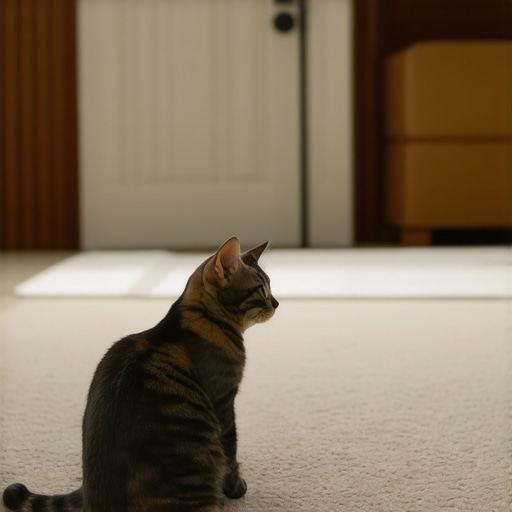
To stop your cat from tearing up the carpet at the bedroom door, you must install a heavy-duty transition strip, apply a localized scent deterrent, or provide an alternative scratching surface like a sisal mat. These interventions work because they disrupt the cat’s ability to hook their claws into the secondary backing of the carpet install, which is the structural foundation of the textile. I spent three days grinding concrete on a job last month just so the floor wouldn’t click like a castanet. It reminded me that most flooring failures, including those caused by pets, start with a lack of respect for the subfloor. When a carpet is loose because the installer skipped the power stretcher, it creates a bubble. A cat senses that lack of tension. They dig because the carpet gives way, providing a satisfying resistance that feels like prey or tree bark. If that carpet was tight enough to bounce a nickel, the cat would have a much harder time getting a grip.
The ghost in the expansion gap
Carpet damage at the door is often a symptom of poor tensioning during the initial carpet install or a subfloor that was never properly prepared with floor leveling compound. When the subfloor has a dip near the bedroom door, the carpet floats over a void. This lack of contact means the backing is vulnerable. I have seen cats strip a carpet down to the subfloor because they could get their entire paw under the edge of the transition. You need to understand the chemistry here. Most carpets use a Styrene-Butadiene Rubber latex adhesive to bond the primary and secondary backings. When a cat scratches, they aren’t just pulling fibers; they are breaking the chemical bond of the latex. In humid climates like Houston, that latex can become slightly more pliable, making it even easier for a cat to destroy a thousand dollars of flooring in a weekend.
“A floor is only as good as the subfloor beneath it; deflection is the enemy of every joint.” – Master Flooring Axiom
The chemistry of the claw and the latex bond
Feline claws are designed to hook into textured surfaces, meaning the tuft bind of your carpet is under constant mechanical stress. The tuft bind is the force required to pull a single loop or cut pile through the carpet backing. High-end carpets have a higher tuft bind, but even the best stuff cannot withstand the repetitive shear force of a ten pound cat. If you are dealing with a cat that has already started the process, the repair involves more than just a patch. You have to look at the tack strip. If the pins on the tack strip are rusted or bent, they won’t hold the tension. I always tell people that a floor is a machine. If one part of the machine, like the transition to the showers or the hallway, is weak, the whole system fails. I have replaced entire rooms because a cat started at the door and eventually delaminated the entire perimeter.
| Material | Durability Rating | Cat Resistance | Repair Complexity |
|---|---|---|---|
| Carpet Install | Low | Very Low | High |
| Laminate | Medium | High | Medium |
| Luxury Vinyl | High | Very High | Low |
| Engineered Wood | Medium | Medium | High |
The 1/8 inch that ruins everything
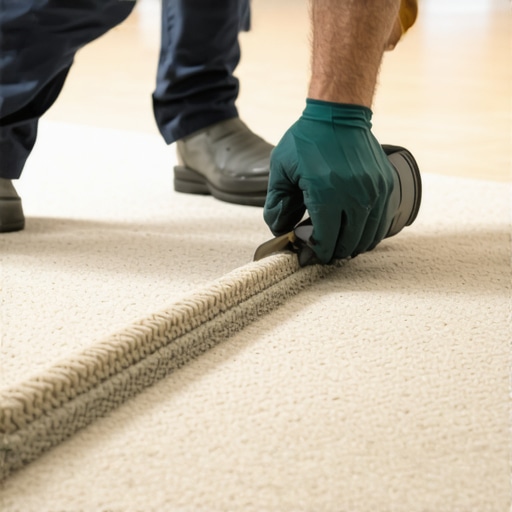
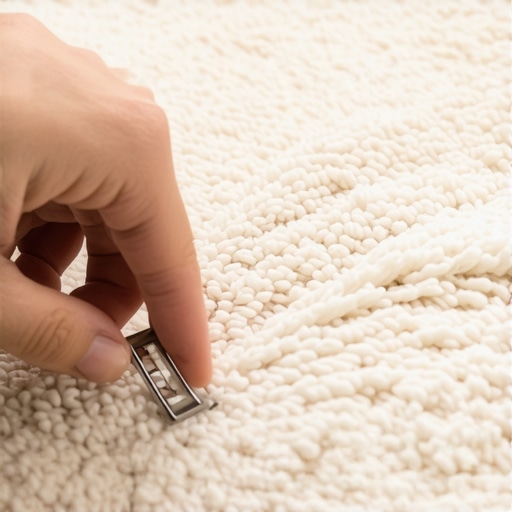
Precision at the door threshold is the only way to prevent a cat from finding the edge of the carpet and pulling it up. Most installers leave too much gap at the door. If that gap is larger than 1/8 inch, it is an invitation for trouble. You want the carpet tucked tight against the transition strip. If you are moving from carpet to laminate, use a Z-bar transition. This metal bar wraps over the edge of the carpet and clamps it down. It hides the raw edge and gives the cat nothing to grab. I have seen guys try to use double-sided tape. That is a joke. The adhesive on that tape will fail in six months, especially if the room is near showers where steam and humidity are constant factors. You need a mechanical bond, not a sticky one.
Why your subfloor is lying to you
A subfloor that looks flat often has microscopic ridges or valleys that prevent the carpet from laying true, which gives pets a physical edge to exploit. If you are planning a replacement, do not skip the floor leveling process. A self-leveling underlayment creates a glass-smooth surface. This ensures that the carpet backing is in 100% contact with the pad and the floor. When there is no air under the carpet, there is no room for a claw to penetrate deep enough to cause a tear. This is the same logic we use when installing large format tile in showers. If the wall isn’t flat, the tile will lip. If the floor isn’t level, the carpet will ripple. Cats love ripples. They are the perfect starting point for a total floor demolition. Do not trust your eyes; trust a ten-foot straightedge.
- Inspect the threshold for any loose carpet fibers and trim them immediately.
- Install a solid brass or aluminum transition strip to guard the carpet edge.
- Check the moisture levels in the subfloor to ensure the adhesive isn’t softening.
- Use a power stretcher to re-tension the carpet if ripples appear.
- Apply a citrus-based deterrent to the carpet near the door frame.
Transitioning to laminate or tile for long term relief
If the cat damage is localized to the doorway, many homeowners find that replacing the carpet in high-traffic areas with laminate is the only permanent solution. Laminate flooring is rated by an AC (Abrasion Class) system. For homes with pets, an AC4 or AC5 rating is non-negotiable. These surfaces are treated with aluminum oxide, making them nearly impossible for a cat to scratch. However, if you switch to laminate, you must ensure the floor leveling is perfect. Laminate is a floating floor. If the subfloor has a dip, the locking mechanisms will flex every time you walk on them. Eventually, those tongues and grooves will snap. This is especially true near bathroom showers where the transition between wet and dry zones must be handled with a moisture-resistant sealant. I once saw a laminate floor peak like a mountain range because the installer didn’t leave an expansion gap near the bathroom door. The humidity from the shower hit the HDF core and it expanded with nowhere to go.
“Deflection in the subfloor is the primary cause of premature floor failure in residential settings.” – TCNA Handbook Standards
Final thoughts on structural pet proofing
The reality is that flooring is an engineered system. You cannot expect a textile to survive a predator’s claws if the installation was subpar from the start. Focus on the tension, the transitions, and the subfloor integrity. If the cat can’t find an edge, the cat can’t start the tear. Stop looking at the carpet as a rug and start looking at it as a structural component of your room. Fix the level, fix the tension, and the scratching stops.