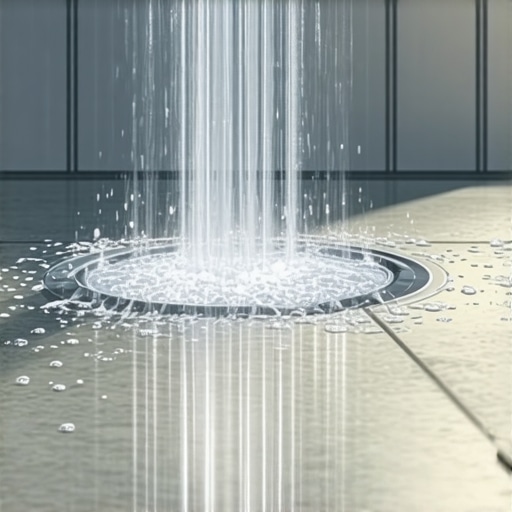
I spent three days grinding concrete on a job last month just so the floor wouldn’t click like a castanet. The homeowner thought they could save a few bucks by skipping the prep work, but they were staring at a subfloor that looked like the rolling hills of Kentucky. Most guys skip the leveling compound. They think the underlayment will hide the dip. It won’t. If you are dealing with a shower transition, that dip is not just an aesthetic problem. It is a hydraulic trap that will funnel every stray drop of water directly under your flooring. I have seen fifteen thousand dollar wide-plank installs ruined in a week because the installer did not understand the physics of a perimeter drain. You can have the best tile in the world, but if your substrate is not dead flat, gravity will win every single time. My knees are shot from forty years of this, but my floors stay dry because I respect the moisture meter more than the blueprint.
The invisible slope that kills your bathroom floor
Floor leveling requires a flatness tolerance of 1/8 inch over 10 feet to prevent hydrostatic pressure from pushing water puddles into the subfloor. Achieving this involves using calcium aluminate based self-leveling underlayment to neutralize deflection. Proper floor prep is the only way to stop moisture migration near showers. When we talk about the physics of a floor, we are talking about the movement of liquid across a plane. If your subfloor has a birdbath, meaning a low spot, it acts as a reservoir. Water does not just sit there. It uses capillary action to climb into the core of your laminate or the primary backing of your carpet install. I have seen high-end laminate swell to twice its thickness because a shower curb leaked just a teaspoon of water a day into a low spot. You have to realize that concrete is a sponge. It looks solid, but at a molecular level, it is a network of pores. If you do not seal those pores and level the plane, you are inviting disaster. I always use a ten-foot straightedge. If I see light under that bar, I am not laying a single plank. You have to grind the humps and fill the valleys until that floor is as flat as a pool table. Only then can you trust that your drainage tests will actually mean something for the longevity of the room.
“A floor is only as good as the subfloor beneath it; deflection is the enemy of every joint.” – Master Flooring Axiom
The flood plane test for structural integrity
The flood test involves plugging the shower drain and filling the basin to the curb height for 24 hours to check for membrane failure. This ASTM standard procedure identifies leaks before the tile or laminate is installed. It is the only way to verify waterproofing. I tell my apprentices that a shower is a localized swimming pool. If you would not trust your basement to hold a thousand gallons of water, why would you trust a shower pan that has not been tested? You plug that drain with a mechanical test plug, not a rag, and you fill it up. I mark the water line with a pencil. If that water drops even a sixteenth of an inch and it is not from evaporation, you have a problem. Usually, it is at the corners or where the specialized tape meets the drain flange. The chemistry of the bonding agent matters here. You are looking for a cross-linked polymer bond that can handle constant immersion. If that bond fails during the test, imagine what it will do in three years when it is buried under three hundred pounds of mortar and stone. People want to rush the carpet install in the adjacent bedroom, but I refuse to bring a single roll of pad onto the site until that shower has held water for a full day and night. Humidity is a silent killer for adhesives. If that shower is leaking into the joist space, the relative humidity in the house spikes, and your flooring glue will never reach full shear strength.
The perimeter spray test for lateral migration
A perimeter spray test utilizes a high-pressure nozzle to simulate shower splash against the vertical transitions and thresholds. This drainage test ensures the silicone sealant and moisture barriers can redirect surface water back toward the drain. It prevents laminate warping. Most installers think the water only goes down the drain. They forget about the bounce. When water hits a human body, it atomizes and sprays in every direction. It hits the glass door, it runs down the hinges, and it finds the gap between the tile and the door frame. I take a garden hose to the shower after the grout has cured. I blast the corners. I want to see if that water can find a way to the subfloor. If I see a dark spot on the subfloor in the hallway, I know the transition was not packed with enough 100 percent silicone. Do not use that cheap acrylic caulk. It shrinks. It cracks. It is garbage for wet zones. You need the stuff that smells like vinegar and stays flexible for twenty years. If you are doing a carpet install next to a master bath, that transition strip is your last line of defense. I always install a synthetic tack strip in those areas because wood strips will rot and grow mushrooms the second they get damp. It is about building a fortress around the wet zone.
Molecular density and the Janka scale reality
Understanding the Janka hardness scale and material density helps in selecting flooring that resists moisture-induced expansion. High-density materials like porcelain tile or engineered hardwoods with a stone polymer core provide the best durability near showers. While most people want the thickest underlayment, too much cushion actually causes the locking mechanisms on LVP to snap under pressure. You need a high-density, low-compression pad. Think about the physics of a click-lock joint. It is a tiny piece of plastic or HDF holding the whole floor together. If the subfloor is uneven and the pad is too squishy, every time you step on that floor, the joint flexes. Do that ten thousand times, and the tongue snaps off. Now you have a gap. Now water from your wet feet can get in. It is a chain reaction of failure that starts with poor material choice. I prefer a stone-core vinyl for anything near a bathroom. It is dimensionally stable because it does not have the wood fibers that react to humidity. Wood is a living thing. It breathes. It moves. In a bathroom, that movement is your enemy. You want something dead, something that will not move even if the humidity hits eighty percent because your teenager took a forty-minute steam shower.
| Material Type | Moisture Resistance | Janka Rating | Acclimation Time |
|---|---|---|---|
| Solid White Oak | Low | 1360 | 10-14 Days |
| Engineered Maple | Medium | 1450 | 3-5 Days |
| Stone Polymer (SPC) | High | N/A | 0-24 Hours |
| Porcelain Tile | Extreme | N/A | None |
The chemical bond of modified thin set
Modified thin-set contains polymer additives that increase shear strength and flexibility for tile installations. This adhesive chemistry is vital for preventing cracked grout and puddle formation caused by substrate movement. When you mix that powder with water, you are starting a chemical reaction. If you add too much water, you weaken the crystalline structure of the cement. It becomes brittle. I see guys mixing it with a drill on high speed, whipping air into the bucket like they are making a meringue. That is a mistake. Air bubbles are voids. Voids are where water lives. You want a dense, creamy mix that you let slake for ten minutes. Slaking allows the polymers to fully hydrate. If you skip that step, the mortar will pull the water out of the mix too fast, and you will get a skin-over. Then your tile does not stick. It just sits there. Eventually, it looses its bond, the grout pops, and water starts seeping under the tiles. That is how you end up with a floor that feels crunchy when you walk on it. That crunch is the sound of your money disappearing. I always back-butter my tiles. It is a pain in the back, but it ensures one hundred percent coverage. No voids, no puddles, no problems.
“Deflection is the silent killer of the modern open-concept bathroom transition.” – TCNA Handbook Summary
The moisture meter never lies
A pinless moisture meter provides non-destructive testing of subfloor humidity levels before laminate or carpet install. NWFA guidelines mandate that the moisture content of the subfloor must be within 4 percent of the flooring material. I do not care if the house feels dry. I do not care if the HVAC has been running for a month. I put my meter on the wood or concrete and I wait for the numbers. If I am seeing twelve percent in the plywood and the hardwood is at six percent, I am going home. I am not putting that floor down. It will buckle. It will crown. It will cup. If you are installing near a shower, you need to check the moisture levels of the joists underneath. If they are wet, it means your drainage test failed or your plumber missed a connection. I have saved myself dozens of insurance claims just by taking a photo of my moisture meter next to the subfloor with a date stamp. It is your insurance policy. If the homeowner insists on moving forward despite high readings, I make them sign a waiver. Usually, once they see the data, they listen. People trust numbers more than they trust a guy in work boots, even if those boots have seen more job sites than they have seen home cooked meals.
The 3 step drainage verification checklist
- Plug the shower drain with a mechanical expansion plug and fill the base to the curb line for a 24-hour static hold.
- Use a laser level to verify the subfloor has no dips greater than 1/8 inch within a 10-foot radius of the bathroom door.
- Perform a moisture probe test on the wall studs and subfloor perimeter to ensure no lateral wicking occurred during the flood test.
The thermal expansion of wet zones
Thermal expansion occurs when flooring materials react to temperature fluctuations and humidity spikes near steam showers. This molecular expansion requires expansion gaps of at least 1/4 inch at all vertical obstructions to prevent floor peaking. I see people slamming their laminate tight against the shower base. That is a rookie move. That floor needs to breathe. When the shower gets hot, the air gets humid. The floor expands. If it has nowhere to go, it goes up. That is how you get those peaks at the seams that look like little mountains. I use spacers every single time. And I do not just leave the gap open. I fill it with a backing rod and a flexible sealant. This keeps the water out while allowing the floor to move. It is a mechanical joint, not a static one. Think of it like a bridge. Bridges have expansion joints for a reason. Your floor is no different. Especially in places like Houston or Florida where the humidity is a literal weight on your chest, you have to account for the air. If you do not, the air will break your floor. I have seen solid oak floors rip the baseboards right off the wall because they had no room to grow. Respect the gap, and the floor will respect you.