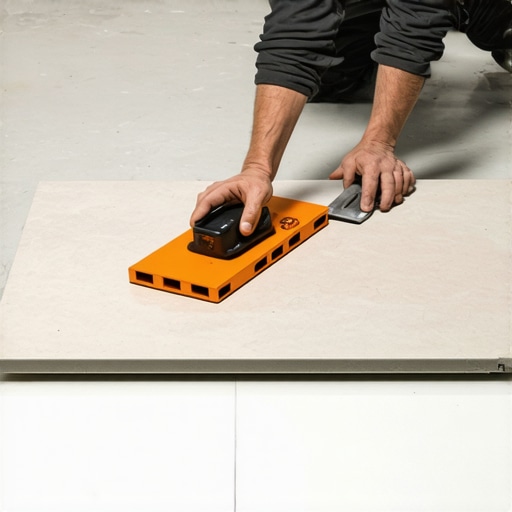
4 Floor Leveling Tricks for 2026 Large Format Tile Installs
Most guys skip the leveling compound. They think the underlayment will hide the dip. It won’t. I spent three days grinding concrete on a job last month just so the floor wouldn’t click like a castanet. I have seen the heartbreak of a sixty dollar per square foot Italian porcelain shattered because the installer thought a little extra thin-set would act as a structural filler. It doesn’t work that way. When you are dealing with tiles that measure forty-eight inches or longer, the margin for error effectively vanishes. You are no longer just a tile setter. You are a structural engineer working with a very expensive, very brittle glass-like substance. If that substrate has a three-sixteenths inch dip over ten feet, your tile will bridge that gap. The first time a heavy kitchen island or a refrigerator rolls over it, the air pocket underneath collapses and your investment cracks in half. This is the reality of the modern flooring industry. We are pushing the limits of material science while still relying on subfloors built to the loose standards of the nineteen seventies. To survive the 2026 standards, you have to master the physics of the slab before you ever open a box of tile.
The myth of the flat concrete slab
Concrete slabs are never flat from the factory because the hydration process of Portland cement involves massive internal stresses and moisture loss that cause curling and shrinking. You need to understand that concrete is a breathing, moving mineral sponge. As water leaves the capillary pores of the slab, the surface tension pulls the aggregate together, often causing the edges of a pour to lift. This is called slab curling. If you slap a large format tile over a curled edge, you are asking for lippage that no clip system can fix. I always carry a ten-foot straightedge. If I see light under that bar, we are not ready for thin-set. We are ready for a grinder. You have to remove the laitance, which is that weak, milky layer of cement paste at the top, to reveal the aggregate. Without opening those pores, your leveling compound is just sitting on top like a sticker. It will eventually delaminate. I use a diamond cup wheel and a HEPA vacuum setup. It is dusty, it is loud, and it is the only way to ensure the chemical bond between the old concrete and your new leveling layer is permanent. If you skip this, you are just building a failure on top of a mistake.
“A floor is only as good as the subfloor beneath it; deflection is the enemy of every joint.” – Master Flooring Axiom
Laser topography and the digital shim
Digital laser levels and rotating topographical scanners provide a three-dimensional map of subfloor deviations that manual straightedges often miss in large open-concept rooms. By 2026, the standard for floor leveling has moved beyond the bubble level. I use a multi-plane green beam laser to cast a grid across the entire floor. This allows me to see the high spots in real-time. I mark the floor with a wax pencil, circling the ‘islands’ that need grinding and the ‘valleys’ that need filling. This is the digital shim method. Instead of guessing how much self-leveling underlayment (SLU) you need, you can calculate the exact cubic volume required to bring the lowest point of the room up to the highest point. In a 2026 tile install, you are often working with zero-threshold transitions where the tile must meet a hardwood floor in an adjacent room perfectly. You cannot afford to be off by a hair. When you are doing a carpet install or putting down laminate, you might get away with a bit of a wave. In those trades, the padding or the foam acts as a mask. But tile is unforgiving. It is a rigid system. If the subfloor is not a mirror of the tile’s underside, the tension will find a way out through the grout lines.
| Subfloor Type | Tolerance (10 ft) | Recommended Leveler |
|---|---|---|
| New Concrete | 1/8 inch | High-Flow Calcium Aluminate SLU |
| Old Plywood | 3/16 inch | Fiber-Reinforced Polymer Leveler |
| Radiant Heat Slabs | 1/8 inch | Thermal-Conductive Leveling Mortar |
| Over Existing Tile | 1/8 inch | High-Adhesion Epoxy Primer + SLU |
Polymer modified compounds and chemical adhesion
High-performance self-leveling compounds utilize calcium aluminate cements and advanced polymers to provide a compressive strength exceeding five thousand pounds per square inch within twenty-four hours. This is not your grandfather’s ‘patching’ compound. We are talking about materials that are engineered to flow like water and set like granite. The chemistry here is fascinating. Most modern levelers use a specific ratio of polymers that allow the mix to remain fluid long enough to find its own level but gain strength rapidly to prevent shrinkage. But here is the catch. These compounds are thirsty. If you pour them onto raw concrete, the slab will suck the water out of the leveler before the chemicals can properly cross-link. This results in a chalky, weak surface. You must use a primer. I prefer a high-solids acrylic primer, sometimes two coats. It seals the pores of the concrete. It acts as a bridge. Think of it like paint primer but for structural loads. It ensures the leveler stays wet long enough to reach its maximum density. I have seen guys mix these bags with too much water because they want it to flow easier. That is a death sentence for the floor. Excess water causes the aggregate to settle at the bottom and the weak polymers to float to the top. When it dries, the surface is soft. You can scratch it with a fingernail. That is not a substrate; that is a disaster waiting to happen.
The 1/8 inch that ruins everything
The industry standard for large format tile is a maximum deviation of one-eighth of an inch over ten feet to prevent mechanical failure of the locking bond. While most people want the thickest underlayment, too much cushion actually causes the locking mechanisms on LVP to snap under pressure. The same logic applies to tile thin-set. People think they can just use a larger notch trowel to ‘make up’ for a dip in the floor. This is a fallacy. Thin-set is an adhesive, not a leveler. As thin-set cures, it shrinks. If you have a half-inch of thin-set in one spot and an eighth-inch in another, they will shrink at different rates. This pulls on the tile and creates ‘lippage,’ where one tile edge sits higher than its neighbor. This is a tripping hazard and it looks like amateur hour. For 2026 installs, especially in showers where drainage slopes are critical, you have to use a mud bed or a dedicated leveling pour before the tile even touches the room. In a shower, the leveling is even more complex because you are managing a two percent grade toward the drain. If your subfloor is wonky, your slope will be wonky, and you will end up with standing water. Standing water leads to mold. Mold leads to lawsuits. Level the floor first. Then tile.
“Surface preparation is the most overlooked phase of tile installation, yet it dictates the longevity of the entire system.” – TCNA Handbook Guidelines
Strategic prep checklist for 2026 installs
- Inspect the subfloor for any signs of movement or structural deflection.
- Check moisture vapor emission rates using a calcium chloride test or an in-situ probe.
- Grind down all high spots and remove any paint, oil, or drywall mud.
- Apply the correct primer based on substrate porosity and let it become tacky.
- Measure water exactly according to the manufacturer’s technical data sheet.
- Mix leveler with a specialized paddle at low RPM to avoid entraining air bubbles.
- Use a spiked roller to release surface tension and help the leveler settle.
- Allow for a full cure cycle before checking flatness with a ten-foot straightedge again.
Managing the wet cure cycle
The curing process of a floor leveler is a thermodynamic event that requires controlled environmental conditions to prevent surface cracking and curling. After you pour, the clock starts. In a dry climate like Phoenix, the air will try to steal the moisture. In a humid place like Florida, it might take twice as long to dry. You have to keep the windows closed. No fans. No HVAC blowing directly on the wet floor. You want a slow, even cure. If the top dries faster than the bottom, the edges will lift. It is the same physics as a mud puddle drying in the sun. It cracks and curls at the edges. I have seen entire floors ruined because a painter came in and turned on the heat to dry their trim, causing the floor leveler to spider-web. You also have to respect the ‘walk-on’ time versus the ’tile-on’ time. Just because you can walk on it in four hours does not mean you can tile on it. The leveler is still releasing moisture. If you seal that moisture under a large format tile and a waterproof membrane, it has nowhere to go. It can degrade the bond. I always wait at least twenty-four hours, sometimes forty-eight, depending on the thickness of the pour. Patience is the rarest tool in a flooring contractor’s bag, but it is the most important one for a 2026 install. If you rush the cure, you are rushing the failure. Take the extra day. Your reputation depends on it.