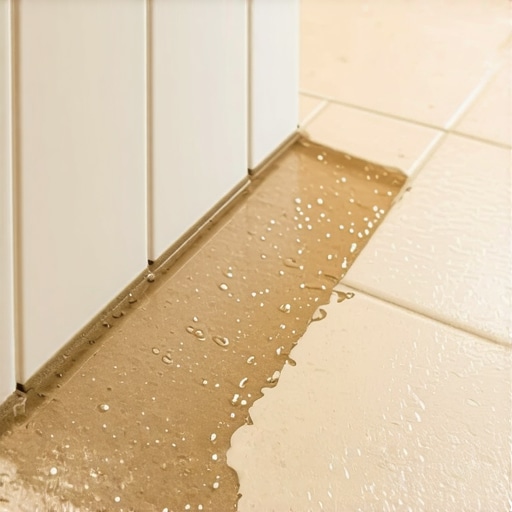
Why Your 2026 Shower Curb Is Soft 3 Hidden Waterproofing Gaps
I spent three days grinding concrete on a job last month just so the floor would not click like a castanet. Most guys skip the leveling compound. They think the underlayment will hide the dip. It will not. I have seen the same corner-cutting in showers where a $20,000 bathroom renovation turns into a mushy, moldy mess within two years because of a soft curb. When you step on a shower curb and feel even a millimeter of give, you are not just feeling a loose tile. You are feeling the structural failure of your home. A soft curb is a symptom of water bypassing the primary membrane and saturating the wooden framing beneath. This is often the result of using a builder-grade approach to a custom engineering problem.
The structural lie of the wooden curb
A soft shower curb is caused by capillary action drawing moisture through the thin-set or via penetrations in the waterproofing membrane that rot the underlying wood. To prevent this, installers must use a pre-sloped mortar bed or a dedicated waterproofing system like Schluter-Kerdi. Most failures happen because the installer nailed the cement board through the top of the curb, creating a thousand tiny holes for water to find. Water does not just sit on top of your tile; it migrates through the grout and into the substrate. If that substrate is a standard 2×4 wrapped in a plastic liner that has been punctured, the wood will absorb moisture, expand, and then rot. This expansion creates pressure that cracks your grout lines, allowing even more water to enter the system.
The ghost in the expansion gap
Every floor needs room to breathe, even the one inside your shower. When we talk about showers and floor leveling, we are talking about the foundation of the entire wet area. If your subfloor is not level, your shower pan will flex. This flex puts immense stress on the curb. I have seen many homeowners try to save money by installing laminate in the bathroom, thinking it is waterproof. It is not. Laminate flooring should never be used in a bathroom with a shower because the moisture levels will eventually swell the core material. Even if the box says waterproof, the joints are the weak point. In 2026, we are seeing a trend toward larger format tiles, which require a floor leveling tolerance of 1/8 inch over 10 feet. If your subfloor has a dip, the tile will lippage and the waterproofing membrane will be stretched beyond its elastic limit.
“A floor is only as good as the subfloor beneath it; deflection is the enemy of every joint.” – Master Flooring Axiom
The 1/8 inch that ruins everything
Precision is not a suggestion in flooring; it is the law. When performing a carpet install in a bedroom that transitions into a bathroom, the subfloor height must be perfectly managed. If the bathroom floor was leveled improperly, you end up with a high transition that creates a trip hazard and a gap where water from the shower can migrate under the carpet pad. This creates a hidden rot zone. I always tell my clients that the thin-set chemistry matters just as much as the tile choice. For a shower curb, you need a high-polymer modified thin-set that can handle the thermal expansion of the materials. Standard unmodified mortar will not create the chemical bond required to keep the curb rigid over time.
| Metric | Liquid Membrane | Sheet Membrane | Mortar Bed |
|---|---|---|---|
| Vapor Permeance | 0.45 perms | 0.01 perms | High |
| Flexural Strength | Low | High | High |
| Installation Speed | Slow | Fast | Very Slow |
The hidden rot of the carpet install transition
Many homeowners overlook the transition where the carpet install meets the bathroom tile. If the shower curb is failing, water will often wick out from the base of the curb and travel under the tile, eventually hitting the carpet tack strip. If you notice your carpet smelling musty near the bathroom, the shower curb is likely the culprit. The water travels along the subfloor, hidden by the floor leveling compound or the tile itself, until it finds a porous material to soak into. This is why a proper moisture barrier must extend at least six inches past the shower opening. We are not just building a floor; we are building a containment system for a high-moisture environment.
“The integrity of a waterproof assembly depends entirely on the continuity of the membrane across transitions.” – TCNA Handbook Principles
Why your subfloor is lying to you
Subfloors often look flat to the naked eye, but the level does not lie. In regions with high humidity, like the coastal areas, the moisture in the air can cause the subfloor to swell before the tile is even laid. If you do not check the moisture content of your plywood or concrete before starting the waterproofing process, you are trapped. You are sealing moisture into the wood. This is why your 2026 shower curb is soft. It is not always an external leak. Sometimes it is internal moisture that was trapped during the installation. I use a pin-less moisture meter on every single job. If that reading is above 12 percent for wood, the project stops. We wait for it to acclimate. To do anything else is professional negligence.
- Check subfloor deflection before installing any membrane.
- Use only stainless steel or galvanized fasteners for any curb framing.
- Ensure the pre-slope is a minimum of 1/4 inch per foot toward the drain.
- Never nail through the top or inside face of a shower curb.
- Apply a flood test for 24 hours before any tile is installed.
The chemistry of the bond
Modern waterproofing relies on molecular adhesion. When you apply a liquid membrane, you are looking for a specific mil thickness. If it is too thin, it will crack. If it is too thick, it will not cure properly. This is the zooming logic of flooring. We are looking at the way the polymers in the thin-set interlock with the fibers of the membrane. When an installer rushes this process or uses the wrong trowel size, the bond is compromised. A soft curb often happens because the membrane delaminated from the substrate. Without that bond, the tile and the grout are the only things holding back the water. Grout is porous. It is basically a hard sponge. Once the water gets past the grout, if the membrane is not perfectly bonded, the curb will fail. This is why floor leveling is so critical. A flat surface ensures an even application of the waterproofing layer.
The bottom line for your 2026 renovation
If you want a shower that lasts twenty years, you have to stop thinking about the tile and start thinking about the physics of the subfloor. Avoid the lure of cheap laminate in wet zones. Ensure your carpet install transitions are protected by a moisture barrier. Most importantly, demand that your installer uses a level and a moisture meter. A soft curb is not an accident; it is the inevitable result of ignoring the structural requirements of the installation. When you step into your shower, you should feel the solid, unyielding strength of a properly engineered system. Anything else is just a ticking time bomb behind your walls.