The ‘Buffer Pad’ Trick for Blending Scratches in Hardwood Floor Refinishing
The ‘Buffer Pad’ Trick for Blending Scratches in Hardwood Floor Refinishing
There is a specific kind of sinking feeling that every homeowner in the Kansas City metro area knows. You’ve just finished a beautiful renovation, or perhaps you’ve lived in your home for years, meticulously maintaining your space, when you see it: a long, jagged scratch running across your living room floor. Maybe it was a delivery driver’s dolly, a rogue piece of grit under a chair leg, or a pet’s over-excited dash across the room. Your first thought is likely one of dread – does this mean I need a total hardwood floor replacement kansas city? Or am I looking at a week of dust and the high cost of a full sand-and-finish?
I’m Justin Kelley, and at Floor Craft Store, we’ve spent years helping Kansas City homeowners navigate these exact frustrations. My background is rooted in the technical nuances of wood behavior, finish chemistry, and the practical realities of hardwood floor refinishing kansas city. Before you panic and start looking for hardwood floor installers lee’s summit to tear everything out, I want to share a professional secret. It’s called the “Buffer Pad” trick. Technically known in the industry as a “screen and recoat,” this method is the ultimate middle ground. It’s the professional’s way of restoring a floor’s “glow” and blending away surface-level scratches without the invasive process of a full sanding. In this guide, I’ll walk you through why this trick works, how to tell if your floor is a candidate, and the step-by-step process we use to get professional results.
Identifying the Damage: Is Your Floor a Candidate for Buffing?
Before we grab the equipment, we have to perform a diagnostic. Not every scratch can be “buffered” away. In the world of hardwood floor refinishing overland park, we distinguish between “surface scratches” and “structural gouges.” A surface scratch exists only in the polyurethane or oil finish. A structural gouge has actually compressed or torn the wood fibers themselves.
The first tool in your arsenal is the The ‘Sunlight Test’ for Spotting Scratches in Hardwood Finishes. On a bright day, open your blinds and look at the floor from a low angle, facing the light. If the scratch casts a shadow or looks like a white, opaque line, it’s often just in the finish. Another trick I often teach my clients is the “wet finger test.” If you put a tiny drop of water (or, as we old-timers call it, the “spit test”) on the scratch and it temporarily disappears, it means the wood underneath hasn’t been grayed by oxidation or stained by moisture. This is a prime candidate for the buffer pad trick.
However, if the scratch is dark, black, or if you can feel a significant “valley” with your fingernail, you might be looking at a deeper issue. If the wood feels loose or sounds hollow when you tap it, you should check out The ‘Tap Test’ for Spotting Delaminated Wood Before You Sand. If the damage has reached the raw wood, a simple buffing won’t hide the color difference; you’ll need a more intensive hardwood floor repair Kansas City approach.
What Exactly is the ‘Buffer Pad’ Trick?
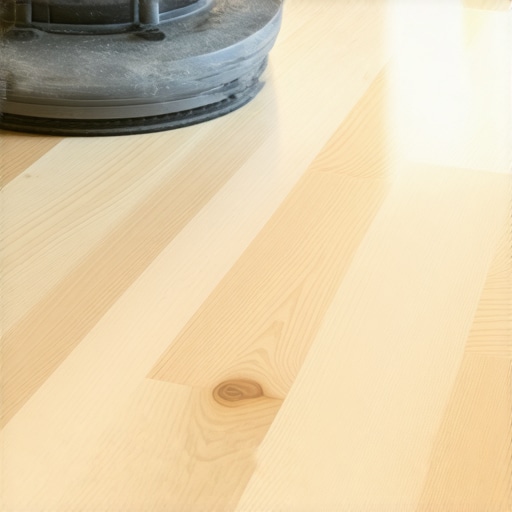
The “Buffer Pad” trick is the core of a maintenance service we call the “Screen and Recoat.” Unlike a full refinish, which uses a heavy drum sander to remove the top layer of wood, the buffer pad trick focuses entirely on the finish layer. We use a heavy-duty floor buffer (usually 175 RPM) equipped with a specialized abrasive pad.
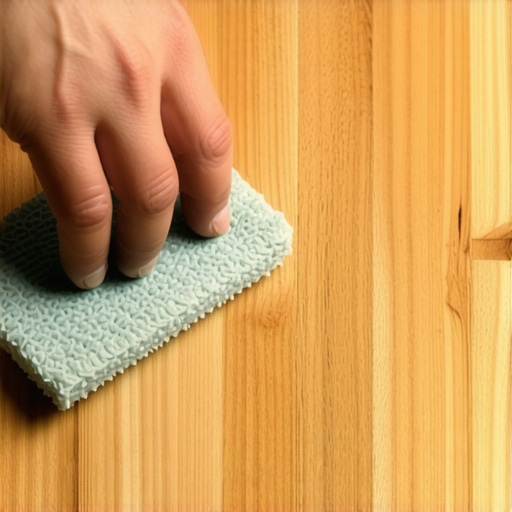
In professional hardwood floor refinishing kansas city, we often use “maroon pads” (which look like giant Scotch-Brite pads) or “screens” (which look like window screening coated in abrasive grit). The goal isn’t to remove the finish down to the wood. Instead, we are “scuffing” the surface. Think of it like prepping a car for a new coat of paint. You need to create “tooth” – a microscopic profile that allows the new topcoat to grip the old one. This is what we call a “mechanical bond.”
The reason this blends scratches so well is that most visible scratches are actually “fractures” in the old, brittle finish. By buffing the floor, we are essentially leveling out the edges of those fractures and removing the white, oxidized finish that makes the scratch stand out. When we apply a fresh coat of high-quality finish over the top, it fills in those microscopic valleys, making the floor look uniform and new again.
Tools of the Trade: Why Professional Equipment Matters
While you can rent a buffer at a big-box store, there’s a reason why homeowners seeking hardwood floor refinishing overland park call us. The equipment we use is specifically balanced to prevent “swirl marks.” A professional buffer is a beast to handle; if you aren’t experienced, it can “run” on you, slamming into baseboards or creating deep circular gouges that are harder to fix than the original scratches.
Beyond the buffer, the vacuum system is critical. At Floor Craft Store, we use HEPA-filtered dust containment systems. Even though we aren’t sanding the wood, the “white powder” created by abrading the polyurethane is incredibly fine and can get into every nook and cranny of your home if not contained.
Then there is the finish itself. For a successful buffer pad trick, you need a finish that is compatible with what is already on your floor. We often use Loba 2K Supra AT or Rubio Monocoat for homeowners who want 0% VOC options. If your floor was originally finished with an oil-based product and you try to put a cheap water-based product over it without the right “buffer pad” prep, the new finish will peel off like a sunburn. This is why we always recommend a professional hardwood floor inspection kansas city before starting. Also, if you are in the middle of a larger kitchen remodel, remember Why Your Kitchen Cabinets Should Be Level Before the Floor Is Finished, as the sequence of work can affect how we approach the edges during a buffing job.
Step-by-Step: Blending Scratches Like a Pro
If you’re determined to understand the process, here is the professional workflow we use for hardwood floor refinishing kansas city.
- Step 1: Deep Cleaning. This is the most ignored step. You must remove every trace of wax, oil soap, or furniture polish. If there is any residue, the buffer pad will just smear it around, and the new finish will fail to bond. We use a specialized intensive cleaner and a microfiber tacking system.
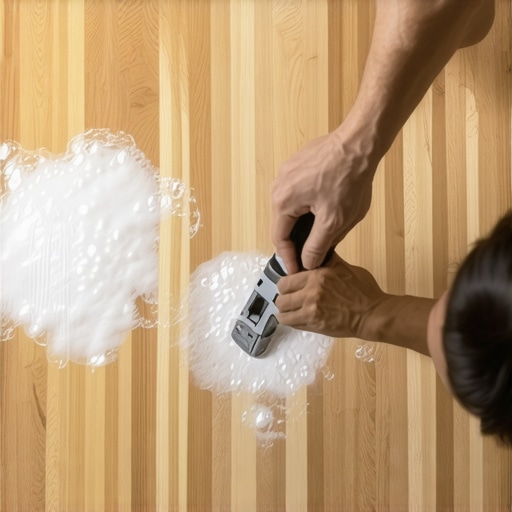
- Step 2: The Buffing Motion. We start with a 175-RPM buffer. The motion is side-to-side, overlapping each pass by 50%. You’ll hear a low, steady hum and see a fine white powder forming. This powder is your friend – it tells you that you are successfully abrading the old finish.
- Step 3: Blending Specific Scratches. For deeper scratches that haven’t hit the wood, we use a technique called “hand-padding.” We take a piece of the abrasive pad and manually work it into the scratch following the grain of the wood. This is part of The ‘Sanding’ Secret for Blending a Hardwood Floor Patch Perfectly. By working the scratch by hand, we ensure the edges are feathered out so the new finish lays flat.
- Step 4: The Tacking Process. After buffing, the floor looks dull and dusty. We vacuum multiple times, then “tack” the floor using a microfiber mop dampened with a specific solvent (depending on the finish being used). The floor must be surgically clean. Any dust left behind will be trapped under the new finish forever, feeling like sandpaper under your feet.
- Step 5: Coating. We apply the new topcoat. Whether it’s a water-borne polyurethane or a hard-wax oil, the application must be even. We use “T-bars” or specialized rollers to ensure there are no lap marks.
When Buffing Isn’t Enough: Hardwood Floor Repair in Kansas City
As much as I love the buffer pad trick for its efficiency, it isn’t a magic wand. There are times when the damage is too deep. If a scratch has turned black, it means the wood fibers have been exposed and have oxidized or absorbed dirt. In these cases, hardwood floor repair Kansas City is required.
Sometimes, we have to perform a “board replacement.” This involves carefully cutting out the damaged planks and weaving in new ones. If you are worried about how a new patch will look against your old floor, we use The ‘Randing Trick’ for Blending a Hardwood Floor Patch Without Sanding the Whole Room. This allows us to blend the new wood’s grain and color profile with the existing installation.
Furthermore, if you have extensive water damage or pet stains that have soaked deep into the oak or maple, you might be looking at a hardwood floor replacement kansas city. In some modern homes, owners are even opting to switch to luxury vinyl plank installation kansas city for high-moisture areas like basements or mudrooms, but for the classic Overland Park or Lee’s Summit home, nothing beats the ROI of restored real hardwood.
Local Expertise: Why Kansas City Humidity Matters
One thing that national DIY blogs won’t tell you is how the Kansas City climate affects this process. We live in a region with extreme humidity swings. In the summer, our air is thick and wet; in the winter, the furnace kicks on and dries everything out. This causes wood to expand and contract significantly.
When performing hardwood floor refinishing kansas city, we have to time our “buffer pad” trick carefully. If we apply a new coat of finish when the wood is at its maximum expansion (high humidity), and then the wood shrinks in the winter, the finish can sometimes “bridge” the gaps between boards and then crack. Hardwood floor installers lee’s summit know that acclimation and humidity control are the most important parts of any job. We always check the moisture content of the air and the wood before we even pull the buffer out of the van. This local knowledge ensures that the “trick” actually lasts for years rather than months.
Conclusion & Call to Action
The “Buffer Pad” trick is one of the most cost-effective ways to breathe new life into your home. It’s faster than a full sand, significantly less messy, and can save you thousands of dollars compared to a full hardwood floor replacement kansas city. By identifying scratches early and addressing them with a professional screen and recoat, you protect the wood underneath and maintain the value of your property.
However, the success of this technique depends entirely on the preparation and the quality of the products used. Don’t risk “orange peel” textures or peeling finish by trying to DIY a high-traffic area. If your floors have lost their luster or are covered in those annoying surface scratches, let us help.
At Floor Craft Store, we pride ourselves on being the go-to experts for hardwood floor refinishing overland park and the surrounding areas. Whether you need a simple buffing or a complex hardwood floor repair Kansas City, I’m here to give you an honest assessment.
Ready to see if the Buffer Pad trick is right for your home? Contact us today to schedule a comprehensive hardwood floor inspection kansas city. Let’s get your floors looking like the day they were installed.