The ‘Razor Blade’ Hack for Removing Paint Over-Spray from Tile
I spent three days grinding concrete on a job last month just so the floor wouldn’t click like a castanet. Most guys skip the leveling compound. They think the underlayment will hide the dip. It won’t. If you want a floor that performs like a structural component and not a temporary rug, you have to respect the substrate. This same philosophy applies to cleaning. When a painter leaves a fine mist of latex across a custom porcelain layout, you don’t reach for harsh chemicals that eat your grout. You reach for a blade. It is a surgical procedure for your floor. I have seen fifteen thousand dollar installations ruined because someone used a wire brush or a scouring pad on a polished glaze. A razor, used with the correct lubricant and at the precise physical angle, can lift dried acrylic without leaving a single microscopic ghost behind.
The physics of surface tension and paint adhesion
Paint overspray sticks to ceramic tile because of surface tension and the porosity of the glaze. Even on polished porcelain, there are microscopic voids where the pigment and binder of the paint can find mechanical purchase, making it difficult to wipe away with water alone once cured.
Understanding the molecular bond is the first step. When latex paint dries, it undergoes a process called coalescence. The water evaporates, and the polymer particles fuse into a solid film. On a non-porous surface like high-fired porcelain, this bond is mostly physical rather than chemical. It sits on top of the vitrified surface. This is why a mechanical edge like a razor is more effective than a chemical solvent. Solvents often liquefy the paint, turning a small dot into a large, smeared stain that can then soak into your grout lines. That is a nightmare you want to avoid at all costs. I have spent decades watching people make this mistake. They turn a five-minute fix into a three-day restoration project because they didn’t understand the chemistry of the bond.
The mechanical reality of a sharp edge
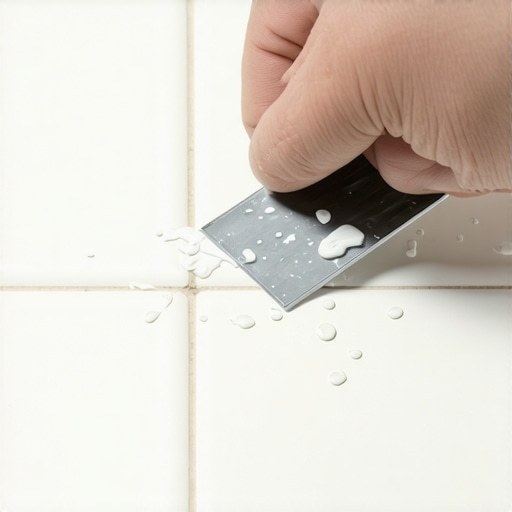
A new razor blade provides a single-point of failure for the paint bond by applying shear force at the interface of the tile. When the blade angle is kept below 15 degrees, the edge slides under the paint droplet and lifts it mechanically without scratching the vitrified glaze.
The sharpness of the blade is non-negotiable. I see guys trying to use a scraper they found in the bottom of a bucket. That is how you scratch a floor. A dull blade doesn’t cut; it drags. When it drags, it creates friction and heat, which can actually bake the pigment into the micro-pores of the tile. You need a fresh, stainless steel or high-carbon steel blade. Think of it like a plane on a piece of white oak. If the iron is dull, it tears the grain. If it is sharp, it leaves a surface like glass. On tile, the sharp edge severs the vacuum bond between the paint film and the floor. You can actually hear the ‘click’ as the paint pops off. That sound is the sound of a job being done right. It is a satisfying noise for anyone who cares about the integrity of their work.
“A floor is only as good as the subfloor beneath it; deflection is the enemy of every joint.” – Master Flooring Axiom
Preparing the area for surgical cleaning
Lubrication is the primary safety mechanism when cleaning tile with razors. Using a surfactant like dish soap mixed with water creates a hydrodynamic layer that prevents the metal from marring the tile surface while allowing the edge to glide smoothly under the debris.
Never scrape dry. I will say that again for the guys in the back. Never scrape dry. When you scrape dry, you risk leaving ‘metal marks.’ These are tiny trails of steel that rub off onto the harder ceramic surface. They look like gray scratches and they are a massive pain to remove. By using a spray bottle with a heavy concentration of soap, you reduce the coefficient of friction. The water also serves to soften the edges of the paint droplet slightly, making it less brittle and more likely to peel up in one piece. If you are working in a bathroom or around showers, be extra careful. The humidity in those rooms can make some paints more gummy, requiring a bit more patience and a few more blade changes to keep the edge from getting gunked up.
The relationship between showers and paint residue
Showers and wet rooms often feature textured tiles or natural stone where paint overspray can become deeply embedded. In these high-moisture environments, the porosity of grout and the alkalinity of the water can chemically alter how paint residues behave over long-term exposure.
In a shower, you are dealing with constant expansion and contraction from heat. If paint is left on the surface, it creates a point of failure for future sealants. I have walked onto jobs where the homeowner complained about ‘peeling tile.’ It wasn’t the tile peeling. It was a layer of overspray that had been sealed over, now failing because of the steam. You have to get that surface back to its original state. When working around drains, ensure you aren’t letting the scraped paint chips wash down the pipe. They can snag on hair and soap scum, contributing to a clog. I always keep a shop vac running nearby or use a damp rag to catch the flakes as they pop off. It is about cleanliness and precision.
Professional checklist for tile restoration
- Verify the tile type. Only use razors on ceramic or porcelain.
- Mix a solution of 10 parts water to 1 part concentrated dish soap.
- Install a brand-new blade into a specialized scraper handle.
- Test a small, inconspicuous area to check for glaze hardness.
- Hold the blade at a 15-degree angle. No higher.
- Apply steady, forward pressure. Do not saw back and forth.
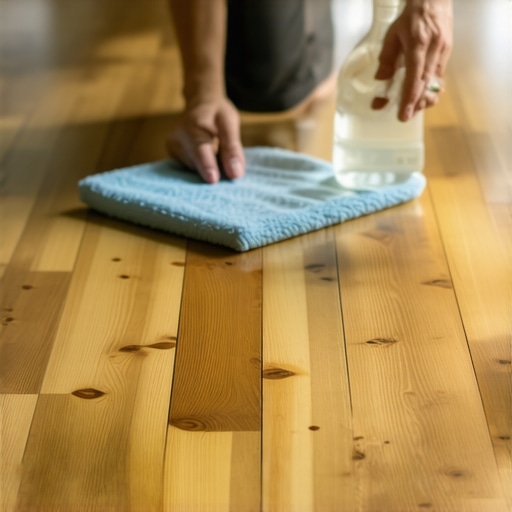
- Wipe the area with a microfiber cloth immediately after scraping.
- Inspect the grout lines for any trapped pigment that needs a soft brush.
Comparing cleaning methods for different flooring
| Surface Type | Cleaning Tool | Risk Level | Efficiency |
|---|---|---|---|
| Polished Porcelain | New Razor Blade | Low | Very High |
| Natural Marble | Plastic Scraper | High | Low |
| Luxury Vinyl Plank | Soft Microfiber | Medium | Moderate |
| Textured Slate | Nylon Brush | Low | Moderate |
| Glazed Ceramic | New Razor Blade | Low | High |
Beyond the blade for laminate and carpet
Laminate flooring and carpet install projects require entirely different approaches to paint removal because these surfaces are vulnerable to mechanical damage. Laminate has a wear layer that can be permanently scratched by metal, while carpet fibers will absorb the paint into the backing.
If you take a razor to laminate, you are asking for a lawsuit. The wear layer is tough against foot traffic, but a sharp steel edge will slice through it like butter. For laminate, you use a plastic scraper and a specialized citrus-based cleaner. For a carpet install, if the painters were sloppy on the subfloor before the pad went down, you might think it doesn’t matter. It does. I have seen paint on a subfloor prevent the adhesive for tack strips from bonding. It can also cause ‘crunching’ sounds under the carpet if the paint is thick enough to crack when stepped on. I always make sure the floor is scraped clean before the first roll of pad is even brought into the house. A clean subfloor is the hallmark of a professional.
“Cleanliness is the foundation of adhesion; a dusty or contaminated surface will never support a lifetime floor.” – Master Flooring Axiom
The science of the subfloor secret
Floor leveling is a chemical and mechanical process that requires a perfectly clean substrate for the primer to bond. Paint spills or overspray on concrete act as a bond breaker, which can lead to hollow spots or delamination of the leveling compound once it cures.
This is where the ‘Mechanic’ in me gets vocal. If you are prepping for a high-end install and you see paint on the slab, don’t just pour the leveler over it. That leveler is a heavy, cementitious product. As it dries, it shrinks and pulls. If it is sitting on a layer of cheap contractor-grade paint, it will pull that paint right off the concrete. Now you have a floating slab of leveler that clicks when someone walks on it. I spent three days grinding a floor because the previous guy thought he could ‘self-level’ over a mess. You use the razor for the small spots and a floor maintainer with a stripping pad for the big ones. You get it down to the raw aggregate if you have to. That is how you build a floor that lasts a century.
The danger of the dull edge
Using a dull razor on tile surfaces increases the probability of surface marring because the installer must apply excessive downward pressure. This pressure can cause the blade to chatter across the surface, creating micro-impacts that can chip the glaze of softer ceramic tiles.
I change my blades every twenty minutes on a big cleanup job. It sounds excessive, but blades are cheap and tile is expensive. When the blade starts to feel like it’s ‘grabbing’ instead of ‘sliding,’ it’s done. Toss it. I keep a dedicated container for used blades so nobody gets cut when they take out the trash. It’s about respect for the site. A sharp blade allows you to use a light touch. You are looking for that sweet spot where the paint just curls up like a wood shaving. If you are straining your wrist, you are doing it wrong. Let the edge do the work. The physics of a 15-degree incline means the force is directed horizontally, not vertically into the tile. That is the secret to a scratch-free finish.
The final word on floor integrity
Every floor tells a story about the person who installed it. If I walk into a house and see paint droplets in the corners or smeared into the grout, I know the installer didn’t care. Taking the time to use a razor blade and a bit of soapy water shows you respect the material. It shows you understand the 1/8 inch that ruins everything. Whether you are prepping for a carpet install, dealing with laminate, or finishing a custom shower, the details matter. The subfloor must be level, the surfaces must be clean, and the tools must be sharp. If you follow these rules, you won’t just have a floor that looks good today. You will have a structural surface that stands the test of time and traffic. It is about the pride of the trade. Keep your blades sharp and your subfloors flat.