The ‘Hot Glue’ Method for Securing Loose Carpet Tacks on Concrete
The failure of traditional masonry nails in old slabs
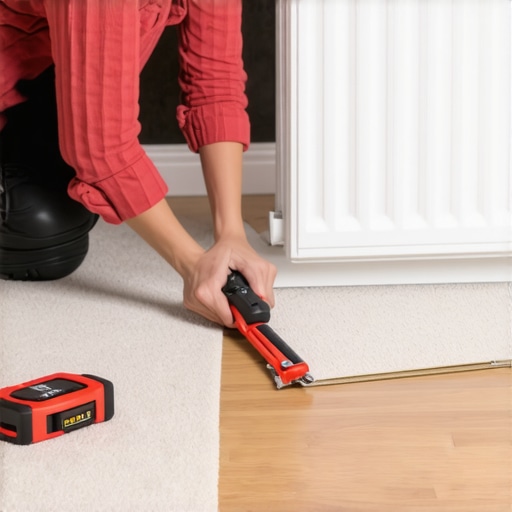
Securing carpet tack strips to concrete requires a bond that can withstand hundreds of pounds of lateral tension from a power stretcher. Traditional masonry nails often fail in brittle or high-psi concrete because the impact causes spalling or cratering. The hot glue method provides an immediate and vibration-resistant anchor point.
Most guys skip the leveling compound. They think the underlayment will hide the dip. It won’t. I spent three days grinding concrete on a job last month just so the floor wouldn’t click like a castanet. That experience reminds me that every single failure starts with a lack of respect for the subfloor. When you are dealing with a carpet install on a concrete slab, you are fighting physics. The slab is a porous, breathing giant that holds moisture and shifts with the seasons. If you think you can just bang in a few nails and call it a day, you are going to be back in six months re-stretching a loose mess. The concrete in many modern homes is either too hard, reaching over 4,000 psi, or it is too crumbly from a poor mix. In both cases, a standard 5/8 inch masonry nail is going to fail. It will either bend or it will blow a hole the size of a silver dollar out of your floor. This is where the chemistry of adhesives becomes your best friend. We are not talking about the craft glue your kids use. We are talking about high-temperature industrial polyamides that create a mechanical and chemical bond with the concrete pores.
The physics of the expansion gap and carpet tension
A carpet tack strip must remain perfectly stationary while the carpet is stretched over the pins using a knee kicker or power stretcher. If the strip moves even a fraction of an inch, the tension is lost and the carpet will eventually develop ripples or lumps.
I have seen it a thousand times. An installer gets lazy near the bathroom showers where the slab is often damp or uneven. They slap down a strip, hit it twice, and move on. Then the homeowner wonders why the carpet is pulling away from the transition. When you use a power stretcher, you are applying significant force. That force is transferred directly to the tack strip. If that strip is only held in by a couple of brittle nails, it will pop. The hot glue method acts as a gasket. It fills the microscopic voids in the concrete surface. When the glue hardens, it creates a wide surface area of contact. This is much more effective than a single point of failure like a nail. You need to understand the moisture vapor emission rate (MVER). If the slab is pumping out too much moisture, even the best glue will fail. This is why a moisture meter is the most important tool in your bag, not your hammer. You want to see less than 3 pounds per 1,000 square feet over 24 hours if you want that glue to stay stuck for the next twenty years.
“A floor is only as good as the subfloor beneath it; deflection is the enemy of every joint.” – Master Flooring Axiom
The chemistry behind high temperature adhesive bonds
Industrial hot melt adhesives used in flooring are typically composed of ethylene-vinyl acetate or polyamides that have a high softening point and high shear strength. These adhesives flow into the concrete capillaries before solidifying into a rigid plastic that resists lateral movement during the carpet stretching process.
You have to look at the concrete under a microscope to understand why this works. Concrete is not a solid block. It is a forest of peaks and valleys. When you apply molten glue at 400 degrees Fahrenheit, it is thin enough to flow into those valleys. As it cools, it shrinks slightly and hooks into the texture of the slab. This is called mechanical keying. If you are also dealing with floor leveling compounds, you need to ensure the glue is compatible with the polymer-modified underlayment. Some cheap glues will just peel the top layer of the leveler right off. I always recommend a high-velocity glue gun that can keep up with the work. If the glue cools before you press the tack strip down, you have already lost. You have about three to five seconds of open time. That is it. If you miss that window, you are just sitting a piece of plastic on top of the dust. Speaking of dust, if you don’t vacuum that floor until it is clean enough to eat off, don’t even bother with the glue. The glue will stick to the dust, and the dust will just slide across the floor.
Why your subfloor is lying to you
Subfloors often appear flat to the naked eye but contains subtle waves and troughs that can compromise any installation from carpet to laminate. Using a ten foot straightedge is the only way to verify the floor meets the standard of 3/16 inch deviation over ten feet.
I remember a job where the client wanted laminate in the hallway and carpet in the bedrooms. The slab looked perfect. I didn’t pull out the straightedge because I was in a hurry. Big mistake. The transition between the two rooms had a 1/4 inch dip. When I glued the tack strip down for the carpet, it followed the dip. When I laid the laminate, it hovered over the dip. The result was a transition that felt like stepping into a hole. I had to pull it all up and use a self-leveling pour to fix it. This is why I tell every apprentice that the subfloor is a liar. It wants to hide its flaws. When you are using hot glue on tack strips, you can actually use the glue to shim the strip slightly in minor low spots. It is not a replacement for proper floor leveling, but it can help in a pinch to keep the pins at the right height for the carpet backing to grab. You also have to consider the perimeter. The gap between the tack strip and the wall should be about 2/3 the thickness of the carpet. Too wide and the carpet won’t tuck. Too tight and you can’t get it down. Precision is the difference between a pro and a hack.
| Fastening Method | Bond Strength | Cure Time | Concrete Risk |
|---|---|---|---|
| Masonry Nails | Medium | Instant | High Spalling |
| Construction Adhesive | Very High | 24 Hours | None |
| Hot Melt Glue | High | 60 Seconds | None |
| Powder Actuated | Extreme | Instant | Cracking Risk |
The 1/8 inch that ruins everything
Small deviations in the height of a tack strip or the depth of a gully can lead to premature wear of the carpet fibers. If a tack strip is not secured properly, it can tilt, causing the sharp pins to poke through the carpet surface and injure the occupants.
Safety is something people forget until they get a tack pin in the bottom of their foot. If your glue bond fails, the strip can flip up. This happens most often at the doorways of bathrooms or showers where people are walking barefoot. The moisture in those areas can also degrade the wood of the tack strip itself. I always use architectural strips in those high-traffic zones. They are wider and have more pins. More pins means the tension is distributed over a larger area. It is basic engineering. If you are working in a region with high humidity, like the Gulf Coast, you need to be even more careful. The moisture in the air will actually move through the slab and can emulsify low-quality adhesives. You want a glue that is moisture-resistant. I have seen jobs where the glue turned back into a sticky goo because the installer didn’t check the RH levels of the slab. Don’t be that guy. Use a pin-less moisture meter to scan the area before you start. If it’s red, you wait. Or you use a vapor barrier coating first.
“A floor is only as good as the subfloor beneath it; deflection is the enemy of every joint.” – Master Flooring Axiom
- Clean the concrete surface with a HEPA vacuum to remove all friable material.
- Mark the perimeter 1/4 inch from the baseboards for the tuck gap.
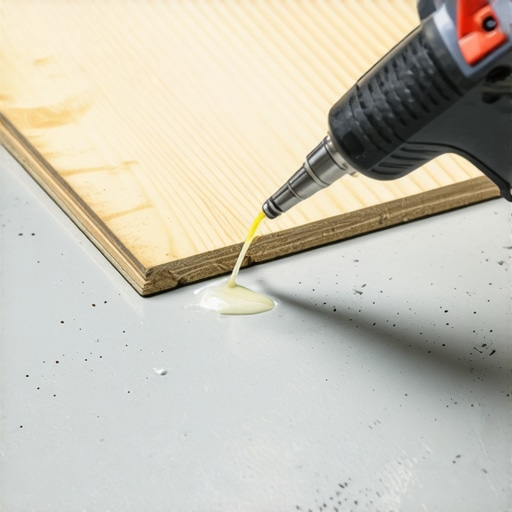
- Apply a continuous bead of high-temperature glue to the back of the strip.
- Press and hold the strip for ten seconds to ensure the mechanical bond sets.
- Wait at least five minutes before applying tension with a power stretcher.
- Check for any ‘hollow’ sounds that indicate a gap in the adhesive.
A contrarian point to consider is that while most people want the thickest underlayment, too much cushion actually causes the locking mechanisms on laminate or the backing of a carpet to fail under pressure. This same logic applies to tack strips. You don’t want a massive mountain of glue under the strip. You want a thin, consistent bond. If the glue is too thick, the strip will bounce. A bouncing strip will eventually snap the glue bond. It needs to be rock solid. Think of the glue as a weld, not a pillow. When I am done with a floor, I want to be able to jump on it and feel nothing but the solid earth. That is the hallmark of a master. No clicks, no squeaks, no movement. Just a performance surface that does its job without complaining. If you take the time to understand the chemistry of your adhesives and the physics of your subfloor, you will never have a callback. And in this business, your reputation is the only thing that lasts longer than the floor. Work clean. Work fast. But never skip the prep. The ‘hot glue’ method is a tool in your arsenal, but only if you use it with the respect the trade deserves.