Why Your Hardwood Floor is Cupping Near the Dishwasher
The anatomy of a kitchen catastrophe
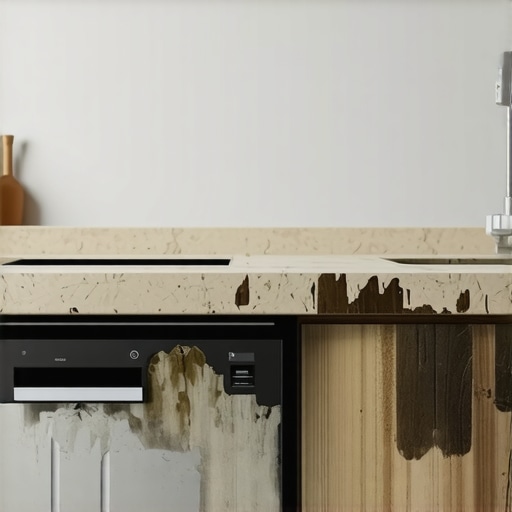
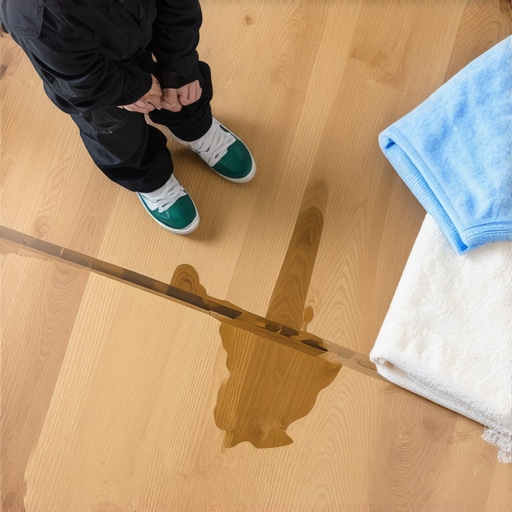
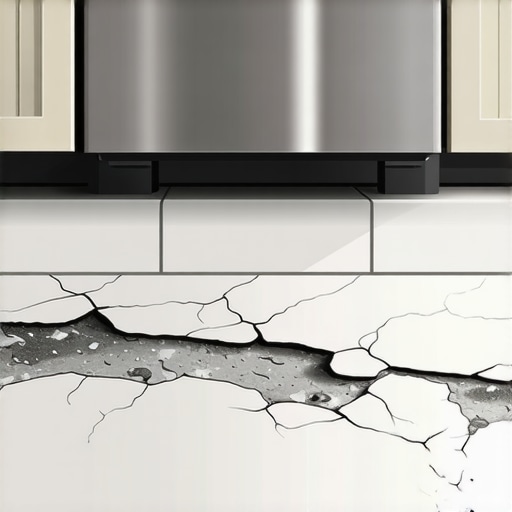
Hardwood floor cupping near dishwashers occurs when the moisture content of the plank bottom exceeds the top, causing the wood edges to rise higher than the center. This structural deformation is triggered by hidden plumbing leaks, steam vent cycles, or high humidity localized under the appliance area. I once walked into a house where a $15,000 wide-plank walnut floor was cupping so bad it looked like a potato chip because the installer didn’t check the crawlspace humidity before laying the first board. It was a gut-wrenching sight for any professional. The owner thought the dishwasher was just old, but the real culprit was a slow-drip compression fitting and a subfloor that acted like a sponge. When you see those edges starting to lift, you are not looking at a cosmetic flaw. You are looking at a physical response to a moisture imbalance that is currently winning the war against your home’s structural integrity. Wood is a hygroscopic material. It lives and breathes. It reacts to its environment at a molecular level. When the bottom of that 3/4 inch solid oak plank absorbs more water than the top, the cells expand. Since the top is drier and restricted by the finish, the only place for that expansion to go is up at the edges. It is physics, plain and simple. If you ignore it, the wood will eventually crush its own cell structure, a process we call compression set, and then you are looking at a full tear-out instead of a simple repair. My hands have felt a thousand floors, and I can tell you that the smell of damp oak and the sound of a hollow click under your work boot are the first signs of an expensive lesson. [image_placeholder_1]
The moisture meter never lies
Accurate moisture testing is the only way to diagnose hardwood floor cupping because visual inspections cannot quantify the vapor pressure gradient within the wood. Professionals use pin-type or pinless meters to compare the moisture content (MC) of the affected planks against the baseline of the rest of the home. You cannot fix what you cannot measure. I have seen guys guess. They look at a floor and say it needs to dry out. They put a fan on it and walk away. Three weeks later, the floor is still cupping. Why? Because the moisture is trapped in the subfloor. You have to get technical. You have to look at the relative humidity of the air and the temperature of the slab or the wood subfloor beneath. Wood needs to be within a specific range, usually between 6 percent and 9 percent, depending on your local climate. If the bottom of your board is at 12 percent and the top is at 7 percent, that floor is going to cup. There is no way around it.
“A floor is only as good as the subfloor beneath it; deflection is the enemy of every joint.” – Master Flooring Axiom
This axiom holds true every single time. If the subfloor is holding onto water from a dishwasher leak that happened a month ago, the hardwood on top is essentially sitting in a puddle that you can’t see. The capillary action of the wood fibers will pull that water up, and the cupping will continue until the source is removed and the subfloor is dried to within 2 percent of the hardwood’s moisture content.
The physics of steam and appliance failure
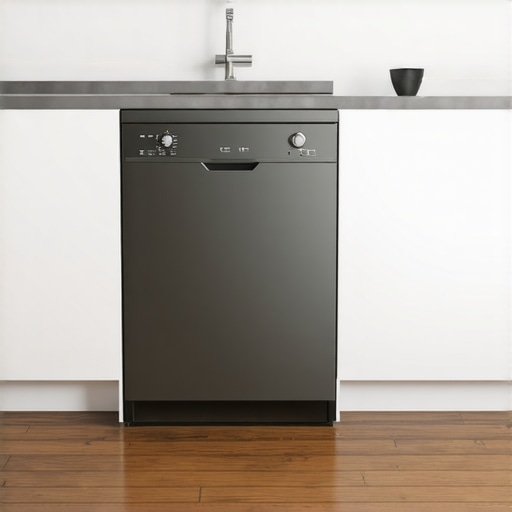
Dishwasher steam vents and faulty door seals are the primary drivers of localized hardwood cupping in modern kitchens. When a dishwasher finishes its cycle, it releases hot water vapor that settles directly onto the wood surface and penetrates the expansion gaps near the toe kick. Most people think their floor is waterproof because it has a few coats of polyurethane. They are wrong. Finish protects the top, but it does nothing for the tongue and groove joints where the raw wood is exposed. Every time that dishwasher vents, you are essentially steam-treating your floor. Over months, that localized humidity spikes. The wood absorbs the vapor, the moisture content climbs, and the boards begin to protest. Then you have the mechanical side. A dishwasher has a pump, a motor, and several water lines. A single drip, one drop every ten seconds, is enough to saturate a plywood subfloor over the course of a week. Once that plywood is wet, it starts a slow-motion disaster. The moisture migrates upward into the hardwood. Because the dishwasher is heavy and often pushed tight against the floor, there is no airflow. No airflow means no evaporation. The water just sits there, feeding the wood fibers until they swell and distort. It is a slow, silent killer of high-end millwork.
Why your subfloor is lying to you
Subfloors often hide moisture reservoirs that cause persistent hardwood cupping even after the primary leak is repaired. Oriented Strand Board (OSB) and plywood behave differently when wet, with OSB being particularly prone to edge swelling that never fully recedes. I have spent three days grinding concrete on a job last month just so the floor wouldn’t click like a castanet because the previous guy didn’t care about the moisture in the slab. People think that if the surface feels dry, the problem is solved. It is a lie. The moisture is often trapped between the underlayment or the vapor barrier and the subfloor itself. If you have a crawlspace, the problem might not even be the dishwasher. It could be the humidity from the earth rising up and hitting the cool underside of your kitchen floor. This creates a dew point transition. The water condenses on the bottom of your floorboards, and suddenly you have cupping in the middle of the room. You have to be a detective. You have to look at the whole system. The dishwasher is just the usual suspect, but the subfloor is the one holding the evidence.
Hardwood performance standards and Janka reality
| Wood Species | Janka Hardness | Moisture Stability | Recommended Acclimation |
|---|---|---|---|
| White Oak | 1360 | High | 7 to 10 Days |
| Black Walnut | 1010 | Medium | 10 to 14 Days |
| Brazilian Cherry | 2350 | Low | 14 to 21 Days |
| Hickory | 1820 | Low | 10 to 14 Days |
As the table shows, different species react differently to the environment. A harder wood like Brazilian Cherry might resist dents better, but it is often less stable when it comes to moisture fluctuations compared to White Oak. This is why the National Wood Flooring Association has strict guidelines.
“Wood flooring will perform best when the environment is controlled to stay within a relative humidity range of 30 to 50 percent.” – NWFA Technical Publication
If your kitchen is hitting 70 percent humidity every time you run the dishwasher, you are asking for trouble. You are operating outside the engineered limits of the material. It is like redlining an engine and wondering why the head gasket blew.
The ghost in the expansion gap
Expansion gaps are the one-half inch spaces left at the perimeter of a room to allow hardwood floors to expand and contract without buckling or cupping. When these gaps are missing or blocked by heavy cabinetry, the floor has nowhere to grow, forcing the boards to cup or peak. I see this all the time with kitchen islands. Homeowners want a massive stone-topped island, and they bolt it right through the hardwood into the subfloor. You have just pinned the floor. When the humidity rises near the dishwasher, the wood wants to expand, but it is anchored by the island on one side and the wall on the other. The pressure has to go somewhere. The boards will bow and cup because they are literally fighting the fasteners. You need that gap. You need the floor to float, or at least have the freedom to move as a single unit. If you cram your planks tight against the wall or under the dishwasher feet without a gap, the first sign of moisture will result in a floor that looks like a topographical map of the Andes. It is basic structural engineering. You cannot fight the expansion of wood; you can only manage it.
The 1/8 inch that ruins everything
A subfloor deviation of just one-eighth of an inch over a six-foot span can cause hardwood floor noise and accelerate moisture-related cupping. When there is a dip in the subfloor, moisture and heavy air settle in that pocket, creating a micro-climate of high humidity directly under the hardwood. This is why leveling is not optional. If you skip the leveling compound, you are leaving a trap for future moisture. While most people want the thickest underlayment, too much cushion actually causes the locking mechanisms on LVP to snap under pressure, and on hardwood, it can create air pockets that trap dampness. I have seen guys try to shim a floor with cardboard or extra layers of felt. It is amateur hour. You use a self-leveling underlayment or you sand the high spots. There is no middle ground. If the floor is not flat, the moisture from your dishwasher will find the low spots, sit there, and rot your floor from the bottom up. It will buckle. It will fail. And you will be calling me to rip it out and do it right the second time.
Maintenance and prevention checklist
- Check dishwasher supply lines for moisture every six months using a dry paper towel.
- Ensure the dishwasher door seal is tight and not brittle or cracked.
- Run a dehumidifier in the kitchen if the relative humidity exceeds 50 percent regularly.
- Inspect the crawlspace or basement directly under the dishwasher for signs of water staining.
- Avoid using steam mops on hardwood floors as they force moisture into the grain.
- Verify that the dishwasher kickplate is not blocking the bottom of the wood planks.
- Use a digital hygrometer to monitor kitchen air conditions daily.
If you follow these steps, you are ahead of 90 percent of homeowners. Most people wait until the floor is a mess before they even look under the sink. By then, the damage is done. You have to be proactive. You have to respect the material. Hardwood is a luxury, but it is also a living product that requires a stable environment to survive the rigors of a modern kitchen. If you treat it like tile, it will punish you. If you treat it like the engineered system it is, it will last a century. It is about the chemistry of the bond and the physics of the environment. Do not let a ten-cent washer in a dishwasher hose ruin a ten-thousand-dollar floor. Stop the moisture, dry the subfloor, and only then should you think about sanding and refinishing. If you sand a cupped floor while it is still wet, you will end up with crowned boards once it finally dries out. That is a mistake you only make once. Article Schema: {“@context”: “https://schema.org”, “@type”: “Article”, “headline”: “Why Your Hardwood Floor is Cupping Near the Dishwasher”, “author”: {“@type”: “Person”, “name”: “Master Floor Installer”}, “description”: “Expert analysis of hardwood floor cupping causes in kitchens, focusing on dishwasher leaks, subfloor moisture, and NWFA standards.”, “publisher”: {“@type”: “Organization”, “name”: “Flooring Excellence”}}