Why Your Carpet Seams Look Worse in the Morning Light
Most guys skip the leveling compound. They think the underlayment will hide the dip. It won’t. I spent three days grinding concrete on a job last month just so the floor wouldn’t click like a castanet. I once walked into a house where a high-end plush was being condemned by the homeowner. In the afternoon, it looked like a million dollars. In the morning, it looked like a topographic map of the Rockies. The installer tried to tell them it was a manufacturing defect. I took one look at the subfloor prep and realized the floor leveling was non-existent. The morning sun was hitting that floor at a sharp, grazing angle, casting long shadows into the microscopic valleys where the carpet backing was struggling to bridge a half-inch dip in the slab. This is the reality of the carpet install world. If your subfloor is not flat to within 3/16 of an inch over 10 feet, the morning sun will betray every shortcut your contractor took.
The physics of grazing light and shadow
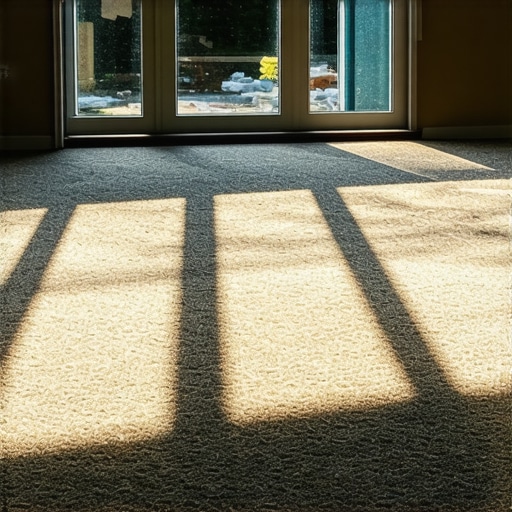
Grazing light refers to light that strikes a surface at a very low angle, usually under 15 degrees, which highlights every microscopic irregularity in a flooring installation. When the sun rises, it sends photons across your floor horizontally. If there is a slight ridge in the seam tape or a dip in the subfloor, that light cannot reach the other side of the elevation. It creates a shadow. In the flooring industry, we call this the telegraphing effect. Even with a thick pad, the structural memory of the carpet backing will eventually conform to the shape of the floor beneath it. If you have a hump in your plywood, the carpet will crown. If you have a valley, the carpet will bridge and then sag. When that morning light hits that crown, it creates a highlight on the peak and a dark void in the trough. It is not a bad seam; it is a bad foundation.
“A floor is only as good as the subfloor beneath it; deflection is the enemy of every joint.” – Master Flooring Axiom
The chemical failure of the seam tape bond
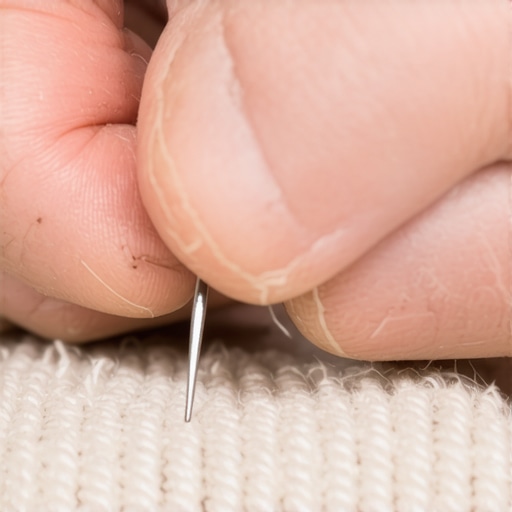
Carpet seams fail because of improper heat application and the chemical degradation of the thermoplastic adhesive found on standard seaming tapes. Most installers move the iron too fast. To get a permanent bond, the adhesive must reach a state of complete liquefaction, allowing it to penetrate the primary and secondary backings of the carpet. If the iron is too cold, you get a cold bond which will eventually delaminate. If the iron is too hot, you scorch the fibers. We look at the molecular level of the adhesive. It is a polymer chain that must entangle with the polypropylene of the carpet. When the morning light reveals a seam, you are often looking at “peaking.” This happens when the power stretcher pulls the carpet tight, but the seam was not properly weighted during the cooling phase. The tension causes the two edges to tilt upward, forming a tiny tent. Under midday light, it is invisible. At 7:00 AM, it looks like a speed bump.
Laminate and the click of death
People think laminate is more forgiving than carpet. It is actually the opposite. While carpet hides small pebbles, laminate will telegraph a single grain of sand. The locking mechanisms are engineered to tolerances of less than a millimeter. If the subfloor is uneven, every step causes the tongue and groove to rub together. This creates friction, which leads to the “click of death.” Eventually, the HDF (High-Density Fiberboard) core will snap. When we talk about floor leveling, we are not just talking about aesthetics. We are talking about the mechanical survival of the locking system. The morning light will show you exactly where the laminate is bridging over a low spot because the planks will look slightly tilted, catching the sun differently than the neighboring boards.
| Floor Type | Flatness Requirement (10 ft) | Moisture Tolerance | Acclimation Time |
|---|---|---|---|
| Solid Hardwood | 1/8 Inch | 6% to 9% | 7 to 14 Days |
| Laminate Planks | 3/16 Inch | Moderate | 48 Hours |
| Plush Carpet | 1/4 Inch | Low | 24 Hours |
| Engineered Wood | 3/16 Inch | High | 72 Hours |
The humidity migration from showers and baths
Moisture migration from showers can raise the relative humidity of adjacent rooms, causing carpet fibers to swell and seams to become more prominent. If your master bathroom is constantly steamy, that water vapor is looking for a home. It finds it in the porous backing of your carpet. As the fibers absorb moisture, they expand. Since the carpet is tucked into tack strips and seamed together, it has nowhere to go but up. This expansion can cause the seam to ripple or “fishmouth.” This is why proper ventilation in showers is a flooring requirement, not just a plumbing one. I have seen 15,000 dollar installations ruined because a homeowner didn’t run a 50 CFM fan while they showered. The morning light catches those ripples, making the floor look like a series of waves. You can’t steam that out. You have to fix the humidity or the subfloor.
The truth about floor leveling compounds
Most people want the thickest underlayment, but too much cushion actually causes the locking mechanisms on LVP or laminate to snap under pressure. When we use floor leveling compounds, we are looking at the compressive strength. A high-quality self-lever should have a PSI rating of at least 4,000. Cheap stuff will crumble under the weight of a heavy dresser. When I am prepping a slab, I am looking for C-S-H (Calcium Silicate Hydrate) crystals. If the concrete is dusty, the leveler won’t stick. You need a primer that creates a chemical bridge. If the installer just pours the liquid over a dirty floor, it will delaminate within a year. You will hear a hollow sound when you walk, and the morning sun will show the slight lifting of the entire floor system.
- Check subfloor flatness with a 10-foot straightedge before any material arrives.
- Verify that the carpet seam tape is a premium grade with high adhesive mass.
- Ensure the room temperature is maintained between 65 and 85 degrees Fahrenheit.
- Use a seaming roller immediately behind the iron to force the adhesive into the backing.
- Never install heavy cabinetry or kitchen islands on top of floating floors.
The ghost in the expansion gap
Every floor breathes. Wood, laminate, and even the PVC in vinyl planks expand and contract with temperature changes. If you don’t leave a 1/4 inch or 3/8 inch gap at the perimeter, the floor will hit the wall and buckle. This is the “ghost” that haunts many installations. In the morning, when the house is cool, the floor might look fine. As the sun warms the surface, the material expands. If there is no gap, the floor peaks at the weakest point, which is usually the seam. This is why we remove baseboards instead of just using quarter-round. We need to see that gap. We need to know the floor has room to move. If you see a hump in the morning sun, go to the wall and see if you can slide a credit card between the floor and the drywall. If you can’t, your floor is trapped.
“Deflection is a silent killer; if the joists flex, the finish floor will fail regardless of the material cost.” – Master Flooring Axiom
Why your subfloor is lying to you
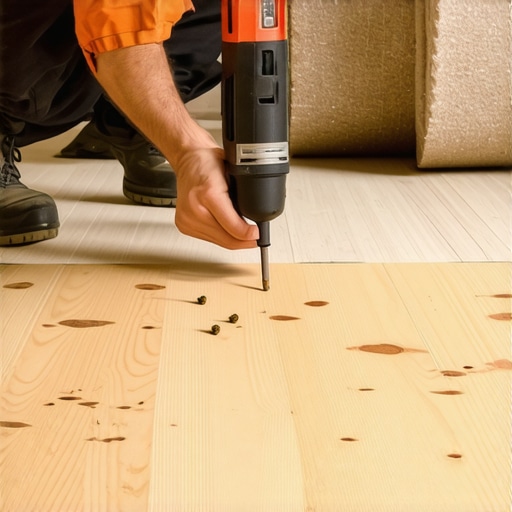
Plywood looks flat until you put a level on it. Over time, joists settle and crowns develop in the lumber. A 1/8 inch deviation might not seem like much, but when you are doing a carpet install with a low-pile commercial grade, that 1/8 inch becomes a mountain. We use a process called “flash patching” to smooth out the transitions between plywood sheets. If the seams of your subfloor are not sanded flat, they will telegraph through the carpet. The morning light is the ultimate judge. It reveals the parallel lines of the subfloor sheets because the carpet is slightly higher at every junction. Professional installers spend 60 percent of their time on prep and 40 percent on the actual installation. If your guy was in and out in four hours, he didn’t do the prep. He just covered up the problems. You are now seeing those problems every morning at sunrise.