Why Your Carpet Seams Look Like a Giant Scar on Your Living Room Floor
You smell that? It is a mix of WD-40, stale coffee, and the fine particulate of red oak dust. That is the smell of a real job site. If you are staring at a thick, ugly line running across your expensive new frieze or plush carpet, you are looking at a failure of physics and a lack of respect for the trade. A carpet install is not just laying down a rug. It is a structural engineering task that requires precision trimming, chemical bonding, and a deep understanding of subfloor topography. Most people think a seam is just two pieces of fabric meeting. It is not. It is a high-tension joint that must withstand thousands of pounds of foot traffic without shifting a millimeter. When that joint is visible, it is usually because the installer treated the carpet like a blanket rather than a performance surface. I spent three days grinding concrete on a job last month just so the floor would not click like a castanet and the carpet would lay flat. Most guys skip the leveling compound. They think the underlayment will hide the dip. It won’t. If the floor is not level, the seam will peak or valley, and no amount of steam will fix it. [IMAGE_PLACEHOLDER]
The physics of a failing seam
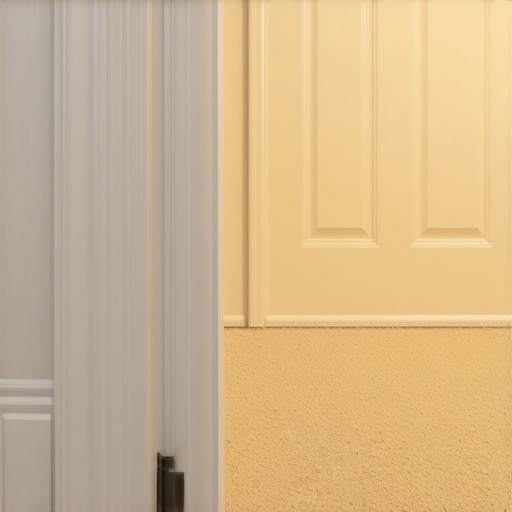
A visible carpet seam is caused by misaligned pile direction, incorrect heat tape temperature, or excessive seam sealer. When the light refraction hits the fibers at different angles, the seam creates a visible shadow that looks like a scar. If the row cutting is not done with a loop pile cutter or a cushion back cutter, the installer likely cut through the fibers rather than between them. This leaves frayed ends that can never be tucked properly. You have to understand the denier of the yarn and how the primary backing interacts with the hot melt adhesive. If the iron is too hot, it melts the synthetic backing. If it is too cool, the thermoplastic resin does not penetrate the secondary backing. It is a narrow window of success that many rush through to get to the next job. This is why floor leveling is essential before any textile touches the ground.
Why your subfloor is lying to you
The subfloor levelness determines the structural integrity of every carpet install and laminate project. If there is a 1/8 inch deviation over a ten foot span, your carpet seams will eventually peak or split because the tack strips are pulling at an uneven angle. I have seen guys try to install laminate over a heaving slab. They think the foam underlayment is a magic wand. It is not. The locking mechanisms on those planks will snap under the deflection of your footsteps. Concrete moisture is another invisible killer. You need a calcium chloride test or a relative humidity probe to ensure that slab is not off-gassing vapor that will delaminate your seam tape. A wet slab is a death sentence for adhesive chemistry. You cannot fight the hydrostatic pressure of a house built on a high water table without a proper vapor barrier.
“A floor is only as good as the subfloor beneath it; deflection is the enemy of every joint.” – Master Flooring Axiom
The myth of the waterproof floor
People love to talk about waterproof laminate and LVP as if they can survive a flood. The wear layer might be plastic, but the core chemistry and the subfloor prep are still vulnerable. If you have a shower leaking in the next room, that moisture travels through the wall plate and under your flooring. This causes mold growth and adhesive failure in your carpet seams. Waterproof does not mean vapor-proof. I once walked into a house where the laminate was buckled six inches off the ground because the installer forgot to leave a 1/4 inch expansion gap at the perimeter. They locked the floor under a heavy kitchen island, killing its ability to breathe. Wood and plastic expand and contract with the ambient humidity. If you do not give it room to move, it will find its own room by peaking at the seams.
| Metric | Standard Requirement | Critical Failure Point |
|---|---|---|
| Concrete Moisture | 3.0 lbs / 1000 sqft | Over 5.0 lbs |
| Subfloor Levelness | 1/8 inch per 10 feet | Over 1/4 inch deviation |
| Seam Tape Temp | 325 to 375 Degrees | Under 300 Degrees |
| Expansion Gap | 1/4 to 3/8 inch | Zero gap / Tight fit |
The heat tape chemical bond
The seam tape is the structural backbone of your carpet. It consists of a paper carrier, fiberglass reinforcement, and a thermoplastic adhesive. When the iron passes over it, the viscosity of the glue must be just right to grab the latex backing. If the installer moves the iron too fast, you get a starved joint. If they move too slow, they char the fibers. Professional installers use a seam roller immediately after the iron to press the carpet backing into the molten glue. This creates a monolithic bond. But if the floor leveling was ignored, that tape is trying to bridge a gap, which puts torsional stress on the adhesive. Eventually, the latex will crack, and the seam will delaminate. You are left with a scar that no carpet cleaner can remove.
- Verify Moisture: Always check the MVER of the concrete slab before starting.
- Acclimation: Let the materials sit in the controlled environment for 48 hours.
- Power Stretching: Use a power stretcher, not just a knee kicker, to ensure drum-tight tension.
- Seal the Edges: Every cut edge must be sealed with liquid latex to prevent unraveling.
- Check the Lights: Inspect the seams with a low-angle work light before the furniture arrives.
The shadow on the floor
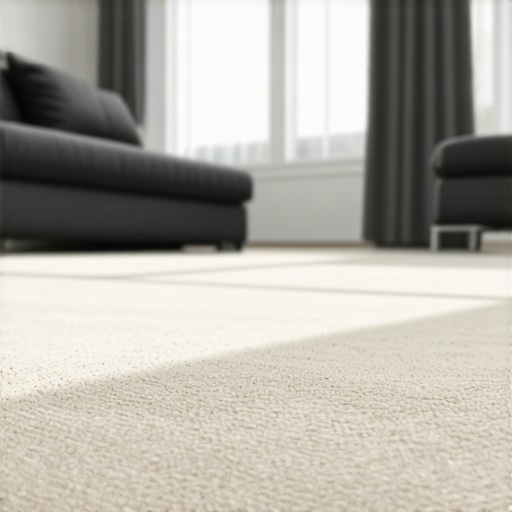
The pile height and light source are the biggest enemies of an invisible seam. If your living room has large south-facing windows, the raking light will highlight every micro-deviation in the floor leveling. A professional knows to run seams parallel to the light source whenever possible. This minimizes the shadow line. Also, never place a seam in a high-traffic pivot point. The shear force of a person turning on their heel will pull the carpet fibers out of the latex. This is why subfloor prep is non-negotiable. If the subfloor flexes, the seam tape flexes, and the fibers eventually separate. You are paying for a surface, but you are really buying the preparation underneath it.
“True floor leveling is the difference between a craft and a commodity.” – NWFA Technical Manual
The final word on fibers
Do not let a retailer tell you that thick pad makes up for a bad subfloor. Too much cushion actually causes the locking mechanisms on laminate to snap and carpet seams to peak because there is too much vertical movement. You want a dense pad, not a thick one. A 7/16 inch 8-pound rebond is usually the sweet spot for residential carpet install. If you are going over radiant heat, you need to check the R-value to ensure you are not insulating the heat away from the room. Flooring is a system. If one part of the assembly fails, the whole thing is junk. Take the time to grind the high spots and fill the low spots. Your carpet seams will thank you by disappearing into the background where they belong.”