Why Your Shower Drain Gasket is Leaking and How to Tighten It
Fixing the Leaking Shower Drain Gasket Without Destroying Your Subfloor
I spent three days grinding concrete on a job last month just so the floor wouldn’t click like a castanet. That job was supposed to be a simple laminate install. The homeowner neglected a tiny drip under their shower pan for six months. By the time I arrived, the moisture had traveled through the slab. It created a nightmare of efflorescence and mineral deposits that felt like mountain ranges under my level. Most guys skip the leveling compound. They think the underlayment will hide the dip. It won’t. If you ignore a leaking shower drain gasket, you are not just looking at a plumbing fix. You are looking at the total destruction of your subfloor structural integrity. I smell like floor wax and knee pads, and I am here to tell you that the 1/8 inch gap in your plumbing is the enemy of your entire home foundation.
The microscopic failure of a rubber seal
A leaking shower drain gasket usually fails because of chemical degradation, mechanical vibration, or improper compression during the initial install. Water travels via capillary action through any gap smaller than a hair. When the rubber gasket loses its elasticity due to hard water minerals or age, the seal breaks. This allows water to seep into the subfloor assembly, causing rot and structural deflection.
“A floor is only as good as the subfloor beneath it; deflection is the enemy of every joint.” – Master Flooring Axiom
Why your subfloor is lying to you about water
Subfloors often hide moisture damage for months because the top layer of material acts as a vapor barrier while the core rots. In a carpet install near a bathroom, the padding absorbs the leak like a sponge. You might not feel the dampness until the tack strips have rusted and the plywood has delaminated. This is the structural reality of water. It moves horizontally. A leak in the shower drain gasket does not just go down. It travels sideways across your floor leveling compound and into your laminate planks. Laminate is particularly vulnerable because the HDF core is basically compressed sawdust. One drop of water into the tongue and groove joint will cause the edges to peak. It will buckle. Once that happens, there is no fixing it. You are tearing it out.
The structural physics of the drain assembly
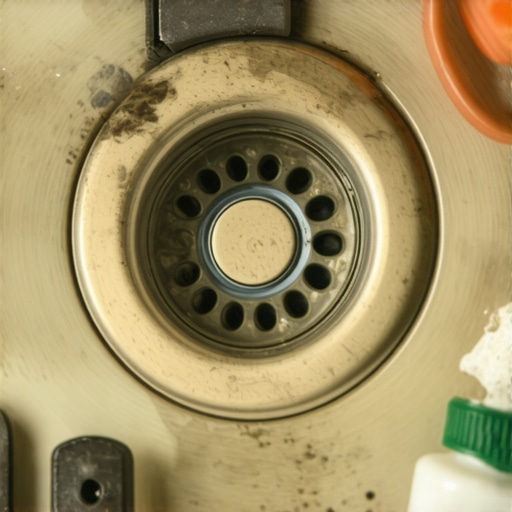
To understand the leak, you must understand the compression nut and the friction washer. The gasket sits between the shower floor and the drain body. A friction washer, usually made of thin plastic, sits between the gasket and the nut. Without that friction washer, the nut would grab the rubber gasket and twist it, creating a pucker. That pucker is exactly where the water escapes. Here is a comparison of materials used in these seals.
| Material Type | Durometer Hardness | Flexibility | Chemical Resistance |
|---|---|---|---|
| EPDM Rubber | 60A | Moderate | High |
| Buna-N Nitrile | 70A | Low | Excellent |
| Silicone | 50A | Very High | Fair |
| Neoprene | 65A | Moderate | Good |
While most people want the thickest underlayment or the softest gasket, too much cushion actually causes the locking mechanisms on LVP to snap under pressure and gaskets to squeeze out of place. You need the right durometer rating for your specific drain assembly. If the gasket is too soft, the compression nut will deform it. If it is too hard, it will not mold to the imperfections of the shower pan surface.
The 1/8 inch that ruins everything
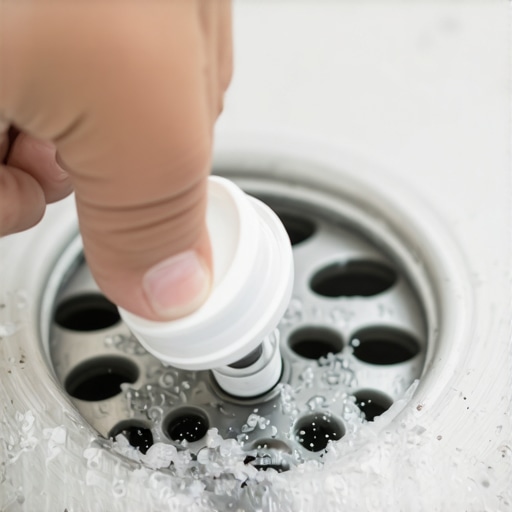
Tightening a shower drain gasket requires a specific sequence of mechanical force to ensure the seal is uniform and watertight. You cannot just crank the nut as hard as you can. Over-tightening is actually worse than under-tightening. If you over-torque the assembly, you risk cracking the fiberglass or acrylic of the shower base. Once that base cracks, the entire unit is trash. You will be tearing out tiles and subfloor for a week. Use a dedicated internal drain wrench. This tool grabs the crosshairs inside the drain. It allows you to hold the body steady while you tighten the nut from below or above, depending on the model. It is about precision, not power.
The ghost in the expansion gap
Every floor needs room to breathe. When you have a leak, the wood fibers in your subfloor expand. They push against the walls. If you did not leave a proper expansion gap during your carpet install or laminate layout, the floor will lift. It will create a bubble in the middle of the room. I have seen 15,000 dollar floors ruined because someone forgot to leave a 1/4 inch gap at the perimeter. Moisture from a shower leak accelerates this. The humidity in the air from a slow leak is enough to cause solid 3/4 inch oak to cup.
“The success of a shower assembly depends entirely on the management of moisture at the transition point where plumbing meets the structural deck.” – Master Flooring Axiom
Steps to tighten the gasket properly
- Inspect the drain assembly for visible cracks in the plastic or metal housing.
- Clean the area around the locknut to remove old plumber’s putty or silicone residue.
- Check the friction washer to ensure it is not brittle or cracked.
- Apply a small amount of silicone grease to the threads to prevent binding.
- Use an internal drain wrench to snug the assembly without using excessive force.
- Wait twenty-four hours for any sealant to cure before running water.
The regional climate factor in floor failure
If you live in a high humidity region like the Gulf Coast, your subfloor is already under stress. The ambient moisture levels are higher. A leaking shower drain gasket in Houston is a much bigger emergency than a leak in Phoenix. In the swampy humidity, mold will colonize the underside of your carpet or laminate in less than 48 hours. You need to use a moisture meter. I never trust my eyes. I trust the pins in my meter. If the subfloor reads over 12 percent moisture content, you cannot put a floor over it. You have to dry it out with industrial fans and dehumidifiers. If you ignore the moisture, the floor leveling compound will fail to bond. It will flake away like old skin. This is why I am a stickler for the standards. Shortcuts lead to lawsuits and ripped-up floors. Do the work once. Do it right. Fix the leak. Then fix the floor.