The ‘Hairdryer Hack’ for Removing Wax from Your Living Room Carpet
The physics of the thermal extraction method
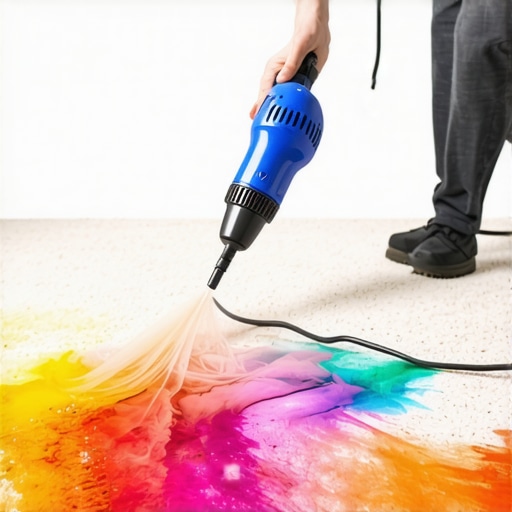
The hairdryer hack for removing wax from carpet works by using controlled convection heat to transition solid paraffin or soy wax into a liquid state. This liquid is then absorbed via capillary action into a sacrificial medium such as a paper towel or a brown paper bag. This process relies on the melting point of the wax being lower than the melting point of the synthetic carpet fibers. I smell like WD-40 and oak dust most days, and I have seen plenty of people ruin a perfectly good room by being impatient with a heat gun. You have to understand the thermal limits of your flooring. Most residential carpets are made of nylon, polyester, or triexta. These polymers have specific glass transition temperatures. If you exceed those temperatures, you are not just removing wax, you are melting the floor. I spent three days grinding concrete on a job last month just so the floor would not click like a castanet, and that same level of precision is required here. Most guys skip the leveling compound. They think the underlayment will hide the dip. It won’t. The same goes for wax. If you do not get it all out of the base of the pile, it will attract dirt and create a permanent dark spot that looks like a grease stain.
“A floor is only as good as the subfloor beneath it; deflection is the enemy of every joint.” – Master Flooring Axiom
The chemistry of paraffin and synthetic blends
The chemical composition of candle wax determines its viscosity and its ability to bond with carpet fibers like nylon or wool. Paraffin wax is a petroleum byproduct with a high alkane content, while soy wax consists of hydrogenated soybean oil which has a lower melting point. Understanding these differences is vital before you start blowing hot air into your floorboards. When wax spills, it does not just sit on top. It undergoes a phase change and migrates deep into the carpet install, sometimes reaching the primary backing or even the pad. If the wax reaches the pad, no amount of hairdryer heat will save you. You are looking at a structural failure of the aesthetic surface. I have seen guys try to use a blowtorch. Do not be that guy. The heat must be indirect. You are essentially performing a low-temperature distillation. You want to liquefy the substance enough to break its surface tension so it can be wicked away by the cellulose fibers in your paper towel.
The 1/8 inch that ruins everything
Precision in flooring is measured in fractions of an inch, and this applies to the gap between your hairdryer and the carpet surface. Maintaining a consistent distance ensures that the heat energy is sufficient to melt the wax without reaching the auto-ignition or melting temperature of the carpet. When I am doing a floor leveling job, 1/8 of an inch is the difference between a floor that lasts thirty years and one that fails in three. In wax removal, that same 1/8 of an inch prevents the singeing of the fiber tips. If you singe the tips, the light will reflect off them differently, and the spot will always be visible. It is the same reason we tell people that laminate in showers is a recipe for disaster. The moisture intrusion at the seams is inevitable. While a living room carpet does not face shower levels of water, the liquid wax acts as a contaminant that disrupts the factory-applied stain resistance of the carpet. You are fighting a battle at the molecular level.
| Wax Type | Melting Point (F) | Absorption Difficulty |
|---|---|---|
| Soy Wax | 120-130 | Low |
| Paraffin Wax | 130-150 | Medium |
| Beeswax | 145-150 | High |
| Microcrystalline | 160-180 | Extreme |
Why your subfloor determines the success of a repair
A subfloor provides the structural foundation for your carpet, and any irregularities like dips or ridges will cause premature wear on the fibers above. If your subfloor is not level, the mechanical stress of foot traffic on a wax-damaged area can lead to permanent delamination. I have walked into houses where a $15,000 wide-plank walnut floor was cupping so bad it looked like a potato chip because the installer didn’t check the moisture. While carpet is more forgiving, the subfloor still matters. If you have a dip in the plywood or the concrete slab, the wax will pool in that low spot. When you apply heat, you are trying to pull that pool back up through the fibers. This is why floor leveling is not just for hard surfaces. A flat substrate ensures that your cleaning efforts are uniform. If the floor is uneven, the heat from your hairdryer will be unevenly distributed, leading to hot spots and potential fiber damage. I always carry a moisture meter. If the subfloor is damp, the heat will pull that moisture up, creating a steam effect that can ruin the carpet glue.
The step by step thermal extraction protocol
The execution of the hairdryer hack requires a systematic approach to heat application and medium replacement to ensure total contaminant removal. You must work from the outside of the spill toward the center to prevent the liquid wax from spreading further into the surrounding clean fibers. Follow this checklist for a professional result.
- Scrape away excess cold wax with a blunt butter knife to reduce the volume of material.
- Place a clean, white paper towel or a brown paper bag over the remaining wax.
- Set the hairdryer to a medium heat setting, avoiding the highest thermal output.
- Move the hairdryer in a constant circular motion about six inches above the paper.
- Observe the paper for darkening, which indicates the wax is being absorbed.
- Shift to a clean section of the paper as soon as it becomes saturated with wax.
- Continue until no more wax transfers to the paper medium.
- Clean the area with a small amount of rubbing alcohol to remove any residual oils.
The moisture barrier and floor leveling requirements
Moisture barriers are essential in any flooring installation to prevent the migration of ground water into the decorative surface material. When using heat to remove wax, you must be aware of the vapor pressure that can build up if the subfloor has high moisture content. This is particularly true if you are working over a concrete slab on grade. If the slab was not properly sealed, the heat from the hairdryer can draw up salts and minerals, a process called efflorescence. This can leave a white, crusty residue once the area cools. I always tell my clients that the best floor is the one they never have to think about. That starts with the prep. If you are doing a carpet install, do not go cheap on the pad. A high-density rebond pad will resist wax penetration better than a cheap foam pad. It gives you a fighting chance to get the mess up before it becomes a permanent part of your home’s geology.
“Deflection and moisture are the two Horsemen of the Flooring Apocalypse; ignore them at your own peril.” – NWFA Technical Guidelines
Why laminate in showers is a structural failure
Laminate flooring is constructed from high-density fiberboard which is essentially compressed sawdust and resin, making it highly susceptible to catastrophic swelling when exposed to the humidity found in showers. Even waterproof laminate is only protected at the surface, not the joints or the core. Bringing this back to your carpet wax issue, it is all about the integrity of the layers. When you apply heat to a carpet, you are stressing the primary and secondary backings. These are held together by a latex compound. Excessive heat can cause this latex to break down, leading to ripples in the carpet. It is the same mechanical failure you see when laminate gets wet and the edges peak. Once the structure is compromised, the floor is toast. You can scrape and blow-dry all you want, but if you have melted the backing, you are looking at a patch job or a full replacement. Precision is the only thing that saves you from a costly mistake.