The Best Way to Remove Old Carpet Glue from Concrete
The Brutal Reality of Removing Carpet Glue From Your Concrete Slab
I spent three days grinding concrete on a job last month just so the floor wouldn’t click like a castanet. Most guys skip the leveling compound. They think the underlayment will hide the dip. It won’t. I walked into a house where a five thousand dollar flooring job was ruined because the installer tried to go right over old adhesive. The smell of thirty year old mastic is something you never forget, it is the scent of a failed project. When you pull up that old, stained carpet, you are often met with a landscape of yellow ridges or black swirls. This is not just a cosmetic mess, it is a structural barrier that prevents your new floor from ever sitting flat. If you ignore this glue, your new laminate will bounce and your floor leveling compounds will peel off like a cheap sticker. You have to treat that concrete like a surgical site. This means understanding the chemistry of the bond and the physics of the concrete pores. Most people want a quick fix, but a quick fix in the flooring world usually leads to a tear-out in six months.
The persistent nightmare of old adhesive
To remove old carpet glue from concrete, you must first identify the type of adhesive and then choose between mechanical grinding or chemical dissolution. Yellow glues usually respond to heat or citrus strippers, while black mastic often contains asbestos and requires wet scraping or professional abatement to prevent the release of toxic fibers into your home. This initial stage of any carpet install is the most physical and the most dangerous. If you are working in an old basement, the slab is likely damp. Concrete is a sponge. It has a microscopic network of capillaries that pull moisture from the earth. When a carpet is glued down, that adhesive migrates into those pores. Over decades, the glue hardens into a substance that is nearly as strong as the concrete itself. If you try to just scrape it with a hand tool, you will likely just lose your temper and ruin your shoulders. You need a plan that accounts for the Concrete Surface Profile, also known as the CSP, which is a measurement of the texture of the slab.
“A floor is only as good as the subfloor beneath it, deflection is the enemy of every joint.” – Master Flooring Axiom
The mechanical path to a flat floor
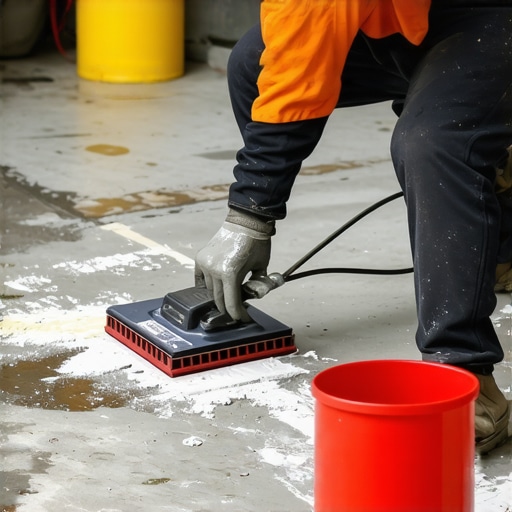
Mechanical removal involves the use of floor grinders or scrapers to physically shear the adhesive from the concrete surface without the use of liquids. This method is the preferred choice for professionals because it leaves the concrete pores open, which is essential for the proper bonding of new floor leveling products or tile thin-set. I prefer the mechanical approach because it is honest work. You see the glue disappear. If you use a seven inch angle grinder with a diamond cup wheel, you can chew through decades of yellow carpet glue in an afternoon. However, the dust is a monster. You must use a vacuum with a HEPA filter or you will be breathing in pulverized adhesive and silica for the next week. Silica dust is no joke, it will stay in your lungs forever. When I am on a job, I look for the ridges. If the glue is more than a sixteenth of an inch thick, a scraper won’t cut it. You need the weight of a walk-behind floor maintainer equipped with a carbide scraper attachment. This tool uses centrifugal force to flick the glue off the surface.
The hidden cost of chemical strippers
Chemical removal utilizes solvents or soy-based liquids to break the molecular bond between the glue and the concrete slab. While this method creates less dust, it often leaves a greasy residue that can interfere with future adhesives, making it a risky choice for those planning to install glue-down hardwood or showers. I have seen guys pour a gallon of stripper on a floor and walk away. When they come back, they have a puddle of toxic soup. The problem with chemicals is the “tack-back” effect. As the solvent evaporates, the glue often becomes even stickier than it was before. Then you are left with a gummy mess that clogs your tools. If you go this route, you must use a neutralizer afterward. I always tell homeowners that if they smell citrus for three days after the job is done, the floor isn’t clean yet. That residue acts as a bond-breaker. If you try to pour floor leveling compound over a chemically stripped floor without a massive amount of scrubbing, the leveling agent will eventually pop and crack.
The hazardous legacy of the black mastic era
Black mastic is an asphalt-based adhesive common in homes built before 1984 that frequently contains chrysotile asbestos fibers. This material must never be sanded or dry-scraped because the friction releases airborne toxins that represent a severe health risk to everyone in the building. If you see black glue, stop what you are doing. You need to test it. I have seen guys just hit it with a sander, filling the whole house with a grey cloud of poison. If it is asbestos, the safest way to deal with it is often to encapsulate it or use a specialized wet-scrape method. You keep the floor soaking wet so no dust can rise. Then you use a long-handled scraper to peel the wet sludge into sealed bags. It is a miserable, back-breaking job, but it is the only way to do it right. Once the black mastic is gone, the concrete will still be stained black. That stain is deep in the pores. You cannot just ignore it if you are planning to install showers or wet-area tile. The moisture from the shower will react with those old oils and create a failure in your waterproofing membrane.
| Method | Effectiveness | Dust Level | Drying Time |
|---|---|---|---|
| Diamond Grinding | Extreme | Very High | None |
| Citrus Stripper | Moderate | Zero | 24 Hours |
| Boiling Water | Low | Zero | 48 Hours |
| Carbide Scraping | High | Medium | None |
The final prep for your new laminate
Preparing for a laminate install requires a subfloor that is flat to within three-sixteenths of an inch over a ten-foot radius to prevent the locking mechanisms from snapping. Removing every trace of glue is the only way to ensure the underlayment sits flush against the slab without creating hollow spots. Laminate is a floating floor, but that does not mean it can float over a mountain range of old glue. If you have a lump of glue under a plank, every time someone walks over it, the joint flexes. Eventually, that plastic tongue will snap. Then you have a gap. Then the gap collects dirt. Before you know it, the whole floor is ruined. I always take a ten-foot straight edge and slide it across the room. If I see light under the bar, I know I have more grinding to do. This is where floor leveling comes into play. You don’t use the leveler to hide the glue, you remove the glue so the leveler can actually stick to the concrete. It is a chain of events. If the first link is weak, the whole thing falls apart.
“Concrete surface profile (CSP) requirements dictate whether an adhesive will fail or find a permanent mechanical key.” – Subfloor Engineering Standard
The essential toolkit for glue removal
A professional toolkit for removing carpet glue includes a heavy-duty floor scraper, a seven-inch angle grinder with a dust shroud, a HEPA vacuum, and a moisture meter to ensure the slab is dry before the next phase. Each tool serves a specific purpose in the structural restoration of the concrete surface. You cannot do this job with a putty knife. You need leverage. I use a scraper with a four-foot handle and a replaceable carbon steel blade. You have to sharpen that blade every twenty minutes. If the blade is dull, you are just bruising the glue, not cutting it. If you are dealing with a large area, rent a floor maintainer with a Diamabrush attachment. This tool has blades coated in diamond grit that are designed to specifically target soft coatings like glue without gouging the hard concrete underneath. It is the gold standard for floor prep.
- Test for asbestos if the house was built before the mid-eighties
- Wear a P100 respirator even if you are using a vacuum
- Seal off all HVAC vents to prevent dust migration
- Use a concrete moisture meter to check for hydrostatic pressure
- Keep a bucket of warm water and soap for final residue cleaning
The physics of the bond are simple. Glue works by creating a mechanical lock within the surface of the concrete. Over time, the polymers in the glue degrade, but the mineral bond remains. To truly clean a floor, you have to remove the top layer of the concrete cream, also known as the laitance. This reveals the aggregate underneath. When you see the little stones in the concrete, you know you have reached a clean, structural surface. This is the only surface I trust for a high-end carpet install or a tile job. If you are skipping this step, you are just waiting for a failure. I have seen floors buckle in the humidity of a basement because the old glue acted as a moisture trap. Don’t be that guy. Take the time to grind it down to the bone. Your knees will hurt and your back will ache, but your floor will stay flat for thirty years. That is the mark of a master. That is why we do the hard work first.