The Credit Card Hack for Testing Laminate Underlayment Compression
The Credit Card Hack for Testing Laminate Underlayment Compression
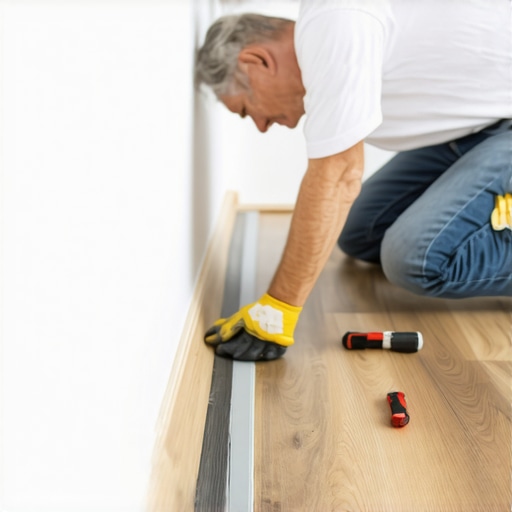
Most guys skip the leveling compound. They think the underlayment will hide the dip. It won’t. I spent three days grinding concrete on a job last month just so the floor wouldn’t click like a castanet. I remember walking onto a job site in the middle of July where the air was thick enough to chew. The installers had already laid half a house of expensive laminate over a cheap, three-millimeter foam underlayment. The subfloor was a mess of high spots and valleys. Within two hours of the sun hitting those planks, the floor started to groan. Every step sounded like a deck of cards being shuffled. I had to tell the homeowner that their brand-new floor was essentially a ticking time bomb of broken click-locks because they ignored the foundational physics of compression and deflection. That is the reality of this trade. You either respect the subfloor or you pay for it later in callbacks and ripped-up planks.
Why your subfloor is lying to you
Subfloor flatness is the single most important factor in any laminate installation. If the concrete or wood substrate has a dip exceeding 3/16 of an inch over a 10-foot radius, the locking mechanisms will eventually fail under the weight of foot traffic. You might look at a concrete slab and think it looks smooth, but your eyes are deceptive. Concrete is a porous, shifting material that settles over time. It develops ridges during the pour and valleys as the water evaporates. When you throw a floating floor over these imperfections, you are creating a bridge. Every time a person walks over that bridge, the laminate flexes. If that flex exceeds the tolerance of the HDF core, the tongue snaps. It is a mechanical certainty, not a possibility. You need to verify every square foot with a long straightedge before even thinking about opening a box of flooring. Leveling is not an option; it is a requirement for a floor that lasts twenty years instead of twenty months.
The 1/8 inch that ruins everything
Minor height variations in your subfloor create air pockets that cause vertical movement. This movement, often as small as 1/8 of an inch, stresses the tongue and groove joints of your laminate, leading to audible clicks and eventual structural separation of the planks. When we talk about floor leveling, we are talking about the difference between a floor that feels solid like a rock and one that feels like a trampoline. The industry standard is typically 1/8 inch over 6 feet or 3/16 inch over 10 feet. Anything beyond that creates a void. That void is where the noise comes from. As the plank is pushed down into the valley, the friction between the locking joints creates a high-pitched click. If the subfloor is too high in one spot, it creates a pivot point. The planks on either side of that high spot will lift, creating a visible gap at the seams. I have seen million-dollar homes ruined by a simple lack of floor leveling compound. You have to be a stickler for the details because the floor is the only part of the house you interact with every single second you are moving.
“A floor is only as good as the subfloor beneath it; deflection is the enemy of every joint.” – Master Flooring Axiom
The physics of underlayment compression
Underlayment provides a cushion that must resist over-compression to protect the floor. High-quality underlayment maintains its cellular integrity under load, whereas cheap, thick padding collapses, allowing the floor to flex too much and breaking the brittle click-lock edges. The molecular structure of your underlayment matters. Whether it is Cross-Linked Polyethylene (IXPE) or natural cork, the goal is high density. A low-density foam might feel soft underfoot, but that softness is the enemy of a floating floor. Think of it like this. If you put a piece of glass on a mattress and walk on it, the glass breaks. If you put that same glass on a concrete floor, it stays intact. A laminate floor is a rigid system that requires a stable base. When the underlayment is too squishy, it allows the floor to move vertically beyond its design limits. This is why we use the credit card hack. It is a simple field test to ensure your underlayment has the structural integrity to support the weight of furniture and people without bottoming out or allowing excessive deflection. [IMAGE_PLACEHOLDER] Underlayment is also your primary defense against moisture vapor. In a basement, the concrete is constantly breathing out water. Without a proper vapor barrier and a high-density core, that moisture will penetrate the underside of your laminate, causing the edges to swell and the wear layer to peel.
The credit card hack for testing compression
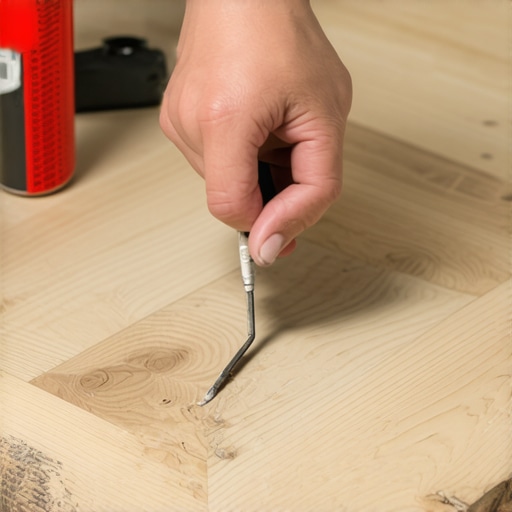
The credit card hack is a manual test to check if an underlayment is too soft for the specific laminate being installed. By placing a straightedge over the underlayment and attempting to compress it with the edge of a credit card, you can visualize how the material will behave under the concentrated load of a heavy chair leg or a high heel. To perform the test, lay a three-foot level or straightedge on top of your installed underlayment. Take a standard plastic credit card and try to slide it under the straightedge while applying downward pressure. If the underlayment compresses enough that the card can slide into a gap larger than its own thickness under the weight of the level, the material is likely too soft. Furthermore, you should press the edge of the card directly into the foam. If it leaves a permanent indentation that does not spring back immediately, the cellular structure is weak. A quality underlayment like a high-density IXPE will resist the edge of the card and maintain its shape. This test is vital because it catches “builder-grade” padding that looks thick and impressive but lacks the compressive strength required by major manufacturers. If your underlayment fails this hack, you are essentially installing your floor on a sponge, and you can expect the joints to fail within the first two years of use.
The chemistry of laminate click locks
The locking mechanism of a laminate plank is a marvel of modern milling, but it is also incredibly fragile. Most cores are made of High-Density Fiberboard (HDF), which is essentially sawdust and resin compressed under extreme heat and pressure. While HDF is very hard, it lacks the tensile strength of real wood. It is brittle. The tongue of a click-lock plank is often less than two millimeters thick. When the floor flexes due to poor underlayment or an uneven subfloor, the force concentrated on that tiny tongue is immense. If the underlayment allows for more than one millimeter of vertical movement, the tongue begins to fatigue. At the molecular level, the resin bonds within the HDF start to snap. This is called “joint fatigue.” Once the joint is fatigued, the floor will never be tight again. You will see gaps appearing at the short ends of the planks, and no amount of tapping will close them permanently. This is why we insist on rigid underlayments and perfectly flat subfloors. It is about protecting the mechanical bond that keeps the floor together. [IMAGE_PLACEHOLDER]
“The moisture vapor emission rate shall not exceed three pounds per one thousand square feet in twenty-four hours.” – NWFA Technical Guidelines
The ghost in the expansion gap
Every floating floor must have a perimeter expansion gap to accommodate changes in temperature and humidity. Laminate floors are composed of organic fibers that expand and contract; failing to provide a 1/4 inch to 3/8 inch gap at every wall and vertical obstruction will cause the floor to buckle or