The Ice Cube Trick for Fixing Furniture Divots in High-Pile Carpet
I spent three days grinding concrete on a job last month just so the floor wouldn’t click like a castanet. Most guys skip the leveling compound. They think the underlayment will hide the dip. It won’t. I smelled like dust for a week and my knees felt like they were full of broken glass. But that is the job. If you do not get the subfloor right, every dollar you spend on the finish material is just money thrown into a wood chipper. Carpet is no different. People think carpet is a mask. They think it hides the sins of a lazy builder or a slab that looks like the surface of the moon. It does not. A dip in the subfloor will eventually show through even the thickest high-pile frieze. And when you park a three-hundred-pound mahogany armoire on that carpet for five years, you are not just making a dent. You are fundamentally altering the molecular structure of the fibers and the backing underneath. This is where the ice cube trick comes in. It is not some Pinterest magic. It is basic thermodynamics and moisture absorption applied to synthetic polymers.
The physics of fiber compression
Carpet fibers like nylon and polyester possess a property called memory that allows them to return to their original shape after being crushed. When heavy furniture sits on high-pile carpet for years, the weight forces air out and compresses the polymer chains at the base of the yarn. This compression is not just a cosmetic issue. It is a mechanical failure of the pile. When you look at a furniture divot, you are looking at a localized zone where the crimp of the fiber has been flattened. In high-pile carpet, the weight-to-surface-area ratio is punishing. A thin furniture leg might exert over fifty pounds per square inch. This pressure crushes the air pockets between the filaments. Over time, the backing material, often a stiff SBR latex, also deforms. If you just try to vacuum it out, you will fail because the fibers are locked in their flattened state by a lack of moisture and heat. The ice cube provides both in a controlled delivery system that prevents the over-saturation that causes mold in the primary and secondary backing.
The ice cube solution for crushed yarn
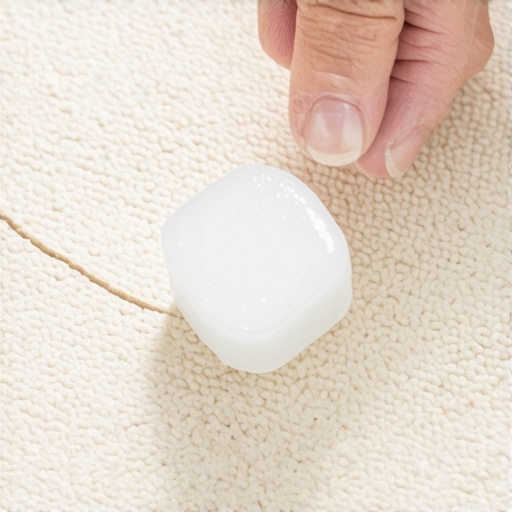
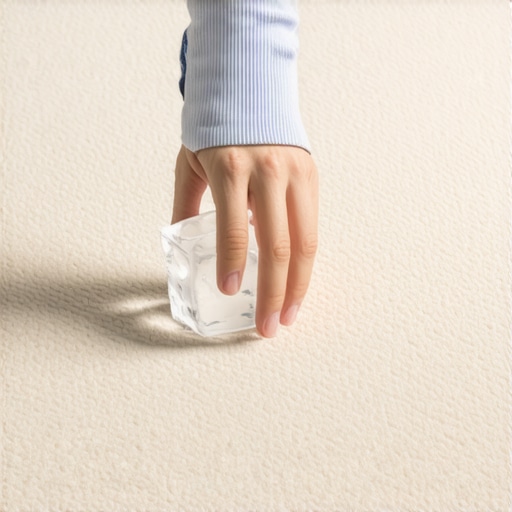
Melting ice cubes provide a slow, controlled release of moisture that penetrates deep into the carpet backing without saturating the subfloor. As the water is absorbed by the crushed fibers, they swell and expand, allowing the pile to be lifted back to its original vertical orientation easily. You do not want to pour a glass of water on the spot. That is a rookie move. Too much water will soak through the pad and hit the subfloor, which is a disaster if you have a wood subfloor or a concrete slab without a proper moisture barrier. You place the ice cube directly in the divot. As it melts at a constant thirty-two degrees Fahrenheit, the water molecules move into the fiber core. This is especially effective on nylon. Nylon is a hydrophilic fiber. It loves water. When it absorbs that moisture, the hydrogen bonds within the polymer chain relax. This allows the fiber to stand back up. You let it sit for several hours. Once the fiber is damp but not soaked, you use a stainless steel spoon or a specialized carpet groomer to gently lift the pile. It is a slow process. Speed is your enemy here.
“A floor is only as good as the subfloor beneath it; deflection is the enemy of every joint.” – Master Flooring Axiom
The molecular zoom into fiber resilience
Nylon 6,6 is the gold standard for high-pile resilience. It has a more compact molecular structure than polyester, which makes it harder to crush and easier to revive. When we talk about the ice cube trick, we are talking about manipulating the glass transition temperature of the fiber indirectly. By introducing moisture, you lower the temperature at which the fiber becomes pliable. Polyester is more hydrophobic. It resists water, which means the ice cube trick takes longer and might require a bit of extra steam from a hand iron held several inches above the damp spot. You never touch the iron to the carpet. If you do, you will melt the plastic fibers and create a permanent, shiny scar that no amount of ice or grooming will ever fix. I have seen guys ruin a ten-thousand-dollar custom rug because they got impatient with a steamer. You have to respect the melting point of the material.
Why subfloor leveling dictates carpet longevity
Even the plushest carpet cannot hide a subfloor that is out of level by more than 3/16 of an inch over 10 feet. High spots cause accelerated wear on the carpet backing, while low spots create air pockets that lead to premature delamination and buckling under heavy furniture. If you are planning a carpet install, you need to check the slab. I use a ten-foot straightedge. If I see light under that bar, I am reaching for the self-leveling underlayment. People ask why their laminate or carpet is failing. It is almost always because they ignored the prep. If your subfloor is uneven, your furniture will not sit level. This creates uneven pressure points on the carpet, leading to deeper, more permanent divots that even the ice cube trick cannot fully repair. If the floor leveling is done right, the weight is distributed more evenly across the tack strips and the pad, which preserves the life of the yarn.
The 1/8 inch that ruins everything
I remember a job in a high-rise where the client wanted a thick, shaggy pile over an old concrete floor. The slab was a mess. It looked like a topographic map of the Rockies. I told them we needed to pour a cementitious leveler. They refused. They said the thick pad and the carpet would hide it. Six months later, I got the call. The carpet was developing strange ridges. The furniture was wobbling. Because the floor was not level, the tack strips were pulling out of the concrete in the low spots. The tension was all wrong. When you have high-pile carpet, the tension is what keeps it looking good. If it loses that tension, it ripples. Once a carpet ripples, the fibers in the peaks of those ripples wear out ten times faster than the rest of the floor. I ended up pulling the whole thing up, grinding the high spots, and doing the job the way I suggested the first time. It cost them double. Do not be that person. Level your floors.
| Fiber Type | Resilience Rating | Recovery Speed | Moisture Affinity |
|---|---|---|---|
| Nylon 6,6 | Excellent | Fast | High |
| Polyester (PET) | Moderate | Slow | Low |
| Triexta (PTT) | High | Moderate | Low |
| Wool | Superior | Natural | High |
The humidity and weather logic of carpet care
If you live in a place like New Orleans or Houston, humidity is your constant shadow. High humidity can soften the latex backing of your carpet, making it more susceptible to furniture divots. In these environments, you have to be careful with the ice cube trick. You do not want to add more moisture to a room that is already at seventy percent humidity. You need to run a dehumidifier. Conversely, in a dry place like Phoenix, the carpet fibers can become brittle. Brittle fibers snap rather than bend. If you try to groom a dry, brittle furniture dent, you might just pull the fibers out of the primary backing. In dry climates, the slow melt of the ice cube is actually a blessing because it rehydrates the yarn before you apply any mechanical force with a brush or spoon.
“Substrate preparation is the most overlooked phase of flooring, yet it determines the success of the entire system.” – Master Flooring Axiom
A checklist for professional furniture dent removal
- Identify the fiber type to determine the required dwell time for moisture.
- Ensure the carpet pad is dry and free of existing mold or mildew.
- Place one or two ice cubes made from filtered water into the center of the dent.
- Allow the ice to melt completely over a period of four to six hours.
- Blot the excess moisture with a clean, white micro-fiber towel.
- Use a spoon or a carpet rake to gently lift the fibers in multiple directions.
- Keep all foot traffic off the area until the carpet is completely dry to the touch.
The ghost in the expansion gap
Whether you are doing a carpet install or laying laminate, you have to respect the expansion gap. Carpet needs it so the tack strips can bite and the installer can tuck the edge. Laminate needs it because the wood-based core will expand and contract with the seasons. If you push your furniture right up against the baseboard in a carpeted room, you are often sitting right on the architectural tension point of the room. This can cause the carpet to pull away from the wall. I always tell people to keep their heaviest pieces at least an inch or two away from the perimeter. This protects the transition and keeps the stretch of the carpet even. It also makes it easier to get an ice cube into those edge divots if you decide to rearrange the room later. Proper spacing is a sign of a floor that was installed by someone who knows the physics of the material. It is not just about how it looks on day one. It is about how it looks on day three thousand.
The risk of showers and moisture ingress
I have seen people install high-pile carpet right up against the transition of a master bathroom. This is a mistake. The steam from showers will eventually migrate into the carpet fibers and the pad. This moisture acts like a permanent, low-grade version of the ice cube trick, but without the grooming. It keeps the fibers in a constant state of collapse and creates a breeding ground for bacteria under the furniture. If you have carpet near a wet area, you need a solid transition like a marble threshold or a wide T-molding. This acts as a moisture break. If you notice furniture divots in carpet near a bathroom, the ice cube trick might actually backfire because the backing is already compromised by humidity. In those cases, you need to check the subfloor for rot before you try to fix the aesthetics of the yarn.