Why kitchen laminate swells at the sink and how to fix it
I smell oak dust and WD-40 every morning before I even have my first coffee. After twenty-five years of staring at subfloors, I can tell you that a kitchen is the most hostile environment for any wood-based product. Most homeowners think of laminate as a plastic sheet. That is their first mistake. Under that decorative layer is a high-density fiberboard core that acts like a compacted sponge waiting for a single drop of water to start its journey toward total structural failure. Homeowners always ask why their waterproof vinyl or laminate is buckling. Usually, it is because they locked it under a heavy kitchen island, killing the floor’s ability to breathe. I have seen floors that cost more than a mid-sized sedan ruined because someone put a heavy pantry on top of a floating floor, effectively pinning it to the subfloor and forcing every bit of expansion to happen at the weak points like the sink or the dishwasher. When water meets these pinned joints, the floor has nowhere to go but up.
The anatomy of a kitchen flood
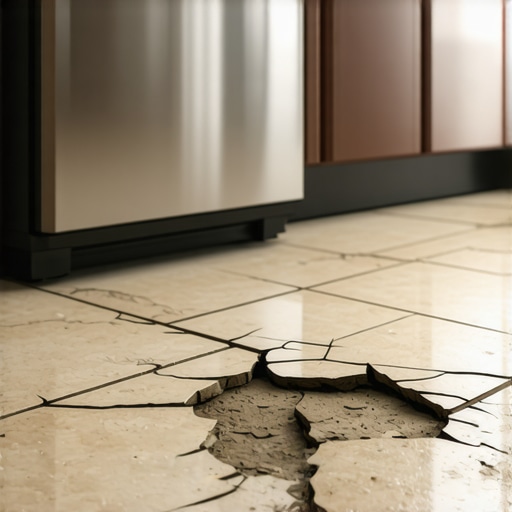
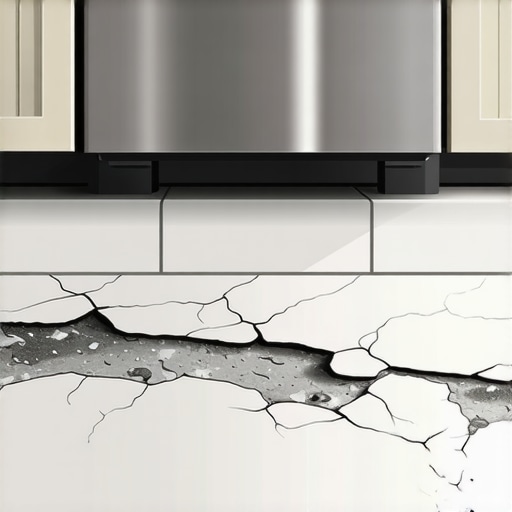
Kitchen laminate swelling occurs when hydrostatic pressure or surface moisture penetrates the HDF core. This moisture absorption triggers linear expansion within the cellulose fibers. When the interlocking joints cannot accommodate this volume increase, the boards peak or buckle near the source of the leak. This is not just a cosmetic issue. It is a chemical change in the board. Once the urea-formaldehyde resins in the core are saturated, the internal bond strength of the wood fibers is compromised. You can dry it out, but the physical structure of the HDF has been altered forever. The wood fibers have separated. They have lost their mechanical grip on one another. This is why a floor that has swelled rarely returns to its original flat state, even after the humidity returns to forty percent. You are looking at a permanent structural deviation that often requires surgical intervention rather than a simple fan and a dehumidifier.
“A floor is only as good as the subfloor beneath it; deflection is the enemy of every joint.” – Master Flooring Axiom
Why the core of your floor is a sponge
Laminate core materials are primarily composed of HDF or MDF which are hygroscopic in nature. These materials absorb liquid water and vapor through capillary action at the unprotected tongue and groove junctions. Even waterproof laminate often only protects the surface, leaving the locking mechanism vulnerable to moisture from the sink. The physics of this are brutal. When the wood fibers in the HDF core absorb moisture, they expand significantly more in thickness than in length. This is known as transverse expansion. Because the core is so densely packed, there is no internal void space for the expanding fibers to occupy. They push against each other, creating an outward force that manifests as a raised edge at the seam. This is what we call peaking. If you run your hand across a seam near your sink and it feels like a mountain ridge, the core has already taken on too much water. The resins have failed to keep the fibers contained. At this point, the wear layer, which is made of aluminum oxide and melamine, might start to crack or delaminate because the base it sits on is no longer stable. This is a progressive failure that will only get worse as you continue to mop or spill water in that area.
The expansion gap that nobody talks about
Expansion gaps are the perimeter voids required around the entire floor to allow for natural movement. Without a quarter inch gap at every wall and cabinet, the laminate will press against the structure, causing peaks at the seams near the sink. The floor is a living thing. It expands and contracts with the seasons. If you run that laminate tight against the kitchen cabinets or the dishwasher, you have created a ticking time bomb. The floor needs to float. If it is pinned at the sink and pinned at the far wall, the middle has to go somewhere when the humidity hits sixty percent in the summer. It goes up. I have walked onto jobs where the floor was two inches off the subfloor in the center of the room because the installer did not leave a gap. They just shoved it under the baseboards and called it a day. That is not installation; that is a disaster waiting to happen. You need that gap covered by a shoe molding or a baseboard, but the floor itself must never touch the vertical surface.
| Core Material | Swell Rate (24hr) | Density (kg/m3) | Common Use |
|---|---|---|---|
| Standard MDF | 12-15% | 600-750 | Low-traffic residential |
| High-Density HDF | 6-8% | 850-950 | Premium laminate |
| Waxed Core HDF | 4-5% | 900+ | Kitchen grade laminate |
| SPC (Stone Polymer) | 0.1% | 1900-2100 | True waterproof floors |
Why floor leveling is non negotiable
Floor leveling is the process of grinding high spots and filling low spots to meet the 1/8 inch over 10 feet industry standard. An unlevel subfloor causes laminate joints to flex and open, allowing kitchen sink water to bypass the top wear layer and destroy the HDF core from within. I spent three days grinding concrete on a job last month just so the floor wouldn’t click like a castanet. If there is a dip in front of your sink, every time you step there, the tongue and groove joint rub together. This friction wears down the factory sealant. Once that sealant is gone, the wood core is exposed. Then you spill a glass of water or the dishwasher leaks a teaspoon of fluid, and it goes straight into the heart of the board. The floor was doomed the second it was laid over that dip. You cannot hide a bad subfloor with underlayment. Too much cushion actually causes the locking mechanisms on laminate to snap under pressure. You want a firm, flat surface. If your subfloor is not flat, your laminate will fail, period.
The 1/8 inch that ruins everything
Subfloor flatness is measured using a straight edge to identify deviations that exceed 3 millimeters. When a laminate plank spans a void, the mechanical lock is stressed, leading to seam separation and moisture intrusion. This is why your sink area is so prone to failure. Kitchens often have complex subfloor transitions between old additions and the main house. If that transition is not perfectly smooth, the laminate planks will bridge the gap. Over time, the weight of a person standing at the sink will cause the planks to deflect. This deflection acts like a pump, drawing moisture from the air or small spills down into the joint. It is a slow death for the floor. You might not see the damage for six months, but by then, the HDF has already started its irreversible expansion. This is also why carpet install techniques do not apply here. You can’t just stretch laminate to fit a bad room. It is a rigid engineering product that demands a rigid, flat foundation.
“Standard laminate swell rates under ISO 24336 define the limits of thickness increase after 24-hour immersion.” – Master Flooring Axiom
How to fix localized kitchen swelling
Fixing swollen laminate requires removing the baseboards and replacing the damaged planks by disassembling the floor back to the source of the leak. For minor peaking, you can sometimes increase the expansion gap at the wall to relieve pressure and allow the fibers to settle. If the swell is localized at the sink, you are likely looking at a surgical replacement. You have to pull up the floor starting from the nearest wall. This is why you always save two boxes of flooring from the original install. You will never find a matching dye lot three years later. Once you get to the damaged boards, you swap them out. If the boards are glued together, you have to use a toe-kick saw to cut out the center of the board and carefully chisel out the tongue and groove from the surrounding pieces. Then you take a new board, cut off the bottom lip of the groove, apply a bead of high-quality wood glue, and drop it in. You weight it down with fifty pounds of toolboxes for twenty-four hours. It is not a fun job, and it is never as good as the original lock, but it beats replacing the whole kitchen floor.
- Identify the moisture source such as a leaking P-trap or dishwasher hose.
- Remove perimeter baseboards to check for expansion gap bottlenecks.
- Use a moisture meter to determine the extent of core saturation.
- Dehumidify the area for 72 hours before attempting any board replacement.
- Check subfloor levelness in the affected area to ensure no low spots exist.
- Replace damaged planks using the surgical drop-in method if necessary.
Preventing the next kitchen catastrophe
Preventing laminate damage involves sealing seams with a specialized joint sealant and maintaining strict humidity controls. In high-moisture areas like the kitchen or showers, using a silicone-based perimeter seal prevents liquid spills from reaching the vulnerable edges of the HDF core. If you are installing in a place like Houston where the humidity is a constant threat, you have to be even more careful. You need a high-quality moisture barrier under the laminate. If you are on a concrete slab, that slab is breathing moisture every single day. Without a six-mil poly film, that moisture is going straight into the bottom of your laminate. It won’t swell as fast as a sink leak, but over five years, it will cup the boards and ruin the finish. Most guys skip the leveling compound. They think the underlayment will hide the dip. It won’t. Take the time to do it right. Use a seam sealer on every joint within six feet of the sink. It adds two hours to the job, but it adds ten years to the life of the floor. Don’t be the guy who thinks waterproof means bulletproof. It doesn’t. Your floor is an engineered system, and if you treat it like a cheap rug, it will behave like one. Keep your sink plumbing tight, leave your expansion gaps open, and make sure your subfloor is as flat as a pool table. That is the only way to keep a laminate floor looking good in a kitchen long-term. Article Schema JSON-LD: {“@context”: “https://schema.org”, “@type”: “Article”, “headline”: “Why kitchen laminate swells at the sink and how to fix it”, “author”: {“@type”: “Person”, “name”: “Master Floor Installer”}, “description”: “A deep technical guide on why kitchen laminate floors swell and how to repair moisture damage in HDF cores.”} HowTo Schema JSON-LD: {“@context”: “https://schema.org”, “@type”: “HowTo”, “name”: “How to fix swollen laminate flooring”, “step”: [{“@type”: “HowToStep”, “text”: “Identify the leak source and stop the moisture.”}, {“@type”: “HowToStep”, “text”: “Remove baseboards and check for expansion gaps.”}, {“@type”: “HowToStep”, “text”: “Replace damaged planks using surgical cutting and gluing methods.”}]}