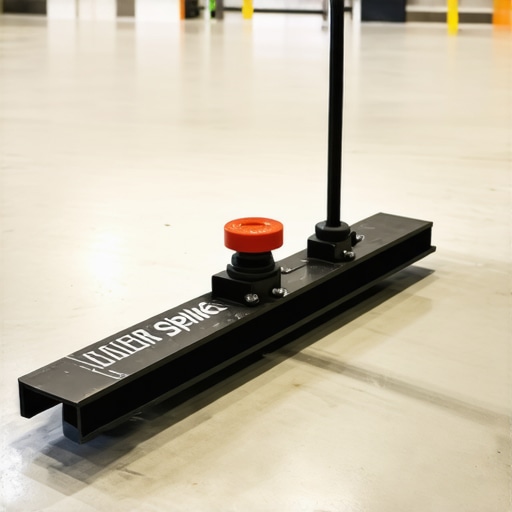
The ‘Leveler Spike’ tool you need for a flat floor
I spent three days grinding concrete on a job last month just so the floor would not click like a castanet. Most guys skip the leveling compound. They think the underlayment will hide the dip. It will not. I have spent twenty five years on my knees with a straightedge and a moisture meter, and I can tell you that the difference between a floor that lasts decades and one that fails in six months is often found in a single tool. The leveler spike, specifically the spiked roller and spiked shoes, is the bridge between a messy DIY failure and a professional grade substrate. I smell like WD-40 and oak dust most days, and my back tells the story of every slab that was not prepped right. If you think you can just pour self-leveler and walk away, you are setting yourself up for a structural nightmare.
The hidden dip that ruins everything
Floor leveling requires a subfloor that is flat within 3/16 of an inch over 10 feet to ensure the structural integrity of laminate or hardwood. If the substrate contains air pockets or ridges, the finished surface will flex, causing locking mechanisms to snap and grout lines to crack under dynamic loads. Most installers overlook the microscopic reality of cementitious flow. When you pour a self-leveling underlayment, the material is thick. It has surface tension. It traps air. Without the mechanical action of a spiked roller, that air stays trapped. It creates voids. These voids are weak points. When you walk across your expensive new floor, the weight of your body compresses the air pocket. The floor moves. It squeaks. Eventually, the tongue and groove of your laminate snaps. This is not a cosmetic issue. It is a physics problem. You cannot hide a canyon with a piece of foam padding. You have to fix the geometry of the room before the first plank touches the ground.
“A floor is only as good as the subfloor beneath it; deflection is the enemy of every joint.” – Master Flooring Axiom
The physics of the degassing spike
Spiked rollers are designed to eliminate air bubbles and surface tension in self-leveling underlayment to create a monolithic bond. This process, known as degassing, is what prevents pinholes and pitting in the cured surface. When the spikes penetrate the liquid compound, they break the surface tension that keeps the material bunched up. This allows the liquid to truly seek its own level. Imagine the compound as a crowd of people. Without the roller, they are standing in clumps. The roller acts as the usher, moving everyone into their exact spot. The spikes must be the correct length for the depth of your pour. If the spikes are too short, they will not reach the bottom of the pool. If they are too long, they are unwieldy. Professional grade rollers often use plastic or metal spikes that are spaced specifically to allow the material to flow back together behind the tool. This is a delicate window of time. Once the hydration process starts, you cannot touch it. You have to move fast, wearing spiked shoes so you can walk right through the wet cement without leaving a footprint that ruins the pitch.
Why laminate fails on uneven concrete
Laminate flooring requires a flat substrate because its click-lock system is brittle and cannot withstand the vertical deflection caused by low spots. When a plank spans a dip in the concrete, it acts as a bridge. Every time a person walks over that bridge, the bridge bends. Laminate is made of high density fiberboard. It is strong under compression but weak under tension. After a few thousand footsteps, the plastic or wood locking lip will fatigue. It will turn to dust. Then the gap opens. Once a gap opens, moisture from your mop or a spilled drink gets in. The core swells. Your floor is ruined. People blame the product. They say the laminate was cheap. Usually, the laminate was fine. The installer was lazy. They did not use a leveler spike to ensure the floor was flat. They relied on the underlayment to bridge the gap. Underlayment is for sound and moisture, not for structural leveling. It is a cushion, not a foundation.
| Substrate Type | Required Prep | Max Deviation (10ft) | Recommended Tool |
|---|---|---|---|
| Concrete Slab | Grind & Prime | 3/16 inch | Spiked Roller |
| Plywood Subfloor | Screw & Sand | 1/8 inch | Sanders |
| Radiant Heat | Encapsulate | 1/16 inch | Thermal Leveler |
| Shower Pans | Pre-slope | 1/4 inch per foot | Magnesium Float |
Shower pans and the leveling paradox
Showers require a sloped substrate rather than a flat one, yet the chemistry of the mortar remains the same as floor leveling. You are dealing with the TCNA standards for moisture management and load distribution. In a shower, the spike tool is less about leveling and more about ensuring the thin-set or mud bed is fully consolidated. If you have air pockets under your shower tile, water will sit in those pockets. It will grow mold. It will smell. The 1/8 inch that ruins everything in a living room is the same 1/8 inch that causes a puddle in a shower. You need a consistent, dense material. When using liquid membranes or specialized leveling compounds for wet areas, the spiked roller ensures that the material is dense enough to support the weight of the water and the user. It is about removing the variables. You want a solid mass of stone and cement, not a sponge full of air.
Carpet padding is not a structural fix
Carpet install professionals often ignore subfloor prep because they believe the pad and pile will hide cracks and dips. While carpet is more forgiving than hardwood, a failed subfloor will still manifest as uneven wear patterns and premite failure of the primary backing. If there is a major ridge in the concrete, the carpet will rub against that ridge every time someone walks over it. It is like sandpaper. Eventually, the backing of the carpet will fray. You will see a dark line appear on the surface. This is not dirt. It is the structural failure of the fibers. Even for carpet, a quick pass with a leveling compound and a spiked roller can save a homeowner from replacing their flooring five years too early. It is about the base. It is always about the base. You can put a silk dress on a pig, but it is still a pig. You can put an expensive Karastan carpet over a cracked slab, but it will still feel like a cracked slab under your feet.
“Deflection in the substrate is the primary cause of ceramic tile delamination and grout failure.” – TCNA Handbook
The chemistry of the perfect bond
Molecular adhesion in floor leveling depends on substrate porosity and the chemical reaction of the polymer-modified cement. Before you even touch the leveler spike, you have to prime. Primer is not just a suggestion. It is a chemical bridge. If the concrete is too dry, it will suck the water out of the leveling compound before it can hydrate. This results in a chalky, weak surface. The spiked roller helps here too. As you roll, you are pushing the compound into the pores of the primed concrete. You are forcing a mechanical bond. The spikes create a tiny bit of turbulence that ensures the primer and the leveler are meeting at the molecular level. We are talking about calcium aluminate cements and high performance polymers. These materials are engineered to be thin and strong, but they are temperamental. They hate wind. They hate heat. They hate air. The spike tool is your only weapon against the bubbles that want to ruin the mix.
- Check the moisture content of the slab using a calcium chloride test before starting.
- Vacuum every speck of dust. Dust is a bond breaker.
- Apply the primer with a soft bristle brush to ensure it gets into the pores.
- Mix the leveling compound with a high torque drill to avoid whipping in extra air.
- Use spiked shoes to navigate the wet field without creating heavy displacement.
- Roll the spiked tool in two directions to ensure total degassing.
- Maintain a wet edge to prevent visible lift lines between batches.
The transition from a raw slab to a finished floor is a process of precision. You cannot rush it. You cannot cheat the physics of gravity and fluid dynamics. If you skip the spiked roller, you are leaving the fate of the floor to chance. I have seen too many beautiful homes ruined by a click-lock floor that sounds like a snare drum because the installer was too cheap to buy a thirty dollar tool. Do the work. Grind the high spots. Fill the low spots. Use the spikes. Your knees and your reputation will thank you ten years down the line. A flat floor is a quiet floor. A quiet floor is a floor that was installed by someone who actually gives a damn about the trade.