How a 5-Gallon Bucket Proves Your Shower Drain is Leaking
How a 5-Gallon Bucket Proves Your Shower Drain is Leaking
I spent three days grinding concrete on a job last month just so the floor wouldn’t click like a castanet. Most guys skip the leveling compound. They think the underlayment will hide the dip. It won’t. I have seen it a thousand times. You walk into a bathroom and the laminate is spongy or the carpet install feels damp near the transition. The homeowner thinks it is a spill. I know better. I smell the wet plywood and the stale scent of mold. I grab my 5-gallon bucket and get to work. Most people see a floor as a pretty surface. I see a structural engineering challenge. When water gets under your floor, it is not just a mess, it is a slow motion demolition of your home foundation. If you want to know if your shower drain is the culprit, you do not need a fancy plumber with a camera. You need a bucket and the patience to watch the water physics do the talking.
The physics of the five gallon test
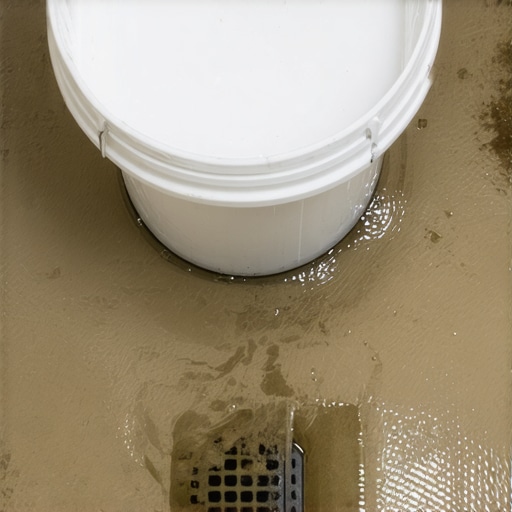
A 5-gallon bucket proves a shower drain leak by isolating the plumbing from the shower pan. By pouring water directly into the drain throat using a bucket, you bypass the shower floor membrane. If the subfloor or the floor leveling below stays dry, the leak originates in the waterproofing membrane or tile grout. This test is about precision. You are not just dumping water. You are applying a specific volume of liquid to a concentrated area to check for failures in the PVC solvent welds or the clamping ring. When I am on a job, I want to see if the leak is a structural failure of the plumbing or a cosmetic failure of the tile. If the water vanishes and the ceiling below starts dripping, you have a plumbing nightmare. If the bucket test results in zero leakage, your shower pan membrane is the ghost in the machine. This is how we separate the pros from the guys who just watch videos and hope for the best.
Why your subfloor is lying to you
Subfloor moisture readings often lie because plywood and OSB act like sponges, wicking water far away from the actual leak source. A damp spot near your carpet install might actually be coming from a drain six feet away. The bucket test identifies the exact point of entry by applying hydrostatic pressure. I have seen guys tear up perfectly good laminate because they thought the leak was under the sink. It was the shower drain all along. Moisture travels the path of least resistance. It follows the floor joists. It hides in the floor leveling compound. You need to understand that concrete and wood are not static. They breathe. They expand. When they get wet, they lose their structural integrity. A shower drain that leaks only a few drops a day will eventually rot out the entire rim joist of your house. I do not play games with moisture. I trust the bucket because the bucket does not lie.
“A floor is only as good as the subfloor beneath it; deflection is the enemy of every joint.” – Master Flooring Axiom
The 1/8 inch that ruins everything
The tolerance for floor leveling in a wet area is exactly 1/8 inch over ten feet. If your shower drain sits higher than the surrounding subfloor, water will pool and eventually find a microscopic path through the thinset and into your framing. This leads to catastrophic failure of the shower assembly. This is where the chemistry of the bond matters. If you used cheap, unmodified thinset on a subfloor with too much deflection, the movement will snap the bond. You get cracks. Those cracks are highways for water. When I perform a bucket test, I am looking for the integrity of that 1/8 inch. I want to see if the drain pipe is moving independently of the floor. If it is, your plumber failed you. A drain should be rock solid. It should be part of the house, not a loose limb. If the drain moves, the seal breaks. It is that simple. I have spent decades on my knees fixing these mistakes because someone wanted to save twenty dollars on a better drain assembly.
Structural failures in laminate and carpet install
Laminate flooring and carpet install zones near bathrooms are the first casualties of a hidden shower drain leak. High humidity and direct water contact cause laminate to swell at the seams while carpet padding traps moisture against the subfloor, leading to wood rot and black mold colonies. You see the bubbling on the edges of the laminate. That is the fiberboard core absorbing water like a biscuit in tea. It is gone. You cannot fix it. You have to rip it out. If you have carpet, the situation is worse. The padding acts as a reservoir. It holds the water against the wood for weeks. By the time you smell it, the subfloor is soft. I hate seeing a brand new carpet install ruined because nobody checked the shower drain. It is a waste of material and a waste of my time. Use the bucket test before you lay a single square foot of finish flooring. It saves your reputation and the homeowner’s bank account.
| Floor Type | Moisture Tolerance | Failure Mechanism | Repair Difficulty |
|---|---|---|---|
| Solid Hardwood | Very Low | Cupping and crowning | High |
| Laminate | Low | Edge swelling and peaking | Moderate |
| LVP (Vinyl) | High | Locking joint failure | Low |
| Carpet | Medium | Mold and pad saturation | Low |
The ghost in the expansion gap
Expansion gaps at the perimeter of a room are vital for flooring but they also serve as a hidden channel for water to reach the subfloor. A leaking shower drain can send water under the baseboards where it sits in the expansion gap, rotting the plate of the wall. People think waterproof LVP means they are safe. It is a lie. The surface is waterproof, but the joints are not. If you have a flood from a drain, the water goes under the floor. It stays there. It cannot evaporate. It just sits and eats your house. While most people want the thickest underlayment, too much cushion actually causes the locking mechanisms on LVP to snap under pressure. This creates more gaps for the water to enter. You want a firm, level surface. You want a subfloor that is dry and a drain that is sealed. Don’t be fooled by the marketing on the box. Physics always wins in the end.
“Standard moisture testing must be performed on all concrete slabs regardless of age; a dry surface does not guarantee a dry core.” – NWFA Technical Guidelines
Steps to perform the 5-gallon bucket test
The 5-gallon bucket test requires you to plug the shower drain, fill the pan to the curb, and observe the water level over twenty-four hours. For a plumbing-only test, you pour the water directly into the drain without touching the tile to isolate the pipe connections. If the water level drops, you have a leak. If the water stays, your drain and pan are tight. It is the most effective diagnostic tool in my truck. I don’t trust a visual inspection. I want to see the water stay where I put it. This is how you prove to a client that their shower is the problem, or how you prove to a plumber that his work is failing.
- Clear the shower floor of all soaps and mats to see the surface.
- Use a test plug to seal the drain pipe completely at the subfloor level.
- Mark the water level on the tile with a piece of painter’s tape.
- Check the ceiling or crawlspace below every hour for signs of moisture.
- Remove the plug and pour a separate bucket directly down the throat to test the waste line.
Chemical bonds and the failure of cheap thinset
The chemical bond between your shower drain flange and the waterproofing membrane is the most common point of failure. Using a low-quality sealant or failing to prime the PVC surfaces will lead to a slow leak that a bucket test will eventually reveal. I see it all the time. Guys use whatever is on sale at the big box store. They don’t read the technical data sheets. They don’t understand that the solvent weld is a chemical reaction that fuses the plastic together. If you rush it, or if you do it in the cold without the right primer, it will fail. The bucket test puts that joint under stress. If it’s a bad bond, it will weep. I have no sympathy for installers who cut corners on the things you can’t see. The finish tile is just a dress. The drain and the subfloor are the bones of the room. If the bones are weak, the whole thing falls down. I’ve spent twenty-five years looking at bones. I know a broken one when I see it.