Why Your Carpet Feels Damp Near the Exterior Wall After Rain
The physics of the perimeter wet spot
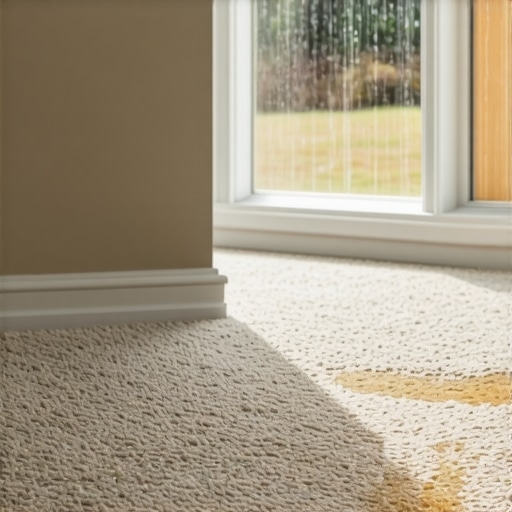
A damp carpet near an exterior wall after rain usually indicates a failure in the building envelope or hydrostatic pressure pushing moisture through the concrete slab. This occurs when groundwater saturates the soil, creating pressure that forces liquid or vapor through microscopic pores in the foundation or gaps in the sill plate.
Most guys skip the leveling compound. They think the underlayment will hide the dip. It won’t. I spent three days grinding concrete on a job last month just so the floor wouldn’t click like a castanet. That job taught me a lot about how moisture hides. When I pulled up the old tack strip, the wood was black. Not just wet, but structurally compromised by years of slow wicking. I smell like oak dust and WD-40 most days because I am down there looking at the grit. A carpet is just a filter for whatever the subfloor is off-gassing. If your toes feel a chill or a dampness near the baseboard, you aren’t just looking at a spill. You are looking at a structural breach. The carpet pad, usually a rebond polyurethane foam, acts like a massive sponge. It pulls water from the perimeter and holds it against the subfloor, creating a microbial playground that will eventually rot your transition strips and drywall. [IMAGE_PLACEHOLDER]
Hydrostatic pressure and the concrete sponge
Concrete is not a solid waterproof barrier but a porous crystalline structure that breathes and absorbs liquid through capillary action. When rain falls heavily, the water table rises and creates hydrostatic pressure, which pushes water through the floor-to-wall joint known as the cove joint.
You have to understand the chemistry of the slab. Concrete has billions of tiny capillaries. When the exterior soil is saturated, the water has nowhere to go but into the foundation. It moves from areas of high concentration to low concentration. Your dry living room is the low concentration zone. If the original builder didn’t install a 6-mil poly vapor barrier under that slab, you are essentially living on a wet rock. I have seen laminate floors buckle into literal tents because the installer didn’t realize the slab was weeping. In a carpeted room, you don’t see the buckle. You just feel the dampness. The tack strip, which is often made of cheap plywood, will be the first thing to rot. It absorbs the moisture and transfers it to the carpet fibers. This is why the dampness starts exactly where the floor meets the wall. It is the path of least resistance.
“A floor is only as good as the subfloor beneath it; deflection is the enemy of every joint.” – Master Flooring Axiom
Flashing failures at the exterior threshold
Exterior moisture often enters the interior space through compromised flashing or improperly sealed sill plates where the wooden framing meets the concrete foundation. Rain hitting the siding runs down and finds gaps in the caulking or overlaps, bypassing the exterior drainage plane and soaking the carpet.
I have spent twenty five years on my knees looking at these transitions. People think a carpet install is just about stretching the fabric. It is not. It is about the seal. If your carpet feels wet after a storm, go outside and look at your siding. Is the mulch piled up against the brick? Is there a gap in the window lintel? If water gets behind the veneer, it hits the OSB sheathing. From there, gravity takes over. It runs down the house wrap and pools right at the bottom plate. That bottom plate is sitting on your subfloor. Once that wood gets saturated, it bleeds into the carpet pad. I have seen expensive showers leak for months because the installer didn’t overlap the liner correctly, but a rain-driven leak at the wall is even more insidious. It only happens when the wind blows the right way, making it a ghost of a problem that most homeowners ignore until the mold starts to smell.
The condensation trap behind the baseboard
Thermal bridging occurs when the exterior wall is significantly colder than the interior air, causing moisture in the air to condense into liquid on the cold surface of the floor. This often happens at the perimeter where insulation is weakest, making the carpet feel damp despite no actual leak.
This is a physics problem, not a plumbing problem. In the winter or after a cold rain, that exterior wall becomes a heat sink. If the carpet is pushed tight against the baseboard, there is no airflow. The warm, humid air inside the house hits that cold spot and turns into dew. It is the same thing that happens to a cold beer on a hot day. The carpet absorbs this dew. Over time, this creates a dark, moist environment behind the baseboard. If you pull the carpet back and see a white salty powder on the concrete, that is efflorescence. It is a sign that water has been moving through that slab and evaporating, leaving the minerals behind. This is a common issue when people try to do their own floor leveling without addressing the moisture first. You can pour all the self-leveler you want, but if the slab is damp, the leveler will just pop off like a scab.
Why floor leveling prevents moisture pooling
Proper floor leveling ensures that any incidental moisture does not pool in low spots near the foundation walls where it can saturate the carpet and pad. A flat subfloor allows for uniform airflow and prevents the concentrated accumulation of water that leads to structural rot and mold.
I always tell my clients that a flat floor is a healthy floor. If you have a dip near your exterior wall, any moisture that finds its way inside will head straight for that low point. It is basic gravity. If the subfloor is level, the moisture is more likely to be distributed and evaporated by the HVAC system. When I do a carpet install, I am looking for those 3/16 inch deviations over a 10 foot span. Anything more than that and you are asking for trouble. Using a high quality cementitious leveler is the only way to go. It creates a dense surface that is less porous than the old slab. This helps slow down the vapor transmission rate. I have seen guys try to use cardboard or extra padding to level a floor. That is a crime. All you are doing is creating a wick that will stay wet for weeks after a single rainstorm.
| Subfloor Material | Porosity Level | Acclimation Time | Moisture Risk |
|---|---|---|---|
| Concrete Slab | High | 72 Hours | Extreme |
| Plywood Subfloor | Medium | 48 Hours | High |
| OSB Sheathing | Medium-High | 48 Hours | High |
| Self-Leveling Underlayment | Low | 24 Hours | Moderate |
The structural checklist for wet perimeters
Before you call a carpet cleaner to suck up the water, you need to diagnose the source. A wet carpet is a symptom of a larger architectural failure. You must work from the outside in to ensure you aren’t just treating the surface. Follow this checklist to find the culprit.
- Inspect the gutters and downspouts to ensure they discharge at least six feet away from the foundation.
- Check the grade of the soil; it should slope away from the house at a rate of one inch per foot.
- Look for cracks in the exterior stucco or siding where wind-driven rain can enter.
- Examine the weep holes in brick veneer to ensure they are not clogged with debris or mortar.
- Check the basement or crawlspace for signs of standing water or high humidity levels.
- Test the slab with a calcium chloride moisture test to determine the vapor emission rate.
The hidden chemistry of damp carpet pads
Carpet pads are often manufactured from recycled foam scrap that creates a capillary network capable of holding gallons of water without appearing flooded on the surface. Once the pad is saturated, the high PH of the moisture begins to break down the latex backing of the carpet.
If you have ever pulled up an old carpet that was damp, you know the smell. It is a mix of ammonia and rotting earth. That is the latex adhesive breaking down. The moisture from the rain reacts with the salts in the concrete and the chemicals in the pad. This creates an alkaline solution that eats the floor from the bottom up. Even a high quality carpet will delaminate under these conditions. The secondary backing will separate from the primary backing, and you will get those ugly bubbles or ripples in the floor. People think they can just run a dehumidifier and fix it. You can’t. Once the chemistry of the carpet is compromised, the structural integrity of the weave is gone. You are better off ripping it out, addressing the subfloor leveling, and starting over with a proper moisture barrier.
“A floor is only as good as the subfloor beneath it; deflection is the enemy of every joint.” – Master Flooring Axiom
The danger of ignoring the subfloor
When I walk into a home and the owner tells me the carpet is just a little damp, I know I am about to give them bad news. They think it is a minor nuisance. I see a potential for dry rot in the rim joists. I see the possibility of the Janka hardness of their nearby hardwood being irrelevant because the subfloor is turning to mush. If you have laminate in an adjacent room, watch the joints. If they start to peak or swell, the moisture is traveling through the entire floor system. It doesn’t stay in the carpet. It moves through the air and the materials. I have seen entire houses need new subfloors because a homeowner ignored a damp corner for three years. It is not just about the aesthetic of a clean carpet. It is about the bones of the house. If the subfloor fails, nothing else matters. You can buy the most expensive flooring in the world, but it will look like trash if the ground beneath it is moving and wet. Treat your flooring like an engineering project. Get the levels right. Seal the perimeter. Respect the moisture. That is the only way to have a floor that lasts thirty years instead of three.