The ‘Hairdryer Fix’ for Removing White Heat Rings from Hardwood
The ghost in the wood finish
A white heat ring on a hardwood floor is not a permanent scar but a trapped pocket of moisture suspended within the finish layer. These milky opacities occur when heat opens the pores of a floor finish, allowing water vapor to migrate inside before the surface cools and seals the moisture in a gaseous state. I once walked into a house where a $15,000 wide-plank walnut floor was cupping so bad it looked like a potato chip because the installer didn’t check the crawlspace humidity, and the homeowner had tried to ‘fix’ a heat ring by sanding it with 40-grit paper. It was a massacre. I have spent twenty five years with sawdust under my nails and the smell of WD-40 on my shirt, and I can tell you that most floor damage comes from panic rather than the accident itself. When you see a white ring, you are looking at physics, not a chemical burn. The finish, likely a polyurethane or a conversion varnish, has acted like a greenhouse. Just as an improper carpet install can trap grit that grinds away at your subfloor, a heat ring traps vapor that obscures the natural grain of the timber. You do not need a drum sander to fix this. You need a hairdryer and a basic understanding of thermal expansion.
“A floor is only as good as the subfloor beneath it; deflection is the enemy of every joint.” – Master Flooring Axiom
The physics of trapped vapor
Trapped moisture molecules create a clouding effect by refracting light differently than the surrounding solid resin of the floor finish. This is known in the trade as blushing. When a hot pizza box or a steaming cup of coffee sits on a finished wood surface, the heat softens the polymer chains of the topcoat. If the wood or the air contains even a trace amount of humidity, that vapor is driven into the softened finish. As the heat source is removed, the finish cools rapidly, snapping the polymer chains back into a rigid structure and locking the water in place. This is fundamentally different from a black stain. A black stain indicates that moisture has bypassed the finish entirely and reacted with the tannins in the wood, often causing rot or permanent discoloration. A white ring is purely topical. It exists in the top 5 to 10 mils of the surface. If you were to look at this through a microscope, you would see tiny globules of water suspended like fog in a glass jar. My job is to get that fog out without melting the jar. This requires a controlled application of heat to re-open the ‘pores’ of the finish and allow the water to evaporate out into the atmosphere.
The 1/8 inch that ruins everything
Subfloor prep and levelness dictate how a floor reacts to environmental stress, including heat and moisture. If your floor has a dip because someone skipped the floor leveling compound, the finish is under constant tension. When you apply heat to a stressed finish to remove a ring, you risk creating a spider-web crack. I have seen guys try to use a heat gun instead of a hairdryer. A heat gun is a flamethrower in the world of flooring. It will blister the finish and char the wood at 1,000 degrees. A hairdryer is much more forgiving. You need to keep the nozzle at least six inches away from the surface and keep it moving. If you hold it in one spot, you will see the finish begin to flow. That is the point of no return. You are looking for a gentle warmth that coaxes the moisture out. This is why laminate is a different beast entirely. You cannot use this fix on laminate because the top layer is often a melamine resin that does not behave like a thermoplastic. If you try to heat a ring out of laminate, you will simply delaminate the decorative paper from the core board. Understanding the material is the first step of any successful repair.
The actual steps for using a hairdryer
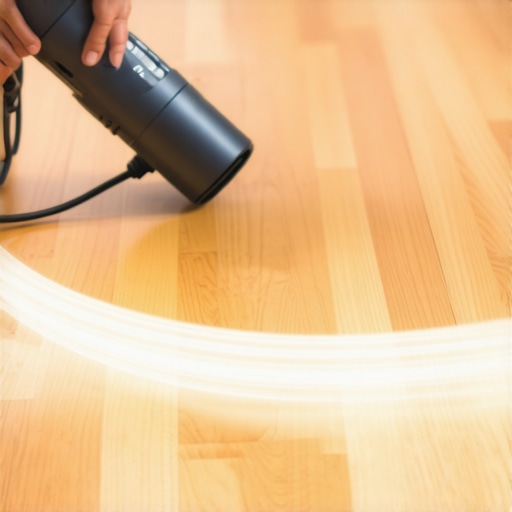
The process of removing a white ring involves steady heat, a soft touch, and a significant amount of patience. First, ensure the area is clean. Any grit or dust on the floor will be baked into the finish once it softens. I keep a clean microfiber cloth handy to buff the area as I work. Set your hairdryer to a medium-high setting. Start moving the air over the white ring in a circular motion. Within two to five minutes, you should see the edges of the ring begin to blur. This is the moisture escaping. If the ring is stubborn, it might be because the finish is an older oil-modified polyurethane which has a higher melting point than modern water-based finishes. If you are working near showers or bathrooms, the ambient humidity might make this process take longer. The wood is a living, breathing organ. It wants to be in equilibrium with the room. By heating the finish, you are creating a localized low-pressure zone that pulls the water out.
| Wood Type | Janka Hardness | Acclimation Time | Heat Sensitivity |
|---|---|---|---|
| White Oak | 1360 | 10 to 14 Days | Moderate |
| Black Walnut | 1010 | 14 to 21 Days | High |
| Hard Maple | 1450 | 7 to 10 Days | Low |
| Brazilian Cherry | 2350 | 21 to 30 Days | Moderate |
Why your subfloor is lying to you
Often, a white ring is a symptom of a larger moisture problem originating from the crawlspace or slab. If your house sits on a wet lot, your wood floors are constantly under pressure from vapor drive. When you add heat from a hairdryer to the surface, you might find that the ring disappears, only to return a week later. This is because the wood itself is saturated. I spent three days grinding concrete on a job last month just so the floor wouldn’t click like a castanet, and that was all because of moisture. You have to check the moisture content of the wood with a pin-type meter. If the wood is over 12 percent moisture, the hairdryer fix is just a temporary bandage. You need to address the source. In a high-end carpet install, a moisture barrier is standard. In hardwood, it is mandatory. If you have moisture creeping in from the edges of a room, especially near wet areas like kitchens or laundry rooms, the finish will blush much more easily. A healthy floor should be between 6 and 9 percent moisture content in most temperate climates.
“Moisture is the single most significant factor in the successful installation and long-term performance of wood flooring.” – NWFA Technical Manual
The chemistry of a hairdryer
Modern floor finishes are complex polymers designed to be hard but flexible. When you apply heat, you are performing a controlled thermal agitation. This agitation increases the kinetic energy of the trapped water molecules, turning them back into vapor. At the same time, the heat lowers the viscosity of the polyurethane. Think of it like honey. Cold honey is thick and holds bubbles. Warm honey is thin and allows bubbles to rise to the surface and pop. That is exactly what we are doing to your floor. However, if the ring has been there for years, the water may have begun to react with the wood fibers. In that case, the white ring might turn into a gray smudge. This means the cellulose in the wood has begun to oxidize. You can’t fix that with a hairdryer. You’ll need to use a chemical stripper or a localized scrape and recoat. But for a fresh ring, the hairdryer is your best friend. It is a tool of finesse, not force. You must be the surgeon, not the butcher. I have seen too many beautiful floors ruined by people who thought more heat was better. It is not.
The maintenance checklist for hardwood longevity
- Use felt pads on all furniture legs to prevent finish scratches.
- Maintain indoor relative humidity between 30 and 50 percent.
- Never wet-mop a hardwood floor with excessive water.
- Keep a professional-grade moisture meter in your toolbox.
- Buff the floor with a dry microfiber cloth after any heat repair.
- Address any leaks near bathrooms or kitchen sinks immediately.
The danger of the overzealous DIYer
The most common mistake people make is using a damp cloth while applying heat. This is a recipe for disaster. You are trying to remove moisture, not add it. Some old-school guys suggest using an iron over a damp towel. While this can work, it is much higher risk than the hairdryer. The steam can forced into the wood grain, causing the wood to swell and the finish to delaminate. I have seen 3/4 inch solid oak buckle and pull the nails right out of the subfloor because someone tried to steam-clean a stain. It will buckle. It will cup. It will break your heart and your wallet. Stick to the dry heat of the hairdryer. It is slower, but it is safer. If the ring does not move after ten minutes of steady heat, stop. The finish may be too thick or the damage may be too deep. At that point, you need to call a professional who can assess the structural integrity of the plank. It might be a simple case of a screen and recoat, or you might be looking at a full sand-and-finish. Either way, do not force the issue. The wood will tell you when it has had enough.
Final thoughts on thermal restoration
A floor is more than just something you walk on. It is a structural engineering challenge. Every time you walk across a room, you are testing the bond between the wood and the subfloor. Every time you spill a drink, you are testing the chemistry of the finish. The hairdryer fix is a testament to the fact that hardwood is a resilient, living material. It can be repaired and restored if you respect its properties. Whether you are dealing with a botched carpet install that left tack-strip holes or a white ring from a hot plate, the goal is always the same: restore the integrity of the surface. Keep your tools clean, keep your head cool, and keep your hairdryer moving. Your floors will thank you for it. Remember that wood moves. It expands in the summer and shrinks in the winter. A white ring is just a temporary interruption in that cycle. With a little heat and a lot of patience, you can make that ghost in the finish disappear forever.