How to Get Rid of New Carpet Odors Without Harsh Chemicals
Most guys skip the leveling compound. They think the underlayment will hide the dip. It won’t. I spent three days grinding concrete on a job last month just so the floor wouldn’t click like a castanet. That job taught me that what you don’t see matters more than what you do. It is the same with the smell of a new carpet. That sharp chemical scent is not just a sign of a new install. It is a sign of volatile organic compounds off-gassing into your living space. I have been on my knees for twenty-five years installing everything from solid oak to high-end broadloom. I have seen homeowners get headaches and rashes because they did not handle the ventilation correctly. Carpet install procedures usually focus on the stretch and the seam but the chemical reality of the backing is where the real work begins. You have to treat your home like a job site that needs remediation. This is about structural integrity and air quality. It is about making sure your subfloor is not absorbing those chemicals and holding them for years. I am going to tell you how to strip that smell out without pouring more chemicals on top of a chemical problem.
The chemical reality of off-gassing
To remove new carpet odors naturally you must address the volatile organic compounds like 4-phenylcyclohexene through aggressive ventilation and adsorption using activated carbon or baking soda. This specific chemical is a byproduct of the styrene-butadiene rubber latex used to bond the secondary backing to the carpet fibers. It is not some mystery. It is science. The 4-PCH compound has a very low odor threshold. This means you can smell it even if the concentration is tiny. When a carpet is rolled up in a warehouse it sits there and marinates in its own fumes. Once we roll it out in your living room and start the carpet install process we are essentially releasing a cloud of these compounds. If your subfloor is porous concrete or old plywood it can actually soak up some of these odors. I have walked into houses where the carpet was replaced years ago but the smell remained because the subfloor was never addressed. You need to understand that the carpet is a filter. It catches everything. If you want to get rid of the smell you have to understand the molecular bond between the fibers and the air around them.
Why your subfloor is lying to you
The subfloor acts as a reservoir for odors and moisture which can react with new carpet adhesives to create persistent and unpleasant chemical smells. If you did not level the floor or check for moisture before the carpet install you are asking for trouble. I always use a moisture meter. If that slab is pushing out more than three pounds of pressure per thousand square feet you are going to have a bad time. The moisture hits the new carpet backing and triggers a chemical reaction. It makes the off-gassing worse. It makes it last longer. Sometimes people think they are smelling the carpet but they are actually smelling the reaction of the adhesive to the high pH levels in a concrete slab that was not properly prepared. Floor leveling is not just for aesthetics. It creates a flat surface that prevents air pockets where odors can settle and grow stagnant. When I am grinding concrete I am opening the pores. If those pores are full of old spills and pet urine the new carpet will just act as a wick for those old smells. You have to clean the subfloor with a vinegar solution before the pad goes down. That is a pro secret that saves a lot of heartbreak later.
Natural absorbents that actually work
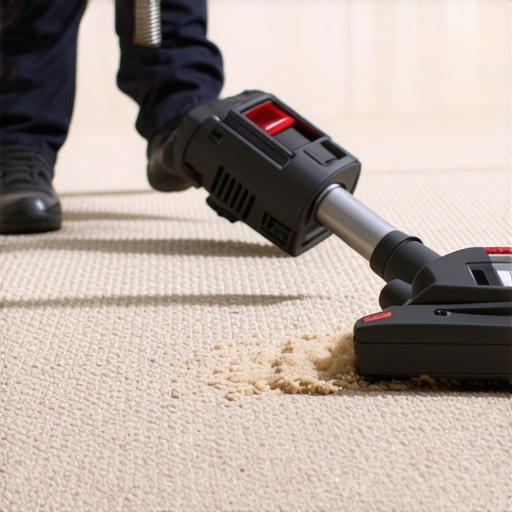
Baking soda and activated charcoal are the most effective natural tools for neutralizing carpet odors because they physically pull VOC molecules out of the air and fibers. You cannot just sprinkle a little bit and vacuum it up five minutes later. That is amateur hour. You need to let it sit. The chemical structure of baking soda allows it to neutralize acidic and basic odor molecules. Activated charcoal is even better because of its massive surface area. One gram of activated carbon has a surface area of over three thousand square meters. It is a microscopic sponge. I tell my clients to buy large bags of it and place them in the corners of the room. Do not put it directly on the carpet because it can stain. Use breathable bags. If you are using baking soda you need to brush it into the fibers with a stiff broom. Let it sit for twenty-four hours. This gives it time to reach the latex backing where the 4-PCH is most concentrated. Then you need a vacuum with a HEPA filter. If you use a cheap vacuum you are just blowing the chemicals back out of the exhaust and into your face.
| Absorbent Material | Effectiveness Rating | Required Contact Time | Best Use Case |
|---|---|---|---|
| Baking Soda | High | 24 Hours | Deep fiber penetration |
| Activated Charcoal | Extreme | 48 Hours | Airborne VOC removal |
| White Vinegar | Medium | Immediate | Subfloor cleaning |
| Volcanic Rock | High | 7 Days | Long term odor maintenance |
The physics of the home bake out
A home bake out involves raising the temperature of the room to accelerate the off-gassing process followed by rapid ventilation to flush the chemicals out. Heat increases the kinetic energy of the VOC molecules. It makes them jump out of the carpet faster. Most people try to keep their house cool but that just keeps the chemicals trapped in the fibers. You want to crank the heat up to about eighty-five degrees for several hours. This is a common tactic in green building certifications. While the heat is up you should not be in the room. After a few hours you open all the windows and doors. Use high-velocity fans to create a cross-breeze. You want to replace the air in the room at least ten times an hour. This mechanical flushing is the only way to truly lower the concentration of 4-PCH in the short term. It is a cycle. Heat it up. Flush it out. Repeat this for three days and you will find that ninety percent of that new carpet smell is gone. It is much better than spraying some floral perfume that just adds more chemicals to the mix. Real pros know that air movement is the best tool in the box.
The ghost in the expansion gap
Air circulation must reach the perimeter of the room where the expansion gaps and tack strips are located to prevent odor pockets from forming. When we do a carpet install we leave small gaps at the edges. These gaps can trap stagnant air. If you have laminate or hardwood in other parts of the house you know about expansion. Carpet does not expand the same way but the air under the pad needs to move. If you have a basement with high humidity the air under your carpet is going to get funky fast. This is why I hate cheap padding. It is like a sponge for bad smells. Use a high-quality rubber or frothed foam pad. They have lower VOC profiles and do not absorb moisture as easily as the cheap re-bond stuff. The re-bond padding is literally made of scraps of old foam glued together. Think about that. You are putting a giant sponge of old industrial scraps under your brand new carpet. No wonder it smells. Always ask for a virgin foam pad or a synthetic fiber pad if you are sensitive to smells. It will cost more but your lungs will thank you.
- Open all windows during and for 72 hours after installation.
- Run the HVAC system with a fresh high-quality carbon filter.
- Place bowls of white vinegar in the corners to neutralize alkaline odors.
- Use a floor fan pointed directly at the carpet surface to increase evaporation.
- Avoid using any oil-based cleaners or scented powders that leave residue.
Choosing the right material for the future
Selecting carpets with the CRI Green Label Plus certification ensures that you are starting with the lowest possible VOC emissions on the market. This is not just a marketing gimmick. It is a rigorous testing standard. I have installed thousands of yards of carpet and I can tell the difference the moment I open the plastic. The Green Label stuff barely has a scent. If you are really worried about chemicals look into natural wool carpets with a jute backing. They use needle-punched construction instead of heavy latex glues. They are expensive. They are hard to install because they do not stretch the same way as synthetic broadloom. But they are the gold standard for air quality. If you are doing a shower or bathroom area do not even think about carpet. I see people do it and it is a disaster for mold and smells. Stick to tile or luxury vinyl with a solid core for wet areas. But for a bedroom nothing beats the feel of a good carpet. Just make sure you treat the installation with the respect it deserves. A floor is only as good as the subfloor beneath it; deflection is the enemy of every joint. The same goes for air. A room is only as clean as the air moving through it. Do not let a bad carpet install ruin your home environment. Take the time to do the natural cleaning steps. It works. I have seen it work on the toughest jobs in the city. Just be patient and let the chemistry work in your favor instead of against it.
“A floor is only as good as the subfloor beneath it; deflection is the enemy of every joint.” – Master Flooring Axiom
“Moisture is the universal solvent and the primary catalyst for post-installation odor failures in residential flooring.” – Master Flooring Axiom