Why Your Carpet Padding Is Making Your Floor Feel Lumpy
I can still smell the mix of fresh oak dust and WD-40 from this morning’s job. My knees hurt, and my back is screaming, but that is the price of doing a floor the right way. Most people see a floor as a pretty surface to walk on. To me, it is a structural engineering project where every sixteenth of an inch matters. I have spent twenty-five years on my knees with a moisture meter and a six-foot level. I have seen every shortcut in the book. Homeowners want the thickest, softest carpet padding because it feels like walking on a cloud at the showroom. They do not realize that the cloud will eventually turn into a series of hills and valleys if the foundation is trash. I spent three days grinding concrete on a job last month just so the floor wouldn’t click like a castanet. Most guys skip the leveling compound. They think the underlayment will hide the dip. It won’t. If you ignore the subfloor, the padding becomes a magnifying glass for every mistake hidden underneath.
The hidden geography of a failed floor
Lumpy carpet is almost always caused by subfloor irregularities or poor padding installation rather than the carpet itself. Common culprits include trapped debris under the pad, uneven subfloor joints, or the use of low density foam that has collapsed under heavy foot traffic or heavy furniture loads. When you walk across a room and feel a hard knot or a soft dip, you are feeling the failure of the preparation phase. A carpet install is only as good as the cleaning and leveling that happens before the first tack strip is nailed down. If an installer leaves a single drywall screw or a pebble of plaster on that subfloor, the padding will eventually mold itself around it. Over time, the tension of the carpet backing pulls the padding tight against that debris. You end up with a permanent lump that wears a hole in your expensive flooring from the bottom up. It is a slow motion disaster that could have been avoided with a shop vac and five minutes of attention. Precision is not an option in this trade. It is the requirement.
Why your subfloor is lying to you
A subfloor that looks flat to the naked eye often contains dips and ridges that exceed the tolerance for modern flooring materials. Floor leveling requires a professional straightedge to identify deviations greater than 3/16 of an inch over a ten foot radius before any padding is laid. I have walked into countless homes where the homeowner complained about their new carpet feeling like a roller coaster. The issue is usually the plywood seams. If the house has settled, those seams can peak or valley. If you lay a 7/16 inch rebond pad over a peaked seam, that ridge will be the first thing to wear out. The carpet fibers at that peak take more abuse than the rest of the floor. Within a year, you will see a dark line of wear. This is why floor leveling is the most skipped step in the industry. It takes time. It takes material. It takes an installer who actually cares about the long term performance of the surface. You cannot fix a structural dip with more padding. In fact, adding thicker padding to a low spot often makes the floor feel more unstable, as the padding lacks the structural integrity to bridge the gap.
| Padding Material | Density Rating | Thickness Limit | Compressive Strength |
|---|---|---|---|
| Rebond Foam | 6 to 10 lbs | 7/16 inch | Moderate |
| Prime Urethane | 3 to 5 lbs | 1/2 inch | Low |
| Felt or Fiber | High | 3/8 inch | Very High |
| Memory Foam | 8 lbs plus | 3/8 inch | High |
“A floor is only as good as the subfloor beneath it; deflection is the enemy of every joint.” – Master Flooring Axiom
The molecular collapse of low density foam
Low density carpet padding is prone to cell wall failure under repeated mechanical stress which leads to localized flattening and a lumpy walking surface. High quality padding utilizes high density polymers that distribute weight evenly across the subfloor to prevent the foam from bottoming out. When we talk about padding, we are talking about chemistry. Cheap prime urethane padding is essentially just air held together by thin plastic walls. When you walk on it, those air pockets burst. After a few thousand cycles of footsteps, the pad loses its rebound. It becomes a pancake. This is why high traffic lanes in a house feel hard while the edges feel soft. That transition creates a lumpy sensation. Rebond padding is better because it is made of scraps of high density foam bonded together. But even rebond has its limits. If the adhesive used to bond those scraps together is poor, the pad can delaminate. I always tell my clients to look for a minimum of an 8 pound density pad for residential use. Anything less is a recipe for a callback in two years. I do not do callbacks. I do the job once.
How improper carpet install ruins your investment
Improper stretching and tack strip placement can cause carpet padding to shift or bunch which creates visible ripples and lumps across the room. A professional carpet install requires power stretching to ensure the primary and secondary backings are under enough tension to stay flat. A lot of guys today just use a knee kicker. That is fine for a small closet, but for a large living room, you need a power stretcher. If the carpet is not tight, it will move. When the carpet moves, it drags the padding with it. If the pad was not stapled or glued down correctly, it will bunch up at the seams. I have seen pads overlap by half an inch because they were not secured. That creates a literal speed bump under your carpet. Also, look at the tack strips. If they are not placed with the correct gully of about 1/4 inch from the baseboard, the carpet cannot be tucked properly. This lack of tension allows the carpet to flex more than it should, which grinds the padding against the subfloor and creates dust and lumps.
The physics of the 1/8 inch gap
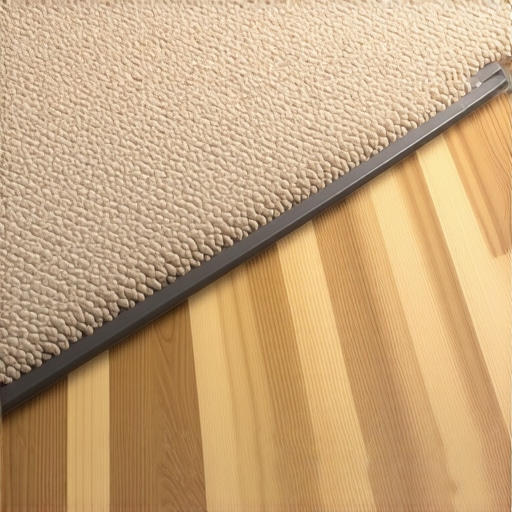
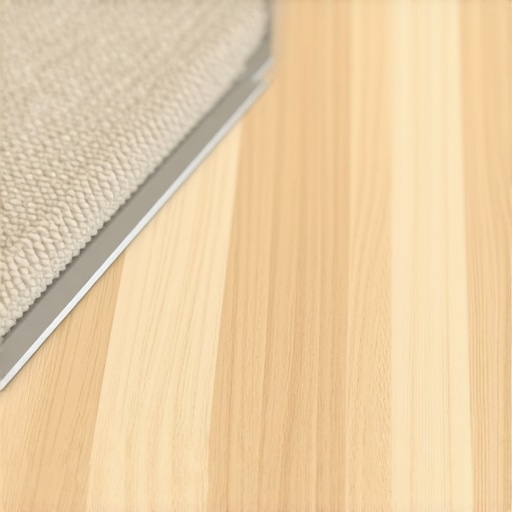
Expansion gaps and vertical tolerances of exactly 1/8 of an inch are necessary to prevent flooring materials from binding and buckling against vertical obstructions. In carpeted areas adjacent to laminate or tile, this gap ensures that transitions remain flush and free of lumps. People think carpet does not expand, but the air humidity affects the backing. If you are in a place like Houston with high moisture, that backing is going to move. If the installer did not leave room at the edges, the carpet will hump up in the middle of the room. I see this a lot near showers or kitchens. Moisture migrates through the subfloor and into the carpet pad. The pad absorbs that water like a sponge. When foam absorbs moisture, it expands and loses its grip on the subfloor. This is why your carpet might feel lumpy specifically near the bathroom door. It is not a padding defect. It is a moisture management failure. You need a vapor barrier even under carpet if you are over a crawlspace or a damp slab. Most guys skip that too.
- Check the subfloor for any protruding nails or staples.
- Use a self-leveling compound for any dips larger than 1/8 inch.
- Verify that the padding density matches the manufacturer specification.
- Ensure the carpet is power stretched in at least four directions.
- Seal all padding seams with high-quality duct tape or specialized floor tape.
“Subfloor preparation is the only insurance policy that actually works in the flooring industry.” – Master Flooring Axiom
The 1/8 inch that ruins everything
Minor height differences in the subfloor can cause the locking mechanisms in adjacent laminate floors to fail or create lumps in carpeted transitions. Precision leveling to within 1/8 of an inch is the industry standard for ensuring a flat and durable walking surface. I remember a job where a guy tried to install laminate right up against a carpeted hallway. He did not level the transition. Every time someone stepped on the carpet, it pushed the padding against the edge of the laminate. Within a month, the laminate tongues were snapped off. It is all connected. You cannot treat one room like an island. The subfloor is a continuous plane. If you have a hump in the hallway, it will affect the carpet in the bedroom. I spend a lot of time with a grinder and a vacuum. It is dirty work. It is loud. But when I lay that pad down, I know it is sitting on a surface that is as flat as a pool table. That is the only way to guarantee that the floor will not feel lumpy. If your installer shows up without a level and a vacuum, send him home. He is not a flooring architect. He is just a guy with a stapler.