Why Your Curbless Shower Drain Is Gurgling
The phantom sound in your bathroom floor
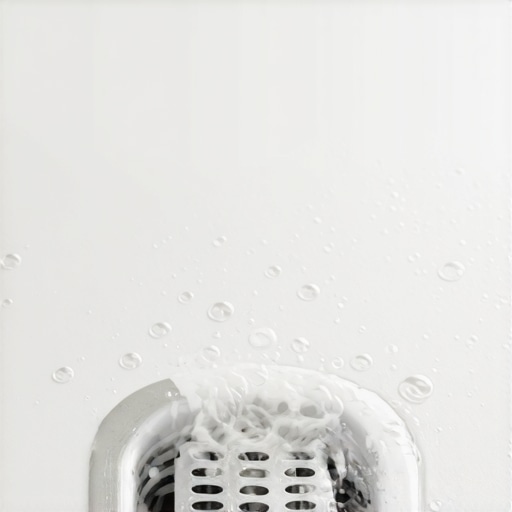
A gurgling curbless shower drain usually indicates a venting failure or a partial obstruction downstream that creates a pressure imbalance in your plumbing lines. When air cannot move freely through the vent stack, the falling water creates a vacuum that pulls air through the P-trap, resulting in that distinct glub-glub sound. This is not merely an annoyance. It is a structural warning sign that your barrier-free system might be at risk of a dry trap, which allows sewer gas to bypass the water seal and enter your living space. Most guys skip the leveling compound. They think the underlayment will hide the dip. It won’t. I spent three days grinding concrete on a job last month just so the floor wouldn’t click like a castanet. That same level of precision is required when you are troubleshooting the mechanics of a curbless assembly.
The physics of the zero entry drain
Curbless showers rely on a precise 1/4 inch per foot slope to move water effectively into the linear or center drain without a physical curb to contain it. This mechanical requirement means the subfloor must be recessed or the surrounding floor built up using extensive floor leveling techniques. If the gurgling occurs, the hydraulics of the drain are being interrupted by air pressure. In a curbless setup, the drain is often a linear style. These have larger surface areas but shallow troughs. If the vent pipe is too small or located too far from the trap, the volume of water moving through the narrow waste pipe creates a piston effect. It pushes air ahead of it and pulls a vacuum behind it. If the vacuum is strong enough, it siphons the water out of your trap. You hear the gurgle as the water level drops and air breaks through the seal.
“A floor is only as good as the subfloor beneath it, deflection is the enemy of every joint.” – Master Flooring Axiom
Why your subfloor is lying to you
Subfloor flatness is the most overlooked variable in residential construction, yet it dictates the success of every finish material from tile to laminate. When I walk onto a job site, the first thing I do is pull a 10-foot straightedge. If I see a gap larger than 1/8 of an inch, I know we have trouble. In the context of curbless showers, the subfloor must be stiff. We are talking about a L/720 deflection rating for natural stone or large format tile. If your subfloor flexes, your waterproof membrane (ANSI A118.10) will eventually fatigue and crack. This flex can also subtly shift the alignment of your waste lines. A drain pipe that has lost its pitch because the subfloor sagged will hold standing water. When new water hits that standing pool, air is forced back up through the drain, causing the gurgle. It is the same reason a carpet install feels bouncy or a laminate floor planks separate. It all comes back to the wood or concrete beneath your feet.
The chemistry of the bond
Modern thin-set mortars are not just mud, they are polymer-modified adhesive engines designed to provide shear strength and flexibility. When installing the pan for a curbless system, you must use a premium modified mortar that can handle the constant moisture cycles of showers. I have seen guys use cheap, unmodified thin-set over a topical membrane, and then they wonder why the tiles start popping off six months later. The water gets under the tile, sits in the ridges of the mortar, and becomes a breeding ground for bacteria. This sludge can also migrate into the drain, coating the interior of the pipes and narrowing the diameter. A narrowed pipe is a prime candidate for gurgling. The reduced volume causes the water to move faster and create higher pressure differentials. I always tell homeowners that the money they save on cheap materials will be spent three times over on the demolition when the system fails.
| Drain Type | Flow Rate (GPM) | Minimum Pitch | Typical Application |
|---|---|---|---|
| Center Drain | 8-10 GPM | 1/4″ per foot | Standard showers |
| Linear Drain | 12-15 GPM | 1/8″-1/4″ per foot | Curbless showers |
| Wall Drain | 10-12 GPM | 1/4″ per foot | Modernist wet rooms |
The 1/8 inch that ruins everything
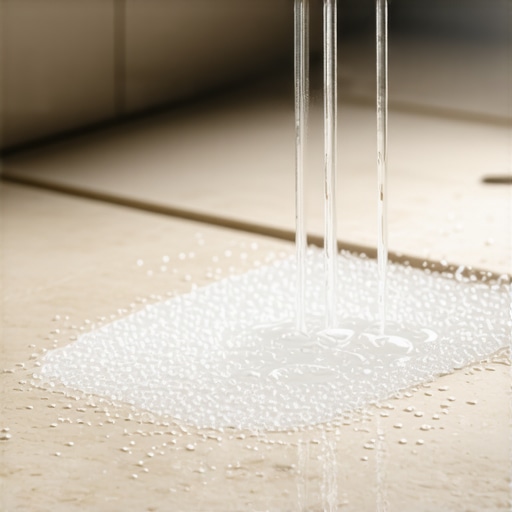
Precision in floor leveling is the difference between a high-performance surface and a liability. If you are transitioning from a tiled bathroom to a laminate floor in the hallway, that 1/8 inch transition must be perfect. If the bathroom floor is too high because you didn’t account for the thickness of the leveling compound, you end up with a clumsy T-molding that ruins the minimalist aesthetic. Even worse, if the slope in the shower is off by just a fraction, the water will travel toward the dry zone. I have seen water travel 15 feet across a bathroom because of capillary action and poor pitch. People think waterproof means indestructible. It doesn’t. Waterproof simply means the water won’t pass through the material, but it will still follow the laws of gravity. If your drain is gurgling, check the slope. If the water is sitting too long in the pipe, you are building up a biofilm that will eventually clog the whole system.
- Check the vent stack on the roof for bird nests or debris.
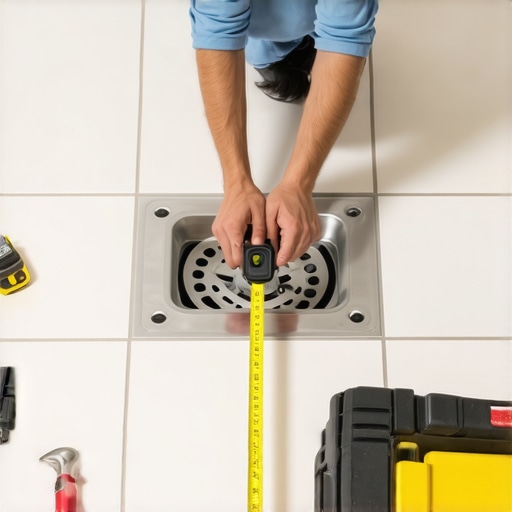
- Measure the water depth in the P-trap after a shower.
- Verify that the air-admittance valve is not stuck closed.
- Inspect the drain tailpiece for hair clogs.
- Ensure the floor leveling compound hasn’t blocked the weep holes.
The ghost in the expansion gap
Every hard surface floor needs room to breathe, and ignoring the expansion gap is the fastest way to buckle a floor. While showers are rigid, the surrounding laminate or hardwood is dynamic. It expands and contracts with the humidity. In a place like Houston, the humidity will swell your boards until they peak. In Phoenix, they will shrink until you can see the subfloor through the gaps. If you have a curbless shower, the transition to these materials must be handled with a moisture-resistant barrier. If the subfloor is damp because the shower is leaking or the drain is backing up, that moisture will wick into your laminate. You will see the edges start to curl. This is called crowning. Once the core of that laminate is wet, it is game over. You can’t dry it out. You have to rip it out. That is why I am so obsessed with the drain. A gurgling drain is a symptom of a system that is not breathing, and if it is not breathing, it is probably leaking.
“Deflection is the silent killer of tile; if the joist moves, the grout cracks.” – TCNA Installation Handbook
The final word on air and water
You cannot have a functional drain without a functional vent. Plumbers call it the vent-to-trap distance. If that distance is too long, the water moves like a solid slug, creating a vacuum that sucks the trap dry. If you are hearing that gurgle, you might need to install an auxiliary vent or an air-admittance valve. This is especially common in remodels where someone tried to turn a standard tub into a curbless shower without updating the plumbing. They think they can just swap the fixture and call it a day. It doesn’t work that way. You have to look at the whole system. From the floor leveling in the corner to the way the carpet install meets the transition strip, everything is connected. If one part of the machine is failing, the rest will follow. Stop ignoring the noise. Grab a camera, snake the line, and find out where the air is getting trapped. Your subfloor depends on it.