Why Your Shower Seat Is Sloping the Wrong Way
Most guys skip the leveling compound. They think the underlayment will hide the dip. It won’t. I spent three days grinding concrete on a job last month just so the floor wouldn’t click like a castanet. That same lazy mindset is exactly why your shower seat is currently collecting a pool of stagnant water against the back wall. You see, a shower seat is not a furniture piece. It is a hydraulic component of a complex drainage system. When an installer treats it like a simple bench, they ignore the physics of water tension and the inevitable reality of structural settling. Most failures start with a level. If you put a level on a shower seat and it says perfectly flat, you have already lost the battle against mold and gravity.
The structural lie of a level seat
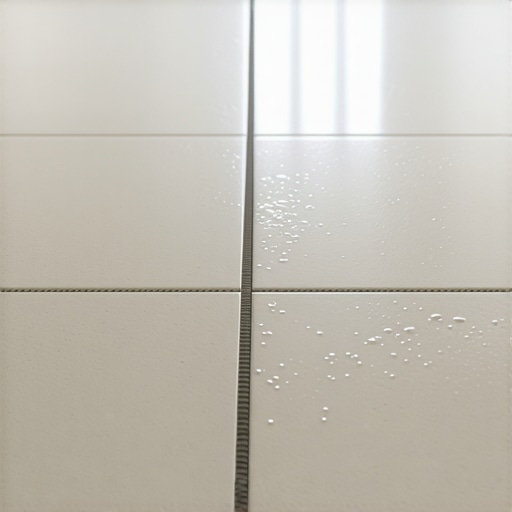
A shower seat slopes the wrong way because the installer failed to account for the mandatory pitch required by the Tile Council of North America standards. A seat must have a minimum slope of one quarter inch per foot toward the drain to ensure water evacuation. This specific pitch prevents the formation of bird baths which are small puddles that sit on the tile surface and eventually saturate the grout lines. When water stays on the seat, it begins a process called capillary action. It finds the microscopic pores in your grout and pulls itself deep into the substrate. If your seat is pitched toward the wall, you are essentially funneling water into the framing of your house. I have seen 2×4 studs turned into black mush because a guy didn’t want to spend ten minutes shimming a piece of cement board. This is not about aesthetics. It is about the structural integrity of your home. If you are planning a carpet install or laying laminate in an adjacent room, a leaking shower will eventually find its way to those floors too. Water travels. It follows the path of least resistance, which is often the subfloor you thought was safe.
“A floor is only as good as the subfloor beneath it; deflection is the enemy of every joint.” – Master Flooring Axiom
The chemistry of thin set and water resistance
The choice of mortar dictates whether your shower seat survives the next decade or fails within two years. High performance polymer modified thin sets are required to create a chemical bond that resists the constant hydrostatic pressure found in wet areas. You cannot just use the cheap stuff from the big box store and expect it to hold up. The polymers in the mortar create a lattice structure that blocks water molecules from penetrating the bond coat. When an installer uses non modified thin set in a wet area, the water eventually breaks down the crystalline structure of the cement. This is especially true if you are dealing with floor leveling issues in the rest of the bathroom. If the floor is not flat, the shower pan won’t sit right. If the pan doesn’t sit right, the seat becomes an afterthought. I always tell homeowners that the tile is just the dress. The waterproofing and the mortar are the skeleton and the muscle. If the skeleton is crooked, the dress is going to tear. We look at the mil thickness of the waterproofing membrane like an architect looks at a blueprint. Anything less than the manufacturer specification is a gamble with your subfloor.
| Material Type | Moisture Resistance | Typical Application | Expansion Rate |
|---|---|---|---|
| Solid Oak | Low | Living Areas | High |
| Engineered Wood | Moderate | Basements | Low |
| LVP Vinyl | High | Kitchens | Moderate |
| Porcelain Tile | Extreme | Showers | Negligible |
The 1/8 inch rule for water drainage
Small measurements make the difference between a dry bathroom and a rotting floor joist. A deviation of just one eighth of an inch over a short distance can stall water movement entirely. This is why floor leveling is a science rather than an art. When I am prepping a room for laminate, I am looking for a flatness of 1/8 inch over 10 feet. In a shower, the tolerances are even tighter. If the seat has a slight dip, the water will sit there until it evaporates. As it evaporates, it leaves behind soap scum and minerals that eat away at the sealer. Eventually, the water finds a way behind the tile. I have pulled up laminate floors in hallways that were ruined by a shower seat five feet away. The water wicked through the subfloor and expanded the core of the laminate planks until they peaked like mountain ranges. It is a chain reaction of failure that starts with a single poorly sloped surface.
“Slopes for horizontal surfaces in wet areas must be a minimum of 1/4 inch per foot.” – TCNA Handbook Excerpt
Why your thin set choice dictates the lifetime of your grout
Grout is not waterproof and it never will be. It is a porous material that relies on the slope of the tile and the quality of the mortar underneath to stay dry. If your shower seat is sloped incorrectly, the grout is under constant attack. Water sits on the grout line and slowly works its way down. If you used a cheap, standard grout without an additive, you are inviting disaster. I prefer high performance epoxy or urethane grouts for seats, but even they will fail if the water cannot drain. The bond between the tile and the thin set must be nearly 100 percent in a shower. Any voids in the thin set coverage become reservoirs for water. This is why back buttering the tile is mandatory. I see guys slapping tile on the wall like they are putting butter on toast. It is lazy. It is wrong. And it is the reason your shower smells like a damp basement after six months.
Checklist for a perfect shower seat installation
- Verify the framing is plumb and the seat support is pitched at 1/4 inch per foot.
- Install a moisture barrier or topical waterproofing membrane that meets ANSI A118.10 standards.
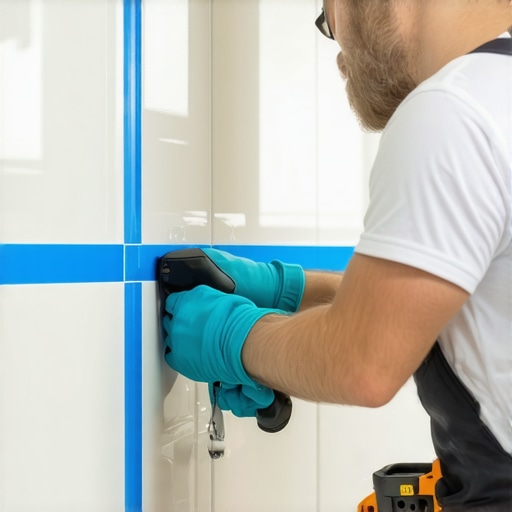
- Ensure all corners and transitions are reinforced with waterproof banding.
- Use a high performance polymer modified mortar for 95 to 100 percent coverage.
- Perform a flood test for 24 hours to ensure no leaks exist before tiling.
- Apply a high quality sealer to any cementitious grout lines.
The physics of capillary action in wet areas
Capillary action is the ability of a liquid to flow in narrow spaces without the assistance of external forces like gravity. In an incorrectly sloped shower seat, this force pulls water upward into the wall board. This is why you see mold growing two feet above the seat. The water is being sucked up the back of the tile. It is a slow, silent killer of houses. When I talk about floor leveling, people think I am being fussy. I am not. I am fighting the laws of physics. If a floor is out of level, the stress on the locking mechanisms of a laminate floor will eventually snap them. In a shower, if the seat is out of slope, the stress is on the chemical bonds of your waterproofing. One leads to a squeaky floor, the other leads to a $20,000 mold remediation bill. I have seen both, and I know which one I would rather avoid. You have to respect the water. If you don’t give it a clear path to the drain, it will make its own path through your ceiling. I always check the moisture content of the subfloor with a meter before I even think about starting a job. If the wood is over 12 percent, we have a problem. If the concrete slab is throwing off too much vapor, we have a problem. You deal with the moisture first, or you don’t do the job at all.