How to Stop Your Laminate Floors from Clicking Like a Typewriter
I spent three days grinding concrete on a job last month just so the floor wouldn’t click like a castanet. The homeowner thought I was crazy because they wanted the laminate down by Tuesday. I told them the floor would sound like a plastic typewriter if I didn’t get that slab within 3/16 of an inch over 10 feet. They did not listen at first. Then I showed them the 10 foot straightedge. There was a valley in the middle of the room big enough to hide a pack of carpenter pencils. If we had laid the planks over that dip, every step would have pushed the HDF core down, forcing the air out and creating that sharp, hollow snap that drives people mad. We ground the high spots until the dust mask was caked in grey and poured a high-flow, calcium aluminate-based self-leveling underlayment. Only then did we start the click-lock process. Most guys skip the leveling compound because they think the underlayment will hide the dip. It will not. A floor is a structural performance surface. If you treat it like a rug, it will fail you.
The hollow sound of a neglected subfloor
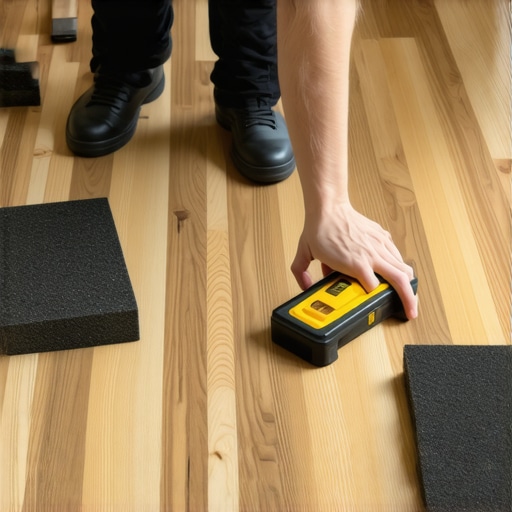
Stopping laminate floor clicking requires addressing the air gap between the plank and the subfloor. This usually means fixing subfloor dips exceeding 3/16 of an inch over 10 feet. Proper underlayment density and perimeter expansion gaps are also critical factors to prevent the vertical movement of the tongue and groove. When you hear that clicking sound, you are hearing the physics of deflection. The laminate plank is essentially a bridge spanning a canyon. When your body weight applies pressure to that bridge, the bridge bows. The clicking is either the locking mechanism rubbing together under stress or the bottom of the plank slapping the subfloor. To stop this, you must eliminate the canyon. This starts with a moisture meter and a long level. If your concrete slab is emitting more than three pounds of moisture vapor per one thousand square feet, that moisture is softening the fiberboard core. A soft core is a loud core. You need to ensure the substrate is dry, flat, and structurally sound before a single box of flooring is opened in the room for acclimation.
“A floor is only as good as the subfloor beneath it; deflection is the enemy of every joint.” – Master Flooring Axiom
The structural lie of the thin underlayment
Underlayment serves as a gasket and a noise dampener but it cannot compensate for a subfloor that lacks planarity. Choosing a high-density underlayment with a high IIC rating is essential for acoustic control. However, using an underlayment that is too thick or too soft will actually cause the locking joints to snap. I see this mistake on every DIY job. Someone buys the thickest, squishiest foam they can find thinking it will make the floor feel soft. It is a disaster. That compression allows the laminate joints to move too much. Think about the chemistry of the adhesive and the density of the high-density fiberboard. These locking systems are engineered to stay static. If the underlayment allows for more than a millimeter of vertical compression, the tongue will eventually shear off from the groove. You want a high-density rubber or cork underlayment. These materials have a high cell density that resists compression while absorbing the high-frequency vibrations that create the typewriter sound. While a carpet install relies on a thick pad for comfort, a laminate floor requires a firm foundation to remain silent and stable over time.
Why your subfloor is lying to you
Floor leveling is the most ignored step in residential flooring but it is the most vital for long-term performance. A subfloor might look flat to the naked eye but a laser level will often reveal significant undulations and waves. These variations are the primary cause of clicking and popping sounds. If you are working on a wood subfloor, check for loose sheets of plywood or OSB. A single loose screw can cause a squeak that sounds exactly like a clicking laminate joint. If you are on concrete, you are dealing with the moisture and the flatness. The chemistry of floor leveling compounds is specific. You cannot just use a bag of play sand or thin-set used for showers to fill deep holes. You need a compound with high compressive strength that will not crack under the rolling load of furniture. I always tell my apprentices that if they spend less time on the subfloor than they do on the actual planks, they are doing it wrong. The floor is an ecosystem. If the base is unstable, the surface will be vocal about its discomfort. Use a 10 foot straightedge and mark every dip with a wax crayon. Fill them. Sand the humps. It is dirty work, but it is the only way to get silence.
| Material Type | Typical Density | Compression Resistance | Acoustic Rating (IIC) |
|---|---|---|---|
| Standard PE Foam | Low | Poor | 50-55 |
| EVA Foam | Medium | Moderate | 55-62 |
| High-Density Rubber | High | Excellent | 65-72 |
| Natural Cork | High | Superior | 60-70 |
The physics of the floating floor bounce
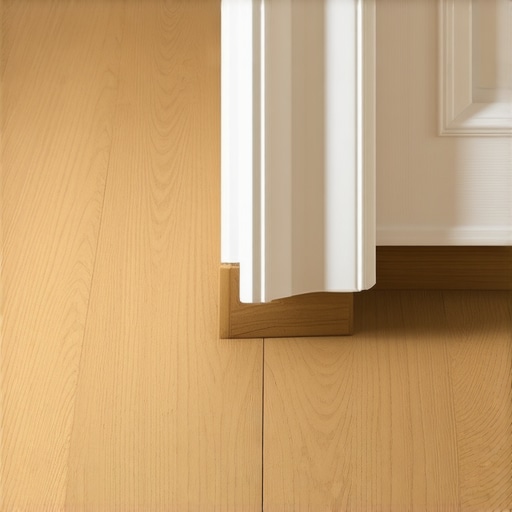
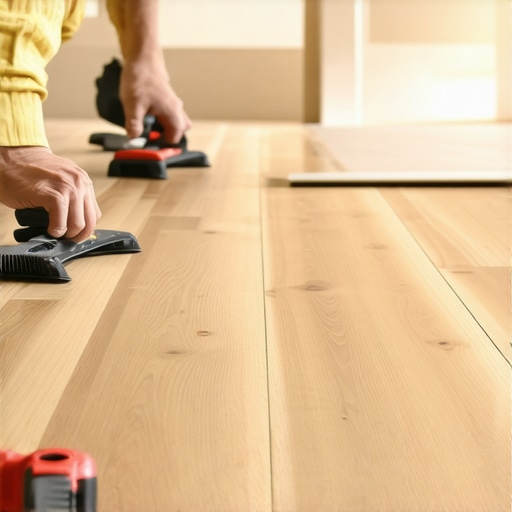
Floating floors are designed to move horizontally as a single unit but vertical movement must be strictly limited to prevent noise. Friction between the locking profiles of the laminate planks creates the sharp clicking sound when the floor is forced to deflect into a subfloor void. This is why acclimation is not optional. If the planks are not acclimated to the humidity of the room for at least 48 hours, they will expand or contract after installation. If they expand too much, they will bind against the walls. A bound floor has nowhere to go but up. It creates a bubble. When you step on that bubble, you get the click. You need a minimum of a 3/8 inch expansion gap around the entire perimeter. Do not forget the doorjambs. Undercut the jambs so the floor can slide underneath. If you pin the floor down with baseboards or heavy kitchen islands, you are killing the floor. It needs to breathe. It needs to shift. If it cannot shift horizontally, it will protest vertically. The sound of a typewriter is the sound of a floor that is trapped and struggling against its own environment.
“Moisture vapor emission rate must not exceed three pounds per one thousand square feet over twenty four hours.” – Industry Standard
The 1/8 inch that ruins everything
Precision in the expansion gap and the flatness of the substrate determines whether a laminate floor feels like solid wood or a cheap plastic imitation. Small deviations of even 1/8 of an inch can create a rhythmic clicking as you walk across the room. It is about the tolerances. Laminate is a manufactured product with very tight tolerances in the millwork. When you introduce the chaos of a bumpy subfloor, those tolerances are exceeded. The tongue of the board is often less than an eighth of an inch thick. It is the weakest point. Constant clicking is the sound of that tongue slowly fatiguing. Eventually, it will snap. Once the joint is broken, there is no fix other than pulling up the floor and replacing the damaged boards. It is better to spend the extra day on floor leveling than to spend a week ripping out a finished floor. I have seen guys try to inject glue into the joints to stop the clicking. It never works. It just makes a mess and voids the warranty. If you want a silent floor, you have to earn it with a grinder and a level.
Silent Floor Checklist
- Check subfloor flatness with a 10 foot straightedge.
- Verify moisture content in the slab or wood joists.
- Acclimate laminate planks in the room for 48 to 72 hours.
- Select a high-density underlayment with a minimum IIC of 60.
- Maintain a 3/8 inch expansion gap at all vertical obstructions.
- Undercut door casings to allow for free horizontal movement.
- Ensure the locking mechanisms are clear of debris before clicking.
When to walk away and start over
If a laminate floor is clicking across more than 30 percent of its surface area it usually indicates a systemic failure of the subfloor preparation. At this point, the most cost-effective solution is often to remove the planks and address the underlying issues. It is a hard pill to swallow. I once had a client who tried to save money by skipping the leveling on a 1,000 square foot basement. A month later, it sounded like a tap dance recital every time they walked to the laundry room. We had to pull it all up. We found two low spots we missed and a section where the vapor barrier had a tear. We fixed the slab, put down a new moisture barrier, and reinstalled the same planks. The silence was immediate. Laminate is a great product when installed within the NWFA guidelines. It is durable and cost-effective. But it is not magic. It cannot defy the laws of physics. If you give it a flat, dry, and stable home, it will serve you for twenty years without making a sound. If you rush the prep, you will hear about it with every step you take. Use the right tools, buy the good underlayment, and do not ignore the level. Your ears will thank you later.