The ‘Ice Cube’ trick for heavy furniture dents in carpet
The ‘Ice Cube’ trick for heavy furniture dents in carpet
Most guys skip the leveling compound. They think the underlayment will hide the dip. It won’t. I spent three days grinding concrete on a job last month just so the floor wouldn’t click like a castanet. This is the reality of flooring that people do not see. They see the plush pile or the oak grain, but I see the 1/8 inch deviation that will eventually snap a locking joint or cause a carpet to ripple like a disturbed pond. My hands are permanently stained with the grey dust of Portland cement, and my knees have the wear of a man who knows that a floor is a structural assembly, not a decorative rug. When people ask me about the ice cube trick for furniture dents, they are usually looking for a quick fix for a deeper problem. They want to know if a bit of frozen water can reverse the physics of a thousand-pound wardrobe crushing a nylon polymer for five years. The answer is yes, but only if you understand the molecular mechanics of the fiber you are trying to resurrect.
The science behind carpet fiber compression
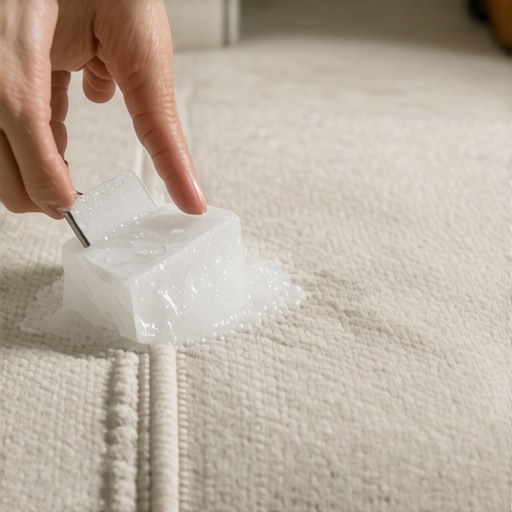
Carpet dents occur when the weight of heavy furniture exceeds the elastic limit of the synthetic or natural fibers, causing a permanent deformation of the pile. This structural collapse is often exacerbated by poor quality padding or an unlevel subfloor that forces the furniture to sit at an angle, concentrating the PSI on a single leg. To fix this, you must introduce moisture and heat to the polymer chains to encourage them to return to their original upright orientation. When you place an ice cube on a dent, you are initiating a controlled hydration process. As the ice melts, the water molecules penetrate the crushed yarn. Synthetic fibers like nylon are thermoplastic, meaning they respond to temperature changes. The cold water allows the fiber to swell slowly without over-saturating the primary backing, which is a common mistake when using a steam iron. If you soak the backing too much, you risk delamination, where the secondary backing separates from the primary, leading to a permanent bubble in your carpet install.
The ice cube method step by step
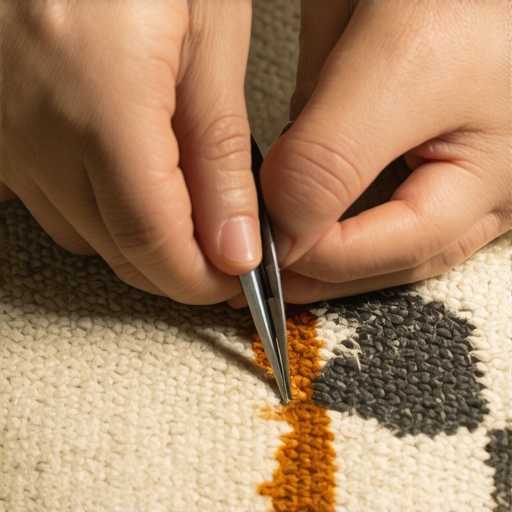
How to fix carpet dents with ice requires patience and a specific sequence of mechanical agitation to ensure the pile stands tall. First, place enough ice cubes to completely fill the indentation. Do not skimp. You need enough volume to saturate the crushed area but not so much that it floods the surrounding floor leveling compound beneath the pad. Let the ice melt completely, which usually takes several hours depending on the ambient humidity of the room. Once the area is damp but not soaking, use a blunt object, like the edge of a spoon or a professional carpet grooming brush, to gently lift the fibers. You are looking to restore the ‘memory’ of the twist. If the carpet is a high-pile shag, you might need to repeat this twice. For commercial-grade loop or laminate transitions where the carpet meets a hard surface, be careful not to snag the loops, as this can create a run that ruins the entire room’s aesthetic.
“A floor is only as good as the subfloor beneath it; deflection is the enemy of every joint.” – Master Flooring Axiom
Why floor leveling determines dent severity
Floor leveling is the silent partner in how your carpet handles heavy loads over time. If a subfloor has a dip, the furniture leg doesn’t just sit on the carpet; it creates a shear force that stretches the backing. When you finally move that furniture and see a deep crater, you aren’t just looking at crushed fibers. You are often looking at a permanent stretch in the polypropylene mesh. This is why I always insist on a flat substrate. Whether you are prepping for laminate or a thick frieze carpet, the subfloor must be within 3/16 of an inch over a 10-foot radius. If you skip this, no amount of ice cubes will fix the fact that your carpet is now oversized for the hole it sits in. I have seen guys try to pad out a dip with extra foam, but that just creates a trampoline effect that wears out the carpet twice as fast. You need a solid, level base of high-flow gypsum or cementitious underlayment.
Comparison of carpet fiber resilience
| Fiber Type | Resilience Rating | Ice Cube Success Rate | Recommended For |
|---|---|---|---|
| Nylon 6,6 | High | 95% | High Traffic Areas |
| Polyester (PET) | Medium | 70% | Bedrooms |
| Triexta | High | 90% | Homes with Pets |
| Olefin | Low | 40% | Basements |
| Wool | Exceptional | 98% | Luxury Living Rooms |
The danger of carpet in high moisture zones
Showers and carpets are a recipe for a biological disaster that no cleaning trick can solve. I have walked into homes where the master bathroom has carpeted floors right up to the edge of the tub. The humidity from the steam alone is enough to kill the tension in the carpet power-stretch, leading to ripples. When you add a heavy vanity on top of that damp carpet, the dents become permanent because the moisture has already compromised the structural integrity of the latex adhesive in the backing. If you are dealing with a dent in a room adjacent to showers, you need to check for subfloor rot before you even think about the ice cube trick. Use a pin-type moisture meter to ensure the subfloor is below 12% moisture content. If it is higher, you are just growing mold under your furniture. In these cases, ripping it out and installing a waterproof luxury vinyl or a properly leveled tile floor is the only professional move.
“The structural integrity of the wear layer is secondary to the compression resistance of the primary backing.” – Carpet Installation Standards
The professional maintenance checklist
- Vacuum high traffic areas at least three times a week to prevent dirt from grinding into the fiber base.
- Rotate furniture every six months by at least two inches to distribute the load on the subfloor.
- Use wide-base furniture cups to spread the PSI of heavy legs across a larger surface area.
- Ensure your carpet install was done with a power stretcher, not just a knee kicker, to prevent sagging.
- Keep indoor humidity between 30% and 50% to maintain fiber elasticity and prevent backing shrinkage.
- Never use a steam cleaner on a wool carpet without testing the temperature, as you can shrink the protein fibers.
The chemistry of heat and fiber recovery
Molecular zooming into the fiber reveals that heat is the catalyst for restoration. While the ice cube provides the moisture, the follow-up with a hair dryer or a garment steamer is what sets the ‘reset’. When the water from the ice cube is absorbed, the hydrogen bonds in the polymer chains are temporarily weakened. This is your window of opportunity. By applying gentle heat, you allow the chains to slide back into their manufactured shape. However, you must be careful. If you get the fiber too hot, especially with cheap polyester, you will reach the glass transition temperature and the fiber will melt. This creates a hard, shiny patch that is far worse than a dent. It is a delicate balance of hydration and thermal energy. This is the same reason why we use heat tapes on seams during a carpet install. The heat melts the adhesive just enough to create a bond without damaging the face fibers. If you treat your floor with the same respect as a structural engineer treats a bridge, it will last you thirty years. If you treat it like a cheap rug, you will be calling me to rip it out in three.