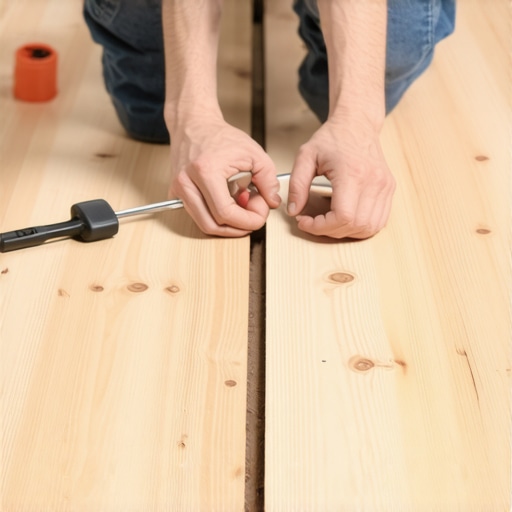

The ‘Hammer Tap’ Strategy for Identifying Hollow Spots in Laminate
The Hammer Tap Strategy for Identifying Hollow Spots in Laminate
Most guys skip the leveling compound. They think the underlayment will hide the dip. It won’t. I spent three days grinding concrete on a job last month just so the floor wouldn’t click like a castanet. I remember the smell of the grinding wheel hitting that high spot in the center of the kitchen. It was an old slab, settled in the corners but humped in the middle like a camel. If I had just thrown the laminate down, the first time the homeowner walked to the fridge, they would have heard that sickening hollow thud. That sound is the death knell of a flooring project. It means there is a void. It means the locking mechanism is under stress. Eventually, it means the tongue snaps and the floor fails. My hands still shake from the vibration of that grinder, but the floor is flat. That is the difference between a floor that lasts twenty years and one that ends up in a dumpster after eighteen months.
The subfloor secret that saves your floor
Subfloor flatness is the most critical variable in any laminate flooring installation, requiring a tolerance of 1/8 inch over 6 feet or 3/16 inch over 10 feet to prevent hollow spots. When the concrete slab or plywood subfloor has a birdbath or a dip, the planks bridge over the void. This creates vertical deflection every time a person walks across the surface, leading to joint fatigue and clicking noises. You cannot fix a dip with more underlayment because the soft cushion allows even more movement. You must use self-leveling compound or portland-based patch to fill the recess before the first plank is laid. I have seen guys try to shim a floor with scraps of roofing felt. It is a hack move. The only way to ensure the structural integrity of the locking system is to provide a continuous substrate that supports the entire underside of the flooring material.
The acoustics of a failing click lock system
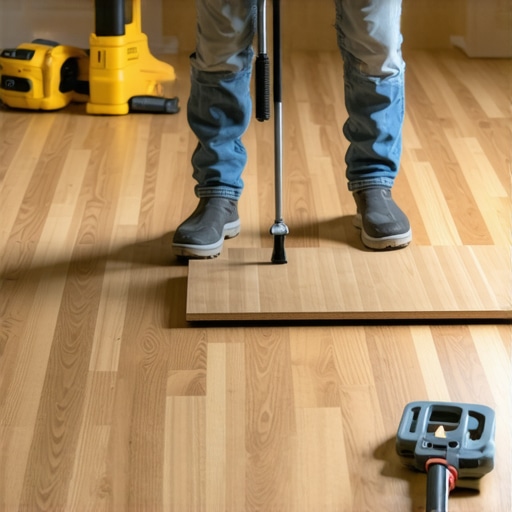
The sound of a floor tells you everything about the work done beneath it. A hollow sound is not just an auditory annoyance. It is a physics problem. When you tap on a floor and hear a higher pitch or an echoing ring, you are hearing an air pocket. This air pocket acts as a drum. The laminate plank is the drumhead. The underlayment is supposed to be the dampener, but if the underlayment is not in contact with the subfloor, the dampening effect is zero. I use a small rubber mallet or even the handle of a screwdriver for the hammer tap strategy. You walk the perimeter and the center of every room, tapping every twelve inches. The sound should be a dull, heavy thud. If it rings, you have a bridge. A bridge means the floor is suspended in the air. This usually happens because of a high spot nearby that was not ground down, or a low spot that was not filled. The physics of the click-lock joint dictates that it must remain in a state of compression or neutral tension. When it bridges a gap, it enters a state of shear stress. The 7mm or 12mm core material is not designed to support the weight of a human being while suspended in mid-air. It will snap. It is only a matter of time.
“A floor is only as good as the subfloor beneath it; deflection is the enemy of every joint.” – Master Flooring Axiom
The physics of deflection and bridge gaps
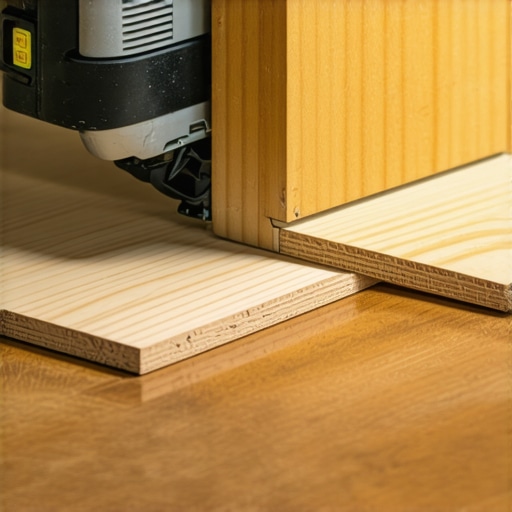
Deflection in flooring refers to the vertical movement of the laminate planks when pressure is applied to a hollow spot or void in the subfloor. This movement causes the tongue and groove to rub together, creating friction and squeaking. Over time, the mil-thickness of the wear layer cannot protect the core from the internal stresses of bending. If the deflection exceeds the manufacturer specifications, the locking mechanism will delaminate. This is why floor leveling is more than just a cosmetic step. It is structural engineering at the microscopic level. You are managing the compressive strength of the installation. When you find a hollow spot, you are identifying a point of potential failure where moisture can also collect. Hydrostatic pressure in a concrete slab can push water vapor into these voids, leading to mold growth or peaking at the seams. A flat floor is a dry floor and a quiet floor.
| Material Type | Dampening Rating (IIC) | Compression Resistance | Acclimation Time |
|---|---|---|---|
| High-Density Foam | 65-70 | Medium | None |
| Natural Cork | 70-75 | High | 24 Hours |
| Recycled Rubber | 75+ | Very High | 48 Hours |
| Basic PE Film | 50 | Low | None |
Why your thick underlayment is actually the problem
Thick underlayment is often sold as a luxury upgrade, but excessive cushion is the primary cause of locking system failure in laminate flooring. If an underlayment is too compressible, it allows the planks to sink too far into the material, which puts excessive torque on the click joints. You want an underlayment with high density rather than high thickness. A 2mm high-density foam is significantly better than a 5mm cheap sponge. The hammer tap strategy will reveal soft spots where the underlayment is collapsing. People think they are being smart by doubling up on padding to hide a bad subfloor. They are actually creating a trampoline effect. This mechanical stress will unzip the floor at the headers. Stick to standards. If the manufacturer says 2mm, use 2mm. Anything else is a liability waiting to happen. I have seen expensive showers and kitchens ruined because the flooring shifted so much it pulled the silicone away from the baseboards.
Critical checklist for a hollow free installation
- Sweep and vacuum the subfloor three times to remove all grit and debris.
- Use a 10-foot straight edge to identify every dip deeper than 3/16 inch.
- Mark the boundaries of the hollow spots with a wax pencil.
- Apply a primer specifically designed for your leveling compound.
- Pour the self-leveler and use a spiked roller to release air bubbles.
- Verify the moisture content of the slab using a calcium chloride test.
- Check the acclimation of the planks to ensure they are within 2 percent of the subfloor.
- Execute the hammer tap test every three rows during the install.
Fixing the void without ripping up the room
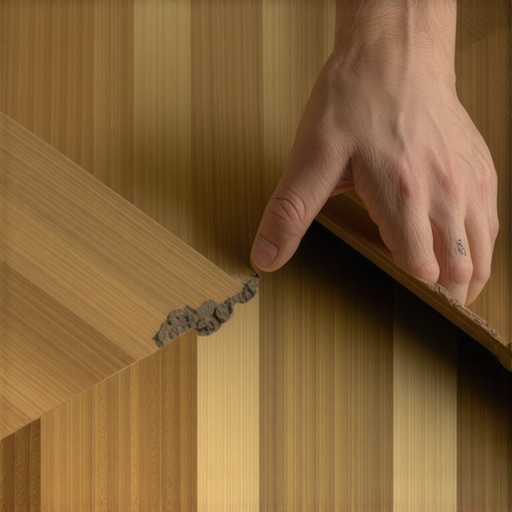
When you find a hollow spot after the installation is complete, you have two options. You can uninstall the planks back to the source or you can inject a structural resin. To inject the void, you drill a small pilot hole in a discreet location, such as a grout line or a dark grain in the laminate pattern. You then use a specialized adhesive that expands to fill the cavity. This adhesive must be non-expansive enough that it does not heave the floor, but strong enough to support the load. After the injection, you weight the area down for 24 hours. This is a last resort. It is always cheaper and better to level the floor correctly the first time. I have done injections on commercial jobs where the carpet install was already scheduled for the next room and we couldn’t stop. It works, but it is a surgical procedure that requires patience and a steady hand.
“Subfloor preparation is not a suggestion; it is the foundation of the warranty.” – TCNA Handbook Standards
The 1/8 inch that ruins everything
Precision is not about being a perfectionist. It is about the chemistry of the bond and the physics of the load. A 1/8 inch gap might seem like nothing to a homeowner. To a floor, it is a canyon. When the air temperature changes and the laminate expands, that 1/8 inch gap changes the way the entire floor moves. If the floor is pinned because of a hollow spot, it cannot slide. Laminate is a floating floor. It must be free to move as a single unit. If one part is stuck because it is sagging into a hole, the expansion will cause the floor to peak. You will see the seams rise up like little mountains. No amount of tapping with a hammer will fix a peaked seam. You have to address the root cause. This is why I always carry a moisture meter and a level. The level does not lie. The moisture meter does not lie. If the subfloor is wet or the subfloor is wavy, the floor will fail. It is a mathematical certainty. You can buy the most expensive laminate in the world, but if you put it on a bad subfloor, you have a cheap floor. If you put a cheap laminate on a perfect subfloor, you have a floor that will last a decade. Focus on the prep. The finish will take care of itself. Stop looking at the color and start looking at the concrete.