The ‘Water Ring’ Mistake That Turns Leveler into Chalk
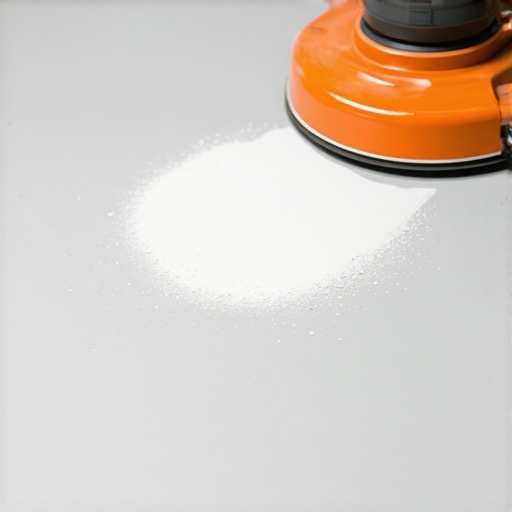
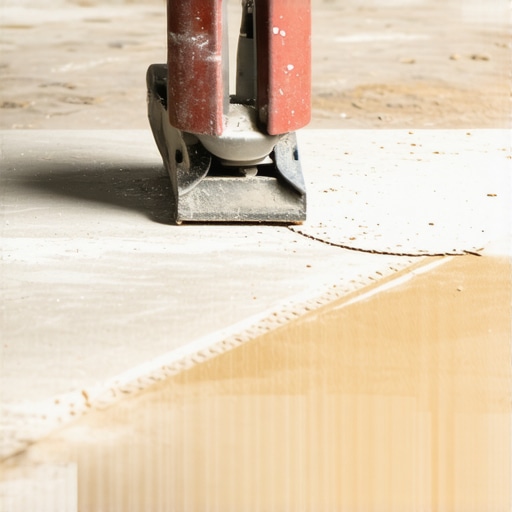
I spent three days grinding concrete on a job last month just so the floor wouldn’t click like a castanet. The previous crew had come in and poured eighty bags of self-leveling underlayment without a primer or a measuring bucket. They just eyeballed the water. When I walked onto that site, the floor looked like a dry lakebed in the Mojave. It was flat, sure, but if you dragged your boot across it, a white cloud of dust kicked up. That is the water ring mistake. It turns a structural component into literal sidewalk chalk. Most guys skip the leveling compound because it is expensive and messy. Then they think the underlayment will hide the dip. It won’t. I had to use a diamond cup wheel to chew through two thousand square feet of ruined material because someone thought they could save ten minutes by not measuring their water. The smell of burning concrete and the vibration of the grinder are the only things that teach you the importance of chemistry in flooring.
The structural lie of a flat surface
Floor leveling requires precise water to powder ratios to ensure the structural integrity of the substrate remains intact for laminate or carpet install projects. When excess water is added, the polymers and binders separate from the cementitious material, creating a weak surface layer that lacks compressive strength and bond durability. A flat floor is not necessarily a stable floor. You can have a surface that is perfectly level across a twenty foot span but possesses the structural density of a graham cracker. In the world of high end flooring, we talk about compressive strength in pounds per square inch. A standard self leveling underlayment should hit four thousand or five thousand PSI. When you introduce too much water, that rating plummets. You are left with a surface that cannot support the weight of a piano or even the repetitive footfalls of a busy family. The floor looks good for a week, then the clicking starts. That sound is the sound of your investment turning into powder. We see this often in modern construction where speed is prioritized over the physics of hydration. A floor is a machine, and like any machine, its parts must be calibrated to the micron.
“A floor is only as good as the subfloor beneath it; deflection is the enemy of every joint.” – Master Flooring Axiom
The chemistry of the overwatered mix
Overwatering self leveling underlayment triggers a phenomenon where the heaviest aggregates sink to the bottom while the water and light polymers rise to the top. This creates a brittle, dusty film known as laitance that prevents adhesives from bonding and causes floating floors to grind the substrate into dust. When you mix a bag of leveler, you are initiating a complex chemical reaction. The calcium aluminate cement needs a specific amount of H2O to create the crystalline structure known as ettringite. If you drown the mix, those crystals cannot form an interlocking web. Instead, they float in a slurry. As the water evaporates, it leaves behind microscopic voids. These voids are why the leveler feels soft. If you are doing a carpet install, the tack strips will simply pull right out of the floor because there is nothing for the nails to grab. If you are prepping for showers, the waterproof membrane will peel off like a sunburned skin. I have seen guys try to fix this by pouring more leveler on top. That is a recipe for a double failure. You cannot build a skyscraper on a foundation of sand, and you cannot build a floor on a foundation of chalk.
Why your laminate will fail on soft leveler
Laminate flooring relies on a rigid locking mechanism that requires a firm, non-yielding base to prevent the tongue and groove joints from snapping under load. A chalky subfloor provides zero support, leading to vertical deflection that eventually shears the locking systems and creates permanent gaps between planks. Laminate is often marketed as a DIY friendly product, but the subfloor requirements are some of the most stringent in the industry. Because laminate is a floating system, it moves. If the leveler underneath is soft, every step causes the plank to dip. That dip puts immense pressure on the thin plastic or fiberboard locking joint. Over time, the joint fatigues. It cracks. Then you get what we call the trampoline effect. You walk in one spot and the whole floor bounces. This is especially prevalent in large open concepts where the floor has significant mass. The friction between the bottom of the laminate and the chalky leveler also creates a fine white dust that works its way up through the joints. You will find yourself mopping every day, wondering where the white powder is coming from. It is coming from the floor eating itself from the bottom up.
| Substrate Property | Standard Requirement | Overwatered Result |
|---|---|---|
| Compressive Strength | 4000 to 5000 PSI | 800 to 1200 PSI |
| Surface Hardness | ASTM C1583 High | Friable/Chalky |
| Bond Strength | > 200 PSI | 0 to 50 PSI |
| Drying Time | 12 to 24 Hours | 48+ Hours (Weak) |
The shower floor drainage paradox
Proper floor leveling in wet areas like showers is vital for ensuring that water migrates toward the drain rather than pooling under the tile. If the leveler is compromised by excess water, it will absorb moisture, leading to mold growth and the eventual delamination of the tile or stone surface. Showers are high stakes environments. You aren’t just dealing with gravity; you are dealing with capillary action and vapor pressure. If the leveler used to create the pitch in a shower is chalky, the thin-set will not bite. I have seen entire shower floors lift up in one piece because the leveler turned to mush. The TCNA has strict guidelines for this. You need a substrate that can handle the constant wetting and drying cycles without losing its dimensional stability. When leveler is overwatered, its porosity increases exponentially. It becomes a sponge. This sponge holds onto soapy water, which feeds microbial growth. Eventually, the shower starts to smell like a swamp, and no amount of scrubbing the grout will fix it because the problem is two inches deep in the chalky substrate.
“The substrate must be prepared to a tolerance of 1/8 inch in 10 feet for large format tile installations to prevent lippage and bond failure.” – TCNA Handbook Standards
Carpet installation over compromised substrates
A carpet install on a chalky subfloor fails because the architectural tension required to stretch the carpet cannot be maintained by the tack strips. The nails used to secure the strips will lose their grip in the soft leveler, causing the carpet to wrinkle and bunch over time. People think carpet is forgiving. They think it hides sins. It doesn’t. It just delays the reckoning. When we stretch a carpet, we are putting hundreds of pounds of tension on it. That tension is held by the tack strips around the perimeter. If those strips are nailed into overwatered leveler, they will eventually pop loose. You will see the carpet start to wave near the baseboards. Furthermore, the padding acts like a bellows. Every time you walk on the carpet, it pushes air down and sucks it back up. If the leveler is dusty, that bellows system pumps concrete dust into your indoor air. It is a health hazard and a structural failure. I always tell my clients that if the subfloor is dusty, the carpet is just a giant air filter for cement particles. You have to seal it or grind it and pour it right.
The 1/8 inch that ruins everything
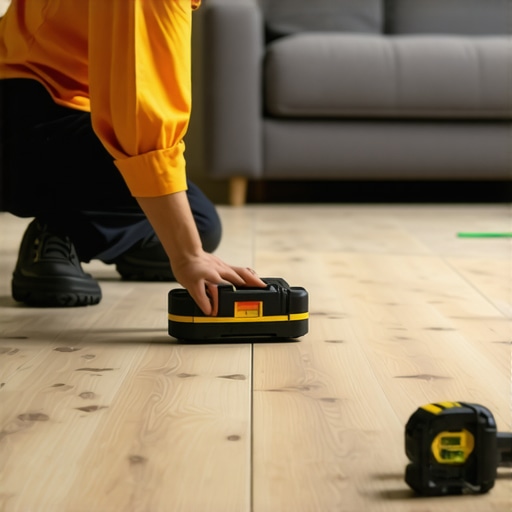
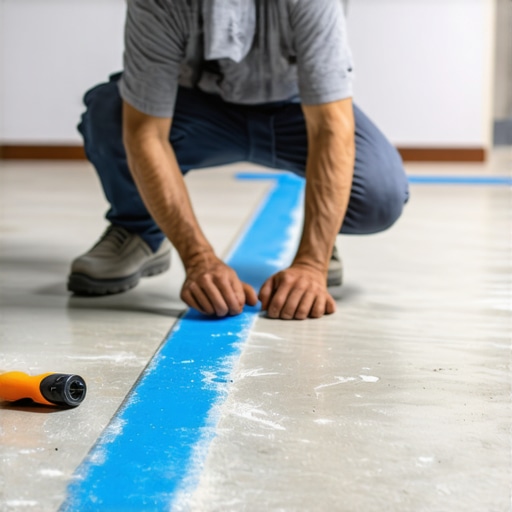
Subfloor deviations greater than 1/8 inch over a ten foot radius will cause modern flooring materials to fail by putting undue stress on the physical joints of the product. Precision leveling is the only way to meet manufacturer warranties and ensure the longevity of the installation in residential or commercial settings. I carry a ten foot straightedge on every job. I don’t trust my eyes. If I see a dip, I mark it. If that dip is filled with bad leveler, it is worse than if it were left empty. The industry standard is clear. We are looking for flatness, not levelness, though level is preferred. If you have a hummock in the middle of the room, your planks will bridge over it. That bridge has air underneath it. Air is the enemy of a solid feel. Every time you step on that bridge, you are bending the wood or the vinyl. Eventually, the material will give up. It is a simple matter of physics. You can only bend a piece of material so many times before the molecular bonds fail. In my twenty five years of doing this, I have never seen a floor fail because the subfloor was too flat. I have seen thousands fail because someone thought 1/4 inch was close enough.
- Check the manufacturer water ratio on the bag before every single pour.
- Use a spiked roller to release trapped air and help the polymers settle correctly.
- Always apply a dedicated primer to the substrate to prevent the concrete from sucking water out of the leveler too fast.
- Perform a scratch test with a screwdriver after twenty four hours to ensure the surface is hard and not chalky.
- Maintain a consistent room temperature to prevent the leveler from flash drying or failing to cure.