The ‘Sniff Test’ for Finding Hidden Subfloor Rot
The Sniff Test for Finding Hidden Subfloor Rot
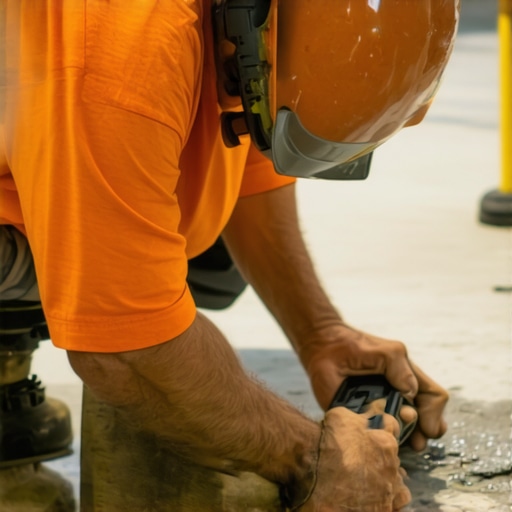
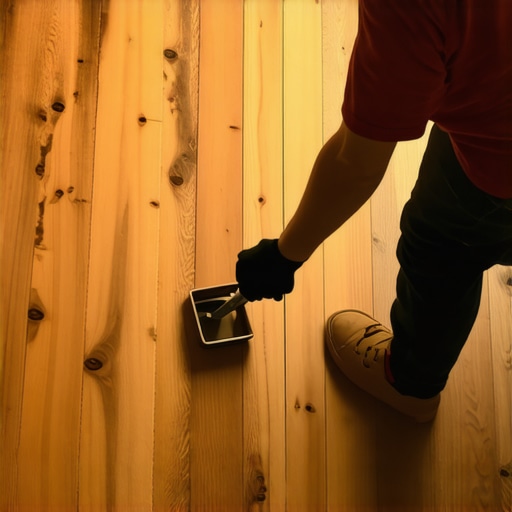
I spent three days grinding concrete on a job last month just so the floor would not click like a castanet. Most guys skip the leveling compound. They think the underlayment will hide the dip. It won’t. I walked into that house and immediately smelled it. Not just the dust from the grinders, but that sharp, earthy tang of microbial volatile organic compounds. The owner wanted a cheap laminate over a slab that was sweating like a marathon runner. If I had just laid the boards, that floor would have been a petri dish within six months. You have to respect the chemistry of the slab and the physics of the joists before you even think about what the surface looks like. If you ignore the subfloor, you are just decorating a disaster.
The scent of microbial volatile organic compounds
The sniff test for hidden subfloor rot relies on detecting microbial volatile organic compounds or MVOCs produced by active fungal growth within the wood fibers or concrete pores. These gasses signify that moisture levels have exceeded 19 percent in wood or 85 percent relative humidity in concrete slabs. When you walk into a room and smell something akin to wet dirt or old gym clothes, your subfloor is likely undergoing a structural breakdown. This is not just a nuisance. It is a sign that the lignin in the wood is being consumed by fungi or that the adhesive bond on your floor leveling compound is being hydrolyzed. This chemical reaction weakens the entire assembly. You cannot mask this with candles or air fresheners. You have to find the source. Usually, it starts in the areas you least expect, like the transition between the bathroom tile and the hallway carpet install. If the smell intensifies near the baseboards, the rot has already reached the perimeter plates of your framing.
“A floor is only as good as the subfloor beneath it; deflection is the enemy of every joint.” – Master Flooring Axiom
The physics of capillary action in showers
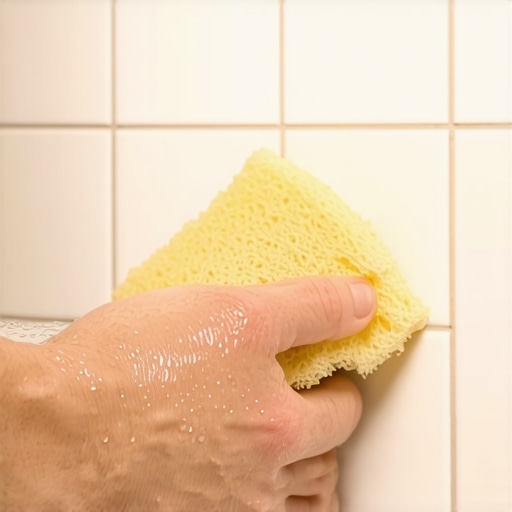
Hidden rot often begins near showers where capillary action draws liquid water through microscopic gaps in grout or unsealed silicone beads into the subfloor. This moisture travels horizontally under the finish floor, saturating the plywood or OSB until the material loses its structural integrity and begins to emit a pungent odor. I have seen shower pans that looked perfect on the surface while the 3/4 inch tongue and groove plywood underneath was the consistency of oatmeal. The water does not just sit there. It moves through the material via the pores in the wood. If you have a crawlspace, you can often see the white, fuzzy growth of efflorescence or actual mold colonies from below before you see it from above. The chemistry of the water also matters. High alkalinity in the water can react with certain wood species, accelerating the rot process through a phenomenon known as alkaline hydrolysis. This is why properly installed waterproofing membranes like those specified by the TCNA are non negotiable.
Why your subfloor is lying to you
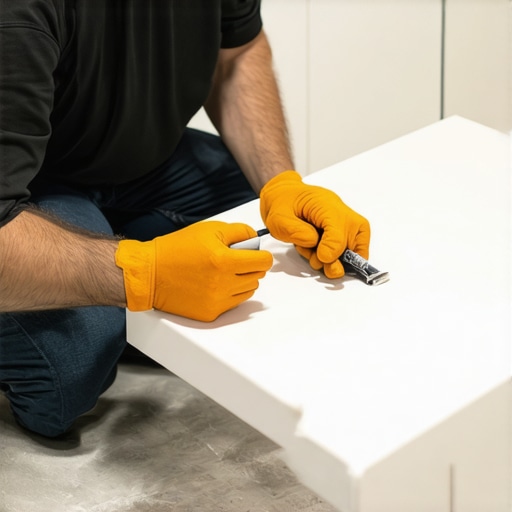
A subfloor might look flat to the naked eye but a ten foot straightedge will reveal the truth about dips and humps that cause floor failure. If a subfloor is not level within 3/16 of an inch over a ten foot radius, the mechanical locking systems of modern floors will eventually snap. People think that underlayment provides a cushion that fixes everything. It does the opposite. If you use an underlayment that is too thick or too soft, it allows the floor to deflect too much. That deflection puts immense pressure on the thin plastic tongues of your laminate or LVP. Eventually, those tongues shear off. Now you have a floating floor that actually moves when you walk on it. I always tell my clients that we spend more on the prep than the plank. If we do not grind the high spots and fill the low spots with a high compression strength floor leveling compound, the floor will fail. It is a mathematical certainty. You are fighting gravity and the weight of everyone who walks in that room.
The hidden failure of carpet install over wet pads
Carpet install over a previously flooded subfloor often hides rot because the synthetic fibers and primary backing do not show moisture damage as quickly as organic materials. The rot occurs in the pad and the wood beneath, creating a localized high humidity environment that rots the tack strips and floor joists. When we pull up old carpet, we often find the tack strips are black. That is not dirt. That is rot. The metal nails in the tack strips react with the moisture and the tannins in the wood, creating iron stain. If those nails are rusted, you have a moisture problem that has been there for months if not years. Even if the carpet feels dry to the touch, the padding underneath can act like a sponge, holding onto gallons of water. This is why the sniff test is so effective for carpeted rooms. The air trapped between the carpet fibers and the subfloor becomes a concentrated pocket of MVOCs. If you push your nose down to the carpet and it smells like a basement, you have a problem.
| Material Type | Moisture Limit (MC) | Janka Hardness (Avg) | Expansion Gap Needed |
|---|---|---|---|
| Solid White Oak | 6% to 9% | 1360 lbf | 3/4 inch |
| Engineered Maple | 7% to 10% | 1450 lbf | 1/2 inch |
| High Density Fiberboard | 5% to 12% | N/A | 3/8 inch |
| OSB Subfloor | Less than 12% | N/A | 1/8 inch at joints |
The ghost in the expansion gap
Expansion gaps are required at the perimeter of every hard surface floor to allow for the natural movement caused by changes in temperature and relative humidity. Without these gaps, the floor will bind against the walls, causing the planks to buckle, crown, or peak at the seams. I see this all the time with DIY jobs. People want a seamless look so they run the floor tight to the baseboards. Then summer hits. The humidity in the air rises. The wood cells absorb that moisture and expand. Since the floor has nowhere to go, it goes up. This creates a hollow sound when you walk. It also creates a perfect dark space for mold to grow if any moisture gets trapped underneath. In high humidity regions like New Orleans, you might even need a larger gap than the manufacturer recommends. In dry climates like Denver, the floor might shrink so much that the gaps show beyond the baseboard. You have to balance the local climate with the technical requirements of the material.
“Wood is a hygroscopic material; it will always seek an equilibrium with the moisture content of its environment.” – NWFA Technical Manual
The 1/8 inch that ruins everything
Precision in floor leveling is measured in 1/8 inch increments because that is the threshold where the human foot can detect a change in elevation and where mechanical fasteners begin to lose their grip. A dip deeper than 1/8 inch creates a void where air and moisture can collect. When you walk over a void, you are compressing the floor into that space. This creates a bellows effect, sucking in air and dust from under the baseboards and blowing it back out through the seams. This is how rot smells move through a house. We use self leveling underlayments with a high flow rate to ensure we hit that 1/8 inch tolerance. If the mix is too thick, it won’t find the low spots. If it is too thin, the polymer chains won’t cross link properly and the surface will be soft and chalky. You need a mix that reaches at least 3,000 PSI of compressive strength to support the localized loads of furniture and foot traffic.
Subfloor Health Checklist
- Check moisture content at ten different locations per 1,000 square feet.
- Inspect all plumbing penetrations for dark staining or soft wood.
- Verify that the subfloor is fastened with screws, not just nails, to prevent squeaks.
- Ensure the crawlspace has a 6 mil poly vapor barrier covering 100 percent of the ground.
- Sand all OSB joints to ensure they haven’t swollen from construction moisture.
- Confirm the floor leveling compound has cured for at least 24 hours before covering.
Laminate and the moisture trap
Laminate flooring acts as a vapor retarder, which means it traps any moisture coming up from the subfloor directly against the core material of the plank. If the subfloor is not dry, the laminate will swell at the edges, creating a lippage that is easily damaged. This is the classic mistake. People think because the surface of the laminate is waterproof, the whole floor is waterproof. It is not. The underside is usually just a melamine or paper backing. If that gets wet, the high density fiberboard core will expand like a sponge. This is why we always use a 6 mil vapor barrier over concrete slabs before laying laminate. Even if the slab feels dry, it is constantly emitting moisture vapor. You have to break that cycle. If you don’t, that expensive floor will be ruined in one season. The sniff test here usually reveals a sour, vinegary smell, which is the adhesive in the fiberboard breaking down under the stress of constant moisture exposure. [image_placeholder]