Why Your Laminate Clicks When You Walk Near the Threshold
The clicking sound at your threshold is the sound of structural failure. It is caused by subfloor deflection, lack of expansion space, or poor leveling. Most guys skip the leveling compound. They think the underlayment will hide the dip. It won’t. I spent three days grinding concrete on a job last month just so the floor wouldn’t click like a castanet. I walked into that house and the homeowner was frantic. She spent a fortune on high end laminate that sounded like a bag of potato chips every time she walked into the kitchen. The installer had ignored a massive dip right at the transition from the carpet install in the living room. He just threw some thin foam down and hoped for the best. It did not work. This is the reality of modern flooring. We have traded the stability of solid oak for the convenience of click lock systems, but these systems are unforgiving. They demand a level of precision that most weekend warriors and low bid contractors simply cannot provide. If your floor is talking to you, it is because it is struggling to stay together under the weight of your footsteps.
The ghost in the expansion gap
Laminate flooring clicks near thresholds because the planks lack the necessary expansion space to move or the subfloor has a vertical dip exceeding one eighth of an inch. This movement causes the locking mechanism to rub against the transition strip or the adjacent plank, creating a distinct snapping noise. When you walk near a doorway, the concentrated weight of your body pushes the plank down into a void. If that plank is pinned by a heavy T-molding or if it is jammed tight against the door jamb, the friction has nowhere to go but into the joint. You are hearing the microscopic grinding of melamine and high density fiberboard. This is not just an annoying sound. It is a slow motion destruction of the floor. Every click is a tiny amount of wear on the tongue and groove. Eventually, that joint will snap entirely. Once the locking mechanism is gone, the floor will begin to gap. You will see a dark line appear at the threshold. Dirt will fill that line. The floor is then ruined.
“A floor is only as good as the subfloor beneath it; deflection is the enemy of every joint.” – Master Flooring Axiom
Why your subfloor is lying to you
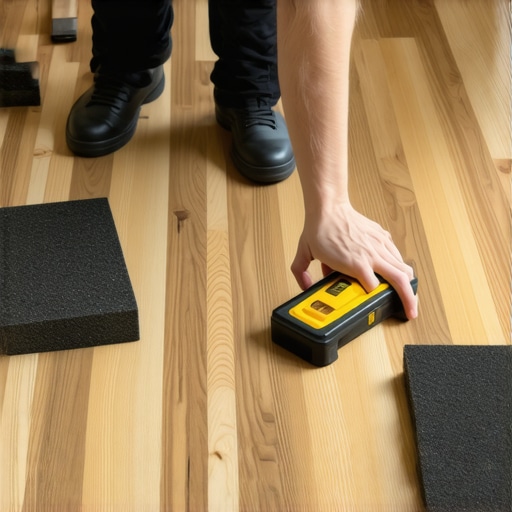
Subfloor flatness is the most ignored requirement in the flooring industry because it requires labor and expensive materials to correct. A subfloor can be level but not flat, meaning it sits on a horizontal plane but contains waves or dips that allow the laminate to bounce. Most people think a layer of padded underlayment will fix a bumpy floor. This is a lie. Underlayment is designed for sound dampening and moisture protection, not for structural support. If you have a 3/16 inch dip over a 10 foot span, the laminate will bridge that gap like a tiny trampoline. When you step on it, the bridge collapses. This is where floor leveling becomes the hero of the story. I use a 10 foot straightedge on every single job. If I can slide a nickel under that straightedge, the floor is not flat enough. For concrete slabs, this means using a diamond cup wheel to grind down high spots or a high quality self leveling underlayment to fill the valleys. For wooden subfloors, it might mean adding layers of plywood or using a floor patch compound that remains flexible enough to move with the house.
The 1/8 inch that ruins everything
Vertical movement in a laminate floor should be near zero because any deflection puts immense stress on the thin fiberboard locking mechanisms. When a subfloor has a dip greater than one eighth of an inch, the plank must bend to meet the ground under load. This bending action is what creates the click. Think about the physics involved. A standard laminate plank is between 7mm and 12mm thick. The actual tongue that holds the floor together is often less than 3mm thick. It is a tiny sliver of compressed wood fiber. When you apply 180 pounds of human weight to a plank that is hovering over a hole, that 3mm tongue acts as a lever. It grinds against the groove of the next plank. This is why floor leveling is not an optional step. It is the foundation of the entire system. If you are transitioning from a carpet install to a hard surface, the subfloor height often changes. Contractors often try to ramp this up with cardboard or extra underlayment. This is a recipe for disaster. The only way to fix it is to use a proper leveling compound that creates a hard, flat surface for the click lock to rest upon.
The chemistry of the locking mechanism
The click lock system relies on precision engineering and friction to hold planks together without the use of glue or nails. When moisture or improper installation interferes with this friction, the joint begins to move and produce noise through mechanical interference. Laminate cores are made of HDF, which is essentially wood dust and resin pressed together under high heat. This material is incredibly stable but it is also susceptible to humidity. If you have a bathroom with frequent showers nearby, the humidity can cause the edges of the laminate to swell. This swelling changes the shape of the tongue and groove. Now, instead of a perfect fit, you have a tight fit that rubs every time it moves. The friction between the wax coated edges of the planks creates a high pitched squeak or click. It is a microscopic battle of physics happening under your feet. You must maintain a consistent indoor environment. If the humidity swings more than 20 percent between seasons, your floor will likely start talking to you. It is breathing, and it needs space to do so.
“Wood based flooring products must be allowed to reach equilibrium with the site conditions before installation to prevent joint failure.” – NWFA Standard Protocol
The checklist for a silent threshold
- Verify subfloor flatness using a 10-foot straightedge before any planks are laid.
- Ensure a minimum of 1/4 inch expansion gap at every wall and door jamb.
- Check that T-moldings are not screwed through the laminate planks.
- Monitor indoor humidity to keep it between 35 and 55 percent year round.
- Use a moisture barrier over concrete slabs to prevent HDF core swelling.
- Inspect the locking grooves for debris or sawdust before clicking them together.
The metrics of floor stability
Technical specifications for the wear layer and the core density determine how much abuse a joint can take before it begins to fail and create noise. A higher AC rating usually means a tougher surface, but it does not mean the core is immune to subfloor issues. We look at the mil thickness of the wear layer for scratch resistance, but the stability comes from the density of the core. Cheap laminate uses a low density fiberboard that compresses easily. High end products use an HDF that is almost as dense as stone. This density is what protects the click lock from snapping. However, even the best HDF cannot survive a roller coaster subfloor. You have to do the prep work. You have to grind the high spots. You have to pour the leveler. It is the only way to ensure the threshold remains silent for twenty years instead of two.
| Metric | Specification | Tolerance |
|---|---|---|
| Subfloor Flatness | 3/16 inch over 10 feet | Maximum Allowable |
| Expansion Gap | 1/4 to 3/8 inch | Minimum Required |
| Relative Humidity | 35% to 55% | Ideal Range |
| Concrete Moisture | 3 lbs per 1000 sq ft | ASTM F1869 Standard |
| Core Density | 850 to 950 kg/m3 | High Quality HDF |
How to fix a clicking threshold without ripping the floor up
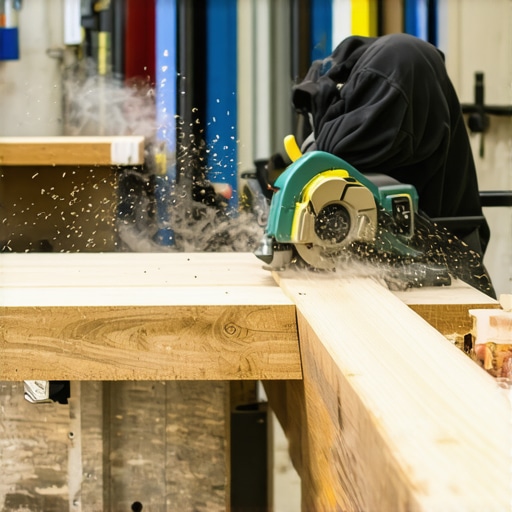
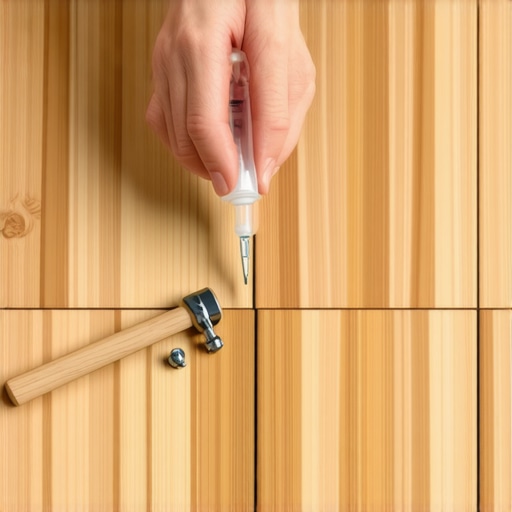
Minor clicking can sometimes be addressed by injecting a specialized floor repair resin into the joint or by trimming the expansion gap if the floor has expanded against a wall. These methods are surgical strikes intended to restore the floor’s ability to move or to fill the void underneath. If the click is caused by a small dip, you can drill a tiny hole through the laminate and inject a low viscosity resin that hardens to provide support. This is a last resort. It is better to prevent the dip in the first place. If the click is caused by the floor being too tight against a door jamb, you can use a oscillating saw to carefully cut back the wood. This releases the tension. The floor will often settle and stop clicking immediately. It is like popping a joint back into place. You are giving the floor the room it was promised during the engineering phase. If the floor is pinned under a heavy kitchen island or a threshold strip that was nailed too tight, you must pull that hardware and reinstall it correctly. A floating floor must be allowed to float. If you lock it down, it will scream.
Concrete slabs and the moisture trap
Hydrostatic pressure and moisture vapor emission from concrete slabs can soften the HDF core of laminate flooring, leading to joint failure and clicking sounds. Even if a slab looks dry, it is a porous sponge that constantly moves water from the earth into your home. This is why a 6 mil poly film is a requirement. If you skip the vapor barrier, the bottom of your laminate planks will absorb moisture. The core will expand at the bottom while the top stays dry. This causes the plank to cup. When a plank cups, the edges lift. When you step on those lifted edges, they snap back down and click against the subfloor. It is a cycle of moisture and mechanical stress. I have seen floors destroyed in six months because the installer thought the concrete was old enough to be dry. Concrete is never truly dry. It is always in a state of equilibrium with the soil beneath it. You must protect the floor from the slab. You must treat the subfloor like a hostile environment. Only then will the laminate stay quiet and stable.