Why Luxury Vinyl Plank Beats Ceramic Tile for High-Traffic Kitchen Floors
Why Luxury Vinyl Plank Beats Ceramic Tile for High-Traffic Kitchen Floors
The kitchen is often referred to as the heart of the home. It is the central hub where meals are prepared, morning coffees are shared, and family gatherings naturally gravitate. However, from a contractor’s perspective, the kitchen is also the most demanding environment in any residential property. Between heavy foot traffic, moisture from spills, and the potential for heavy dropped objects, choosing the best flooring for kitchen floors is a decision that impacts the long-term value and livability of your home.
My name is William Vinal. With over 12 years of experience providing expert guidance and fast quotes for flooring installations in McKinney, TX, I have helped hundreds of homeowners navigate the complex world of materials. For decades, ceramic and porcelain tiles were considered the “gold standard” for kitchens. They were waterproof and durable, but they also came with a host of drawbacks that modern technology has finally solved. Today, Luxury Vinyl Plank (LVP) has emerged as the clear winner for modern, high-traffic kitchens. In this guide, I will break down exactly why LVP outperforms traditional tile in every category that matters to a busy homeowner.
The Ergonomic Advantage: Saving Your Joints from “Foot Fatigue”
One of the most overlooked aspects of kitchen flooring is ergonomics. If you spend any significant time cooking or cleaning, you know the feeling of “foot fatigue.” Ceramic tile is an incredibly hard, unforgiving surface. It is essentially a layer of stone bonded to a concrete slab. Standing on tile for hours can lead to lower back pain, knee discomfort, and sore feet because the floor provides zero shock absorption.
In contrast, LVP is engineered with a multi-layer construction designed for comfort. Most high-quality LVP products feature a Stone Plastic Composite (SPC) or Wood Plastic Composite (WPC) core, topped with a resilient vinyl layer and often an integrated cork or foam underlayment. This provides a microscopic amount of “give” that makes a world of difference during a long Sunday meal prep. In my experience, homeowners who switch from tile to LVP frequently comment on how much longer they can stand in the kitchen without discomfort.
Internal Link Opportunity: If you find yourself wondering [Why Your Kitchen Floor Tiles Feel Cold and How to Add Insulation], the answer often lies in the material’s thermal and ergonomic properties, which LVP addresses natively.
Impact Resistance & The “Dropped Pot” Test
In a high-traffic kitchen, accidents are inevitable. Whether it is a heavy cast-iron skillet slipping from your hand or a glass bottle falling from the counter, your floor needs to be able to handle the impact. This is where the best flooring for kitchen floors must prove its worth.
Ceramic tile is brittle. While it is scratch-resistant, it has very low impact resistance. When a heavy object hits a tile floor, the energy has nowhere to go, often resulting in a permanent crack or a jagged chip. Replacing a single cracked tile is a labor-intensive nightmare that involves chipping out grout and mortar, often risking damage to the surrounding tiles.
LVP, however, is a resilient material. It is designed to absorb the energy of an impact rather than shattering under it. A dropped pot that would crack a ceramic tile will usually bounce off an LVP floor without leaving a mark. Furthermore, modern LVP features a wear layer – typically ranging from 12-mil to 20-mil – that is nearly impervious to the scratches and scuffs common in homes with pets or children.
Internal Link Opportunity: Homeowners often use [The ‘Coin Drop’ Strategy for Identifying Loose Tiles on a Concrete Slab], but with LVP, you don’t have to worry about the hollow sounds or structural failures that plague aging tile installations.
The Grout Nightmare vs. Seamless LVP
If you ask any homeowner what they hate most about their kitchen floor, the answer is almost always “the grout.” Grout is a porous, cement-based material that acts like a sponge for kitchen grease, spilled wine, and dirt. Over time, even the most meticulously cleaned grout will stain and darken, requiring professional deep cleaning or harsh chemicals to restore.
LVP eliminates this pain point entirely. Because LVP uses a click-lock or “floating” installation system, the planks fit together with incredible precision, creating a near-seamless surface. There is no grout to scrub, no sealant to reapply every year, and no place for bacteria to hide. For those who are currently dealing with aging tile in other parts of the home, such as a bathroom remodeling McKinney project, the shift to LVP is often a revelation in low-maintenance living.
Internal Link Opportunity: We often discuss [Why You Should Never Use Bleach on Your Shower Grout] because of how it degrades the material; by choosing LVP, you remove this chemical-heavy maintenance cycle from your kitchen entirely.
Waterproofing and Kitchen Spills
Kitchens are wet zones. Between dishwasher leaks, sink overflows, and the occasional spilled gallon of milk, your floor needs to be 100% waterproof. While ceramic tile itself is waterproof, the system as a whole is only as good as the grout and the subfloor preparation. If water seeps through a crack in the grout, it can sit beneath the tiles, leading to mold growth or subfloor rot.
A professional waterproof flooring installation using LVP provides a complete moisture barrier. Because the planks are made of synthetic materials, they will not swell, warp, or rot when exposed to water. This is a significant upgrade over older technologies.
Internal Link Opportunity: Many clients ask [Why Your Kitchen Laminate is Peeling Near the Dishwasher Vent]. The answer is usually steam and moisture infiltration – a problem that is non-existent with LVP but common with laminate tile flooring that isn’t specifically rated for high moisture.
Installation Speed and Subfloor Requirements
Time is money, especially during a kitchen remodel. A ceramic tile installation is a multi-day (and often multi-week) process. You have to prep the subfloor with backer board, lay the tile in mortar, wait for it to cure, apply grout, wait for that to cure, and then seal it. During this time, your kitchen – the most important room in the house – is a construction zone.
A luxury vinyl plank installation is significantly faster and cleaner. In many cases, LVP can be installed directly over existing hard-surface flooring, saving you the mess and cost of a total demolition. For our Spanish-speaking clients in the North Texas area, pisos lvp are an increasingly popular request because of this efficiency and the high-end aesthetic they provide without the high-end labor costs.
Expert Tip: Before starting any project, I recommend [The ‘Penny Test’ for Checking Subfloor Levelness Before Your Canton Kitchen Remodel]. LVP is more forgiving than tile, but a level subfloor is still the foundation of a great result.
If you are considering other options, such as an affordable laminate flooring installation, keep in mind that while laminate has come a long way, LVP still holds the edge in total waterproof performance for kitchens.
Temperature and Comfort: The Thermal Factor
Have you ever stepped into your kitchen on a cold winter morning only to be shocked by the freezing temperature of your tile floor? Ceramic and porcelain are highly thermally conductive; they pull heat away from your feet, making the room feel colder than it actually is. Unless you invest in expensive radiant heating coils beneath the tile, those floors will always be chilly.
LVP is much more “thermally neutral.” It stays closer to the ambient room temperature, providing a much warmer feel underfoot in the winter while remaining cool enough in the Texas summer. This makes the kitchen a more inviting space year-round. While some homeowners love the look of natural wood, they worry about maintenance; LVP offers the warmth of wood with the durability of stone. If you have old wood floors that are beyond saving, rather than trying to restore floorboards that have been water-damaged by a kitchen leak, LVP is often the more practical and cost-effective replacement.
Appliance Weight and Movement
Kitchen floors have to support massive weights – refrigerators, ranges, and dishwashers. One of the fears with LVP is that these heavy items might dent the floor. However, modern SPC (Stone Plastic Composite) LVP is incredibly dense and can handle the static load of heavy appliances without issue.
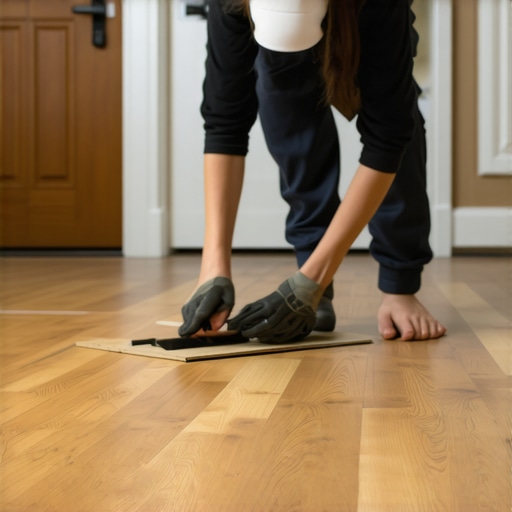
The real challenge is moving those appliances. When you slide a refrigerator out for cleaning or repair, tile can easily crack or scratch. While LVP is tough, it does require care during movement. I always suggest using “glide slides” or the “cardboard trick” to protect the surface.
Internal Link Opportunity: For more on this, see [The ‘Cardboard’ Trick for Moving Appliances Over New Floors] and [Why Your Kitchen Island Should Not Be Anchored Through Laminate]. These same principles apply to LVP to ensure your floor remains floating and functional.
If your home features a mix of flooring types, such as nylon carpet flooring in the living room and an engineered hardwood flooring installation in the dining area, LVP provides a beautiful, durable bridge that can tie the aesthetic of the whole house together while providing the specific protection the kitchen needs.
Conclusion: The Smart Choice for McKinney Homeowners
After 12 years in the industry, the data is clear: for the majority of modern families, Luxury Vinyl Plank is the superior choice for kitchen flooring. It offers the aesthetic beauty of natural wood or stone with a level of comfort, durability, and ease of maintenance that ceramic tile simply cannot match.
When you weigh the benefits – no grout to clean, a waterproof surface that won’t crack when you drop a pot, and a much faster installation process – the value proposition of LVP becomes undeniable. Whether you are looking for pisos lvp or a high-end luxury vinyl plank installation, the result is a kitchen that is as functional as it is beautiful.
If you are ready to upgrade your kitchen or are planning a bathroom remodeling McKinney project, don’t settle for the “way things used to be done.” Contact me, William Vinal, for a fast quote and expert guidance on the best materials for your specific needs. Let’s build a kitchen floor that stands the test of time.