How to Remove Dried Construction Adhesive from New Laminate
I spent three days grinding concrete on a job last month just so the floor wouldn’t click like a castanet. Most guys skip the leveling compound. They think the underlayment will hide the dip. It won’t. I have spent twenty five years with my knees on a subfloor, smelling of oak dust and WD-40, and I have seen every way an amateur can ruin a surface. The worst is the construction adhesive smear. You spend five thousand dollars on a new AC4 rated laminate and some worker leaves a glob of PL Premium or Liquid Nails right in the center of the living room. It cures. It hardens. It becomes part of the room. If you attack it with a metal putty knife, you are going to gouge the melamine wear layer and the floor is trash. I do not care about the aesthetic. I care about the structural integrity of the finish.
The molecular bond of construction polymers
Construction adhesive creates a permanent chemical bond by utilizing polyurethane resins or synthetic rubbers that cross link as they cure. Removing these from laminate flooring requires a solvent that breaks the polymer chain without dissolving the aluminum oxide topcoat or the decorative paper layer beneath the transparent surface. This is a battle of chemistry. Most installers do not understand that laminate is essentially a high density fiberboard core wrapped in a photograph and a plastic shield. The shield is tough but it has a specific chemical resistance limit. If you use the wrong solvent, you melt the shield. The floor fails. It will buckle.
The physics of the laminate wear layer
Laminate flooring relies on an Abrasion Class rating to define its resistance to mechanical stress and chemical exposure. An AC3 or AC4 floor features a melamine resin top layer that is specifically designed to resist impact, but it remains porous to certain organic solvents like acetone if left to dwell. When adhesive dries, it contracts. This contraction creates a mechanical lock with the texture of the laminate. If the laminate has a hand-scraped or wire-brushed texture, the adhesive sinks into the valleys. You cannot just wipe it. You have to soften it.
“A floor is only as good as the subfloor beneath it; deflection is the enemy of every joint.” – Master Flooring Axiom
Chemical compatibility for safe removal
Denatured alcohol and low odor mineral spirits are the primary solvents for removing dried adhesive without compromising the laminate finish. You must avoid paint thinners or citrus based cleaners that contain high concentrations of d-Limonene, as these can leave a permanent haze on the refractive surface of the floor.
| Adhesive Type | Recommended Solvent | Risk to Finish |
|---|---|---|
| Polyurethane | Mineral Spirits | Moderate |
| Water-Based | Warm Soap Water | Low |
| Solvent-Based | Denatured Alcohol | High |
The 1/8 inch that ruins everything
Floor leveling is not a suggestion. When you have dried adhesive on the surface, it often points to a chaotic installation where the subfloor was not properly prepped. If the installer was sloppy enough to leave glue on the boards, they were likely sloppy enough to ignore the 1/8 inch over 10 feet flatness requirement. A floor that is not level will bounce. This bounce puts tensile stress on the click-lock joints. When you are scrubbing at a glue spot, you are also applying downward pressure. If there is a void under that plank because the concrete slab was pitted, you might snap the locking tongue while trying to clean the surface. Do not push hard. Let the chemistry work.
The step by step extraction protocol
- Apply a small amount of mineral spirits to a microfiber cloth.
- Dab the adhesive glob and let it sit for exactly three minutes.
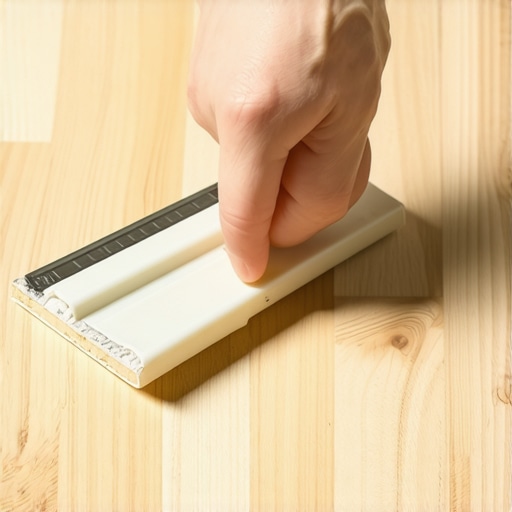
- Use a plastic putty knife to gently lift the edges of the softened polymer.
- Wipe the residue with denatured alcohol to remove the oily film.
- Buff the area with a dry cloth to restore the original sheen.
The ghost in the expansion gap
Expansion gaps are the most ignored part of laminate installation. If construction adhesive has dripped into the perimeter gap near the baseboards, the floor is effectively pinned. Laminate is hygroscopic. It grows. It shrinks. If the glue locks the plank to the wall plate or the subfloor, the floor will peak at the seams. You must ensure that no adhesive has migrated into these structural voids. I have seen entire floors lift off the ground because one gallon of glue was spilled in the wrong corner.
“Moisture is the primary cause of flooring failure, yet improper maintenance often claims the finish first.” – NWFA Technical Manual
Why your subfloor is lying to you
People think a thick underlayment solves everything. It does not. Too much cushion actually causes the locking mechanisms on LVP or laminate to snap under pressure. When you are dealing with dried glue, you are seeing the result of a rushed job. A real pro keeps a wet rag in his pocket. He cleans as he goes. If you are reading this, the damage is already done. You are in recovery mode. The HDF core of your laminate is sensitive to liquid infiltration. If you soak the spot with too much solvent, the liquid will find its way into the seam. Once the fiberboard swells, it never goes back down. It is a permanent structural deformity.
The mechanics of mechanical scraping
If solvents fail, mechanical removal is the final resort. Use a plastic scraper. Never use steel. A plastic edge will give way before the melamine does. This is basic material science. You want the tool to be softer than the surface. Work from the outside of the glue spot toward the center. This prevents the adhesive from spreading and creating a larger smear. If the glue is particularly stubborn, a hairdryer can be used to increase molecular vibration and soften the bond. Keep the heat moving. Static heat will delaminate the plank. It will ruin the floor.