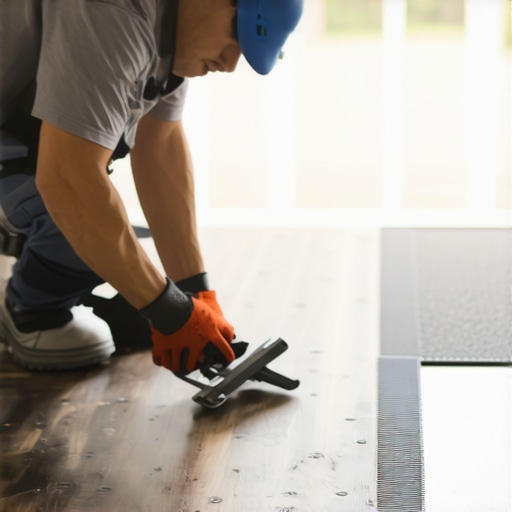
Have you ever stepped onto what looked like a smooth, beautiful carpet only to feel an unexpected wobble or uneven patch under your feet? I sure have. Early in my DIY journey, I underestimated just how crucial proper floor leveling is for lasting carpet installation. That lightbulb moment hit me hard when I watched my carefully laid carpet ripple and shift, revealing flaws I thought I had hidden. Turns out, a little extra effort in the beginning could have saved me from costly fixes later.
Why Skimping on Floor Preparation Can Cost You Big Time
Getting a perfectly flat surface isn’t just about aesthetics—it’s the foundation of durability and safety for your flooring. An uneven subfloor can cause your carpet to wear unevenly, develop wrinkles, or even come loose over time. That’s why investing time in expert-level leveling techniques is essential, especially if you want your home to look polished and stay that way for years.
Are You Falling for the Biggest Carpet Installation Mistake?
Early on, I made the mistake of skipping detailed floor prep, thinking a quick sweep and patching would suffice. Spoiler: it doesn’t. That oversight led to endless frustrations and a carpet that didn’t hold up—something I now know is a common trap many DIYers fall into. For a foolproof approach, check out top carpet installation and floor leveling tips from seasoned professionals.
In this post, I’ll share exactly how to avoid these pitfalls and ensure your carpet stays beautiful and functional. From selecting the right leveling compounds to techniques that guarantee a perfectly smooth surface, I’ll walk you through everything you need to know to get that flawless, lasting finish you’re dreaming of.
Ready to transform your space? Let’s dive into the essential steps for expert floor leveling and carpet installation that truly lasts.
Start with a Solid Foundation
Before laying your carpet, focus on achieving a perfectly level subfloor. I remember once rushing through this step and ending up with ripples and wrinkles in my new carpet. To avoid that, use a high-quality self-leveling compound, which acts like the magic potion transforming an uneven surface into smooth terrain. Pour it gradually and spread with a long trowel or a smoothing tool, ensuring no air pockets remain. For detailed guidance, check out top carpet installation and floor leveling tips that can save you hours of frustration.
Prepare Your Tools and Materials
Using the right tools makes all the difference. Gather a sturdy trowel, a level, a mixing bucket, and safety gear. Mixing the leveling compound precisely according to the manufacturer’s instructions is crucial. I once misread the ratio, and the compound didn’t set properly, causing more work down the line. Measure carefully, and don’t rush this process. Also, test the level across the entire floor; small bubbles or uneven readings indicate spots needing additional attention.
Apply the Leveling Compound Correctly
Think of this step like icing a cake—you want a smooth, even surface. Start from the farthest corner and work your way out, pouring and spreading the compound evenly. Use a long-handled squeegee or a smoothing tool to feather out the compound, pushing it into low spots and filling gaps. For large areas, work in sections to maintain control and ensure a consistent finish. Remember, patience here pays off; rushing can lead to thin spots or uneven patches. When I did this in my living room, I made sure to go slow, rechecking the level frequently. The result was a flawless base that made my carpet installation look professional and durable.
Allow Adequate Curing Time
Don’t be tempted to install your carpet right after applying the leveling compound. Give it at least 24 hours, or longer if the product instructions specify. This ensures the compound fully cures and hardens, providing a stable foundation. I once skipped this step and paid the price—my carpet shifted after a few months. Proper curing is like letting bread rise; patience here leads to a stronger, longer-lasting finish.
Double-Check Before Installation
Once the compound has cured, recheck the floor with a level. Any remaining dips or bumps should be addressed with additional compound. Use a straightedge or a long spirit level to confirm the surface is uniformly flat. This extra step can seem tedious but is essential for lasting beauty and durability. Remember, a well-prepared base not only makes installation easier but significantly extends the lifespan of your carpet.
With a level surface in place, your carpet installation becomes a straightforward process, resulting in a smooth, durable, and beautiful finish that lasts for years. For more detailed tips, explore expert floor leveling techniques and ensure your project’s success from start to finish.
Many DIY enthusiasts and even seasoned homeowners often fall prey to misconceptions when it comes to floor leveling, especially for carpets. Let’s dig deeper into some of the most misunderstood aspects and reveal hidden nuances that can make or break your project.
Why the Popular Belief That Any Uneven Floor Can Be Fixed Easily Is Wrong
Everyone says a self-leveling compound can fix any unevenness, but in reality, not all issues are equal. Severe dips or high spots require more than just pouring a leveling compound. For example, deep cracks or structural shifts might need professional intervention or reinforcement before you even think about leveling. Relying solely on compounds without diagnosing the root cause can lead to future problems, like cracks reappearing or the floor shifting again. For a durable solution, consider consulting experts or reading professional tips on floor leveling.
Advanced Mistake: Overlooking Moisture and Climate Effects
A common trap is ignoring how moisture and temperature fluctuations impact your leveling efforts. Moisture can weaken leveling compounds or cause future expansion and contraction, leading to cracks or unevenness. This is especially true in basements or areas prone to dampness. Incorporating vapor barriers or choosing moisture-resistant compounds can save you from costly repairs down the line. This nuance is often overlooked but is crucial for long-lasting results. For more insights, check out expert laminate flooring leveling tips.
Make Your Floor Leveling Truly Last: The Hidden Step
Many skip the crucial step of rechecking the level after the compound has cured, assuming the initial application was perfect. However, small dips or bumps can still remain and cause wrinkles or uneven wear in your carpet. Using a long straightedge or a high-quality level to double-check ensures the surface truly is flat. This extra step, often dismissed as tedious, is vital for a flawless finish. Remember, precision at this stage can save you hours of troubleshooting later. For detailed techniques, explore expert-level floor leveling guides.
Have you ever fallen into this trap? Let me know in the comments. Understanding these nuances can elevate your DIY game and ensure your carpet not only looks great but lasts for years to come.
Keep Your Flooring Skills Sharp with the Right Tools
Maintaining your flooring projects over time requires investing in specific, high-quality tools that ensure longevity and professional results. One of my go-to tools is a **laser level**. Unlike traditional bubble levels, laser levels project a precise, consistent line across large surfaces, making it much easier to identify uneven spots and confirm your work is perfectly flat. I personally use the **DeWalt DW089LG** because its accuracy and durability help me avoid costly mistakes during installation or touch-ups.
Next, a **sturdy mixing drill** (like the **Makita XFD10Z**) is essential when working with leveling compounds. It ensures thorough, uniform mixing, which is critical for proper curing and adhesion. I’ve found that manually stirring compounds often leads to inconsistent consistency, which can cause weak spots or cracking down the line.
For applying leveling compounds, I rely on a **long-handled squeegee**. This tool allows me to spread compounds smoothly over large areas, preventing air pockets and ensuring a level surface. Investing in a high-quality squeegee with a flexible rubber blade, like the **Vollrath 47101**, makes the difference between a bumpy surface and a perfectly flat one.
To verify your progress, I recommend a **digital moisture meter** such as the **Protimeter Surveymaster**. Moisture levels can affect the curing process and future stability of your flooring, especially in basements or damp environments. Regularly checking moisture content helps prevent future issues like warping or mold growth.
Finally, finish with a **high-quality finishing sander** for any touch-up work needed after leveling. The **Bosch ROS20VSC** is lightweight yet powerful, allowing you to smooth out imperfections and prepare the surface for carpet or laminate installation. Proper maintenance of these tools, including cleaning and storing them correctly, extends their lifespan and keeps your projects running smoothly.
Looking ahead, technology trends are leaning toward **smart tools** that connect via Bluetooth or Wi-Fi, providing real-time feedback and diagnostics. This integration can help DIYers and professionals alike maintain their tools and ensure optimal performance over the long term.
How do I maintain my tools over time?
Regular cleaning after each use is vital—removing dust, debris, and residue prevents corrosion and mechanical issues. For power tools, check and replace worn brushes or blades periodically, and store them in a dry, temperature-controlled environment. Using protective cases and proper storage racks helps prevent accidental damage. Additionally, following manufacturer maintenance schedules, such as lubricating moving parts or updating firmware, ensures your tools remain reliable for future projects.
Don’t forget to keep your equipment calibrated, especially laser levels and moisture meters, to maintain accuracy. Calibration kits are often available from the manufacturer or authorized service providers. As technology advances, I predict more tools will incorporate AI and IoT features, making maintenance even easier and more precise in the future.
For a step-by-step guide on maintaining your leveling tools and ensuring your flooring projects last, visit this resource. Try incorporating a digital moisture meter into your routine—it’s a game-changer for long-term durability.
Getting your floor perfectly level is the secret ingredient that transforms a good carpet installation into a lasting masterpiece. Over the years, I’ve learned that rushing this step or neglecting the subtle details can turn your beautiful new carpet into a wrinkled, uneven mess. From my personal experience, the biggest breakthrough came when I started treating floor leveling as an art rather than a quick fix, ensuring every inch of my subfloor was primed for success.
Insider Lessons That Changed My Approach to Floor Leveling
- Precision Over Speed: In my early projects, I underestimated how small dips can cause big problems. Taking the time to double-check with a quality level saved me hours of troubleshooting later.
- Moisture Matters: I once ignored moisture levels in a basement, only to see my leveling compound crack and shift months later. Now, I always test moisture content before starting.
- Root Cause Analysis: When I faced persistent unevenness, I discovered that structural issues needed fixing first. Relying solely on compounds can mask underlying problems.
- Patience Pays Off: Allowing the compound to cure fully is crucial. Rushing the process led to shifting floors and wrinkled carpets, which could have been avoided with proper curing time.
- Double-Check Every Step: Even after curing, re-measuring the level prevents surprises during carpet installation, making everything smoother and more durable.
Tools I Trust for Lasting Results
- Laser Level: A laser level like the DeWalt DW089LG helps me spot uneven spots across large areas quickly and accurately.
- Mixing Drill: The Makita XFD10Z ensures my leveling compounds are perfectly mixed, avoiding weak spots.
- Smoothing Tools: A high-quality long-handled squeegee like the Vollrath 47101 makes spreading the compound smooth and even effortless.
- Moisture Meter: I rely on the Protimeter Surveymaster to ensure moisture levels are optimal before proceeding.
- Finishing Sander: The Bosch ROS20VSC helps prepare the surface for the final carpet layer, ensuring a flawless finish.
Transform Your Flooring Game Today
Taking the time to master floor leveling has been a game-changer in my DIY projects. Not only does it save money and time in the long run, but it also guarantees that your carpet will look stunning and last for years. Remember, a level subfloor is the foundation of lasting beauty and durability—so don’t cut corners here. If you want to dive deeper into expert techniques, explore these professional tips and elevate your home upgrade game now.
http://Emily%20Johnson
This post really hits home! I remember rushing through the floor leveling process in my last DIY project and ending up with uneven patches that made my new carpet look less than perfect. Since then, I’ve learned the importance of patience and proper tool use—especially when it comes to mixing the leveling compound thoroughly and giving it enough time to cure. I also started using a laser level, which has been a game-changer for me in ensuring everything is perfectly straight before installing the carpet.
One thing I’d add is that climate and moisture can be sneaky enemies for a level subfloor, especially in humid areas or basements. I always check moisture levels beforehand and add vapor barriers if needed. Has anyone else experienced issues with moisture after the fact? How do you best address that without pulling up your new flooring again? Looking forward to hearing tips from others who’ve navigated these challenges in their DIY flooring projects!